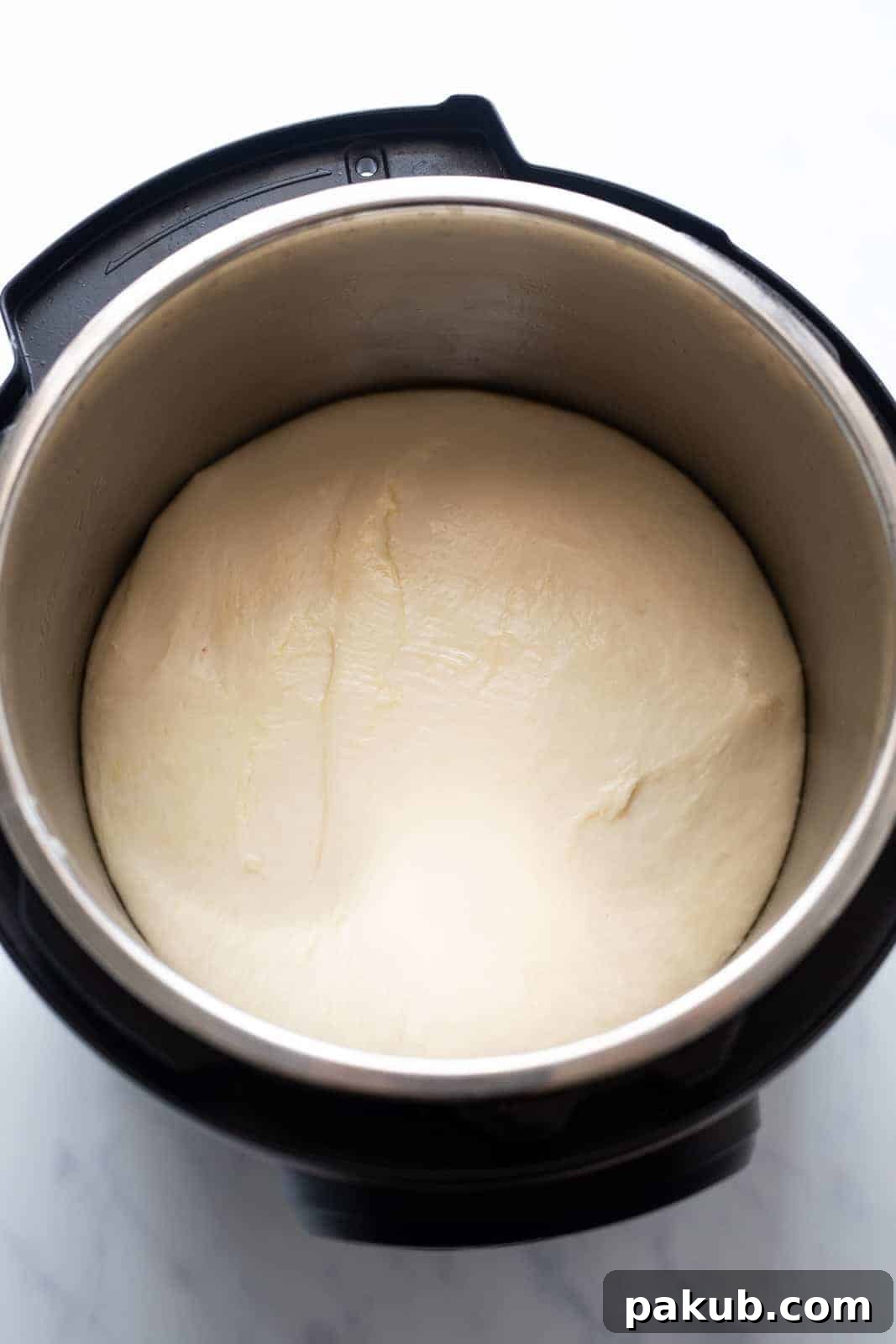
Transform your bread baking experience! Proofing bread in the Instant Pot takes only 30 minutes, creating the perfect warm and humid environment for your dough. This ingenious method is a total game-changer for bakers – read on to unlock the secrets of making perfectly risen bread with your Instant Pot.
For home bakers, the journey of crafting a perfect loaf of bread is often a labor of love, marked by moments of anticipation, especially during the crucial proofing stage. Traditionally, achieving that ideal rise can be a lengthy and often unpredictable process, dependent on ambient room temperature and humidity. But what if we told you there’s a revolutionary way to cut down proofing time significantly while ensuring consistent, flawless results every single time? Enter the Instant Pot – your versatile multi-cooker, ready to take on a surprising new role in your kitchen: a dedicated bread proofer!
Like many enthusiastic home cooks, we’re constantly exploring the vast capabilities of our beloved Instant Pot. Its ability to pressure cook, slow cook, sauté, and more has already cemented its place as an indispensable kitchen appliance. Just when we thought we’d exhausted its potential, particularly in the realm of baking, we stumbled upon a brilliant application of its ‘Yogurt’ function. This year, bitten by the bread-baking bug, we embarked on a mission to integrate our Instant Pot into our baking routine, and the results have been nothing short of spectacular. Using the Instant Pot to proof our bread dough has revolutionized our baking, drastically reducing waiting times and delivering consistently airy, beautifully textured loaves. Let’s delve into this innovative technique and understand what bread proofing truly entails.
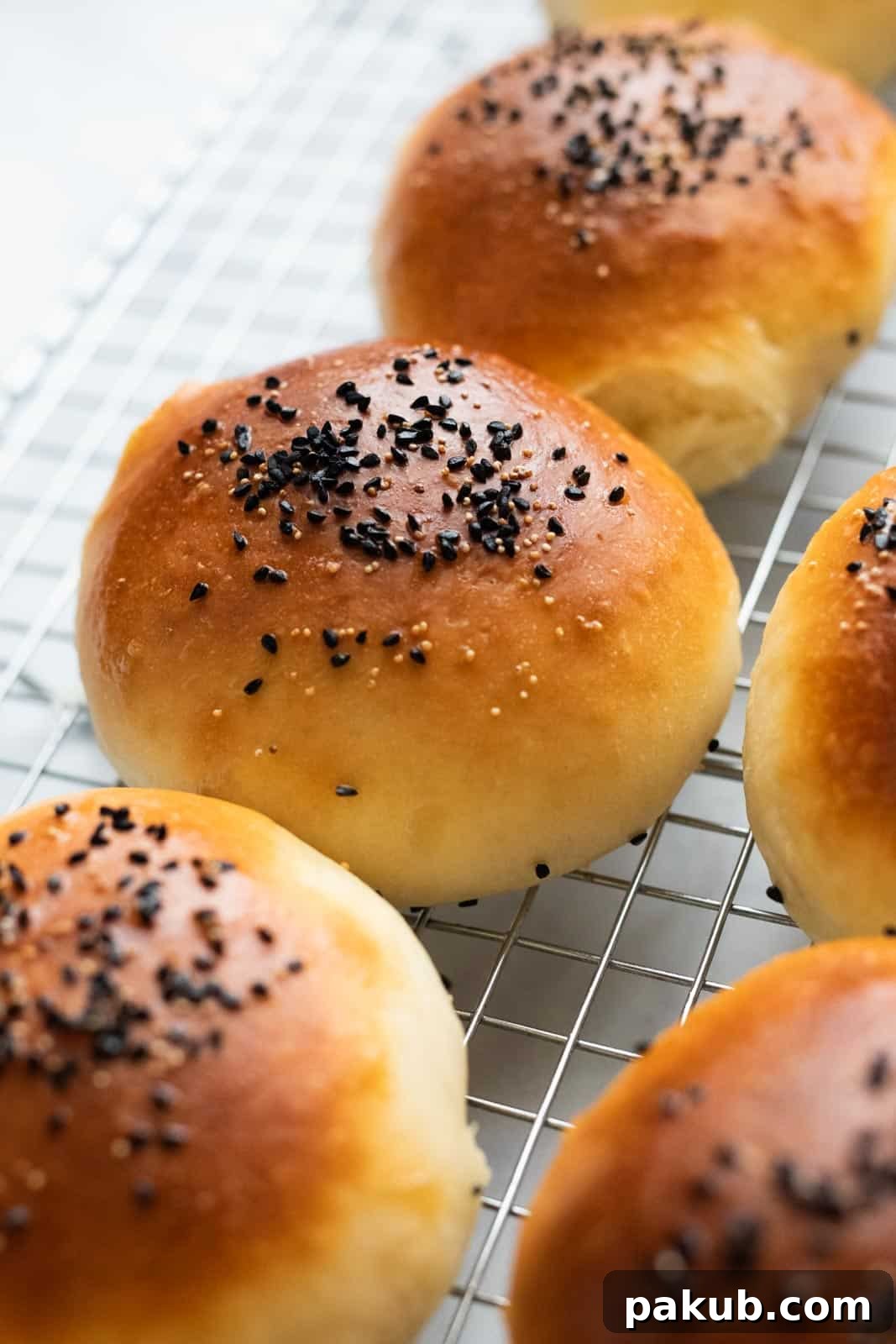
What Exactly is Bread Proofing? Understanding the Science Behind the Rise
Bread proofing, also known as proving or fermentation, is a fundamental step in bread baking that refers to the final rise of the dough before it goes into the oven. This stage is absolutely critical for developing the bread’s flavor, texture, and overall structure. During proofing, the yeast, which has been activated by warmth and moisture, begins to feed on the sugars present in the flour. This metabolic process generates carbon dioxide gas and alcohol as byproducts.
As the CO2 gas is produced, it gets trapped within the elastic gluten network that has been developed through kneading. These trapped gas bubbles are what cause the dough to expand and rise, giving the bread its characteristic light, airy, and porous texture. Without proper proofing, your bread can end up dense, heavy, and lacking in flavor. The quality of the proof directly impacts the crumb structure, crust development, and even the aroma of your finished loaf.
Most traditional bread recipes call for two main proofing stages. The first fermentation, often called “bulk fermentation,” allows the dough to rise significantly, creating larger air pockets. After this initial rise, the dough is gently “knocked down” or degassed to redistribute the yeast and gas bubbles, then shaped according to the desired final product (e.g., loaves, rolls, pizza bases). The second fermentation, or “final proof,” allows the shaped dough to rise again, developing smaller, more uniform air gaps. This two-stage process results in a more even crumb structure and a refined crust, contributing to a superior bread-eating experience. In this particular guide, we’ll focus on utilizing the Instant Pot for the crucial first fermentation, giving you a powerful head start.
The Instant Pot Method for Proofing Bread: Harnessing Controlled Warmth
Professional bakeries and high-end restaurants rely on specialized equipment called proofing chambers or proofers. These sophisticated devices are designed to maintain a consistently warm temperature, typically between 85-105°F (30-40°C), alongside a carefully controlled relative humidity of 75-80%. These precise conditions are paramount because they provide the absolute most ideal environment for yeast to thrive and for dough to ferment efficiently and evenly. Trying to replicate these conditions at home can be challenging, often involving creative but inconsistent methods like a warm oven with the light on, or a sunny spot on the counter.
Here’s where the ingenious hack with the Instant Pot comes into play, delivering the magic right to your kitchen. The Instant Pot’s “Yogurt” function was specifically engineered to create a stable, warm fermentation environment for culturing dairy into yogurt. This means it maintains a low, consistent temperature, perfect for encouraging bacterial growth. Remarkably, these precise, controlled conditions are strikingly similar to what active yeast requires for optimal dough proofing! This makes your Instant Pot a surprisingly effective and highly consistent alternative to a commercial proofer, eliminating the guesswork and inconsistency often associated with traditional home proofing methods. It’s like having a mini, perfectly calibrated proofing chamber right on your countertop.
Step-by-Step Guide: Proofing Bread in Your Instant Pot
Achieving perfectly proofed dough in your Instant Pot is incredibly simple. Follow these straightforward steps for a reliable and efficient rise:
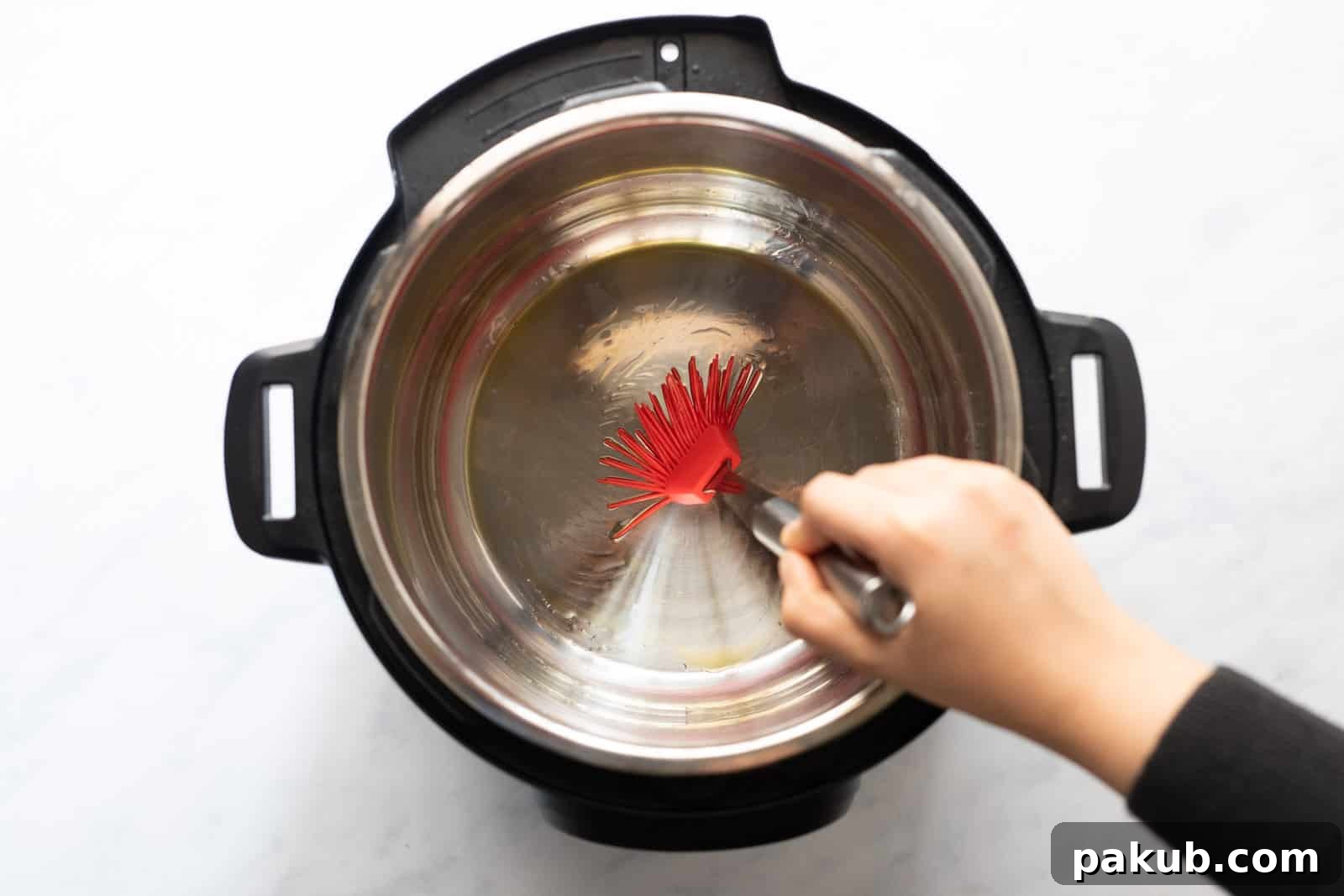
- Prepare the Inner Pot: Begin by lightly brushing the interior of your Instant Pot’s stainless steel inner pot with a neutral cooking oil (like vegetable oil, canola oil, or olive oil). This prevents the dough from sticking as it expands. Once the pot is oiled, place your freshly kneaded dough inside. For best results, also lightly oil the top surface of the dough itself. This forms a protective barrier, preventing a dry “skin” from forming on the dough, which can hinder its rise and make it less supple.
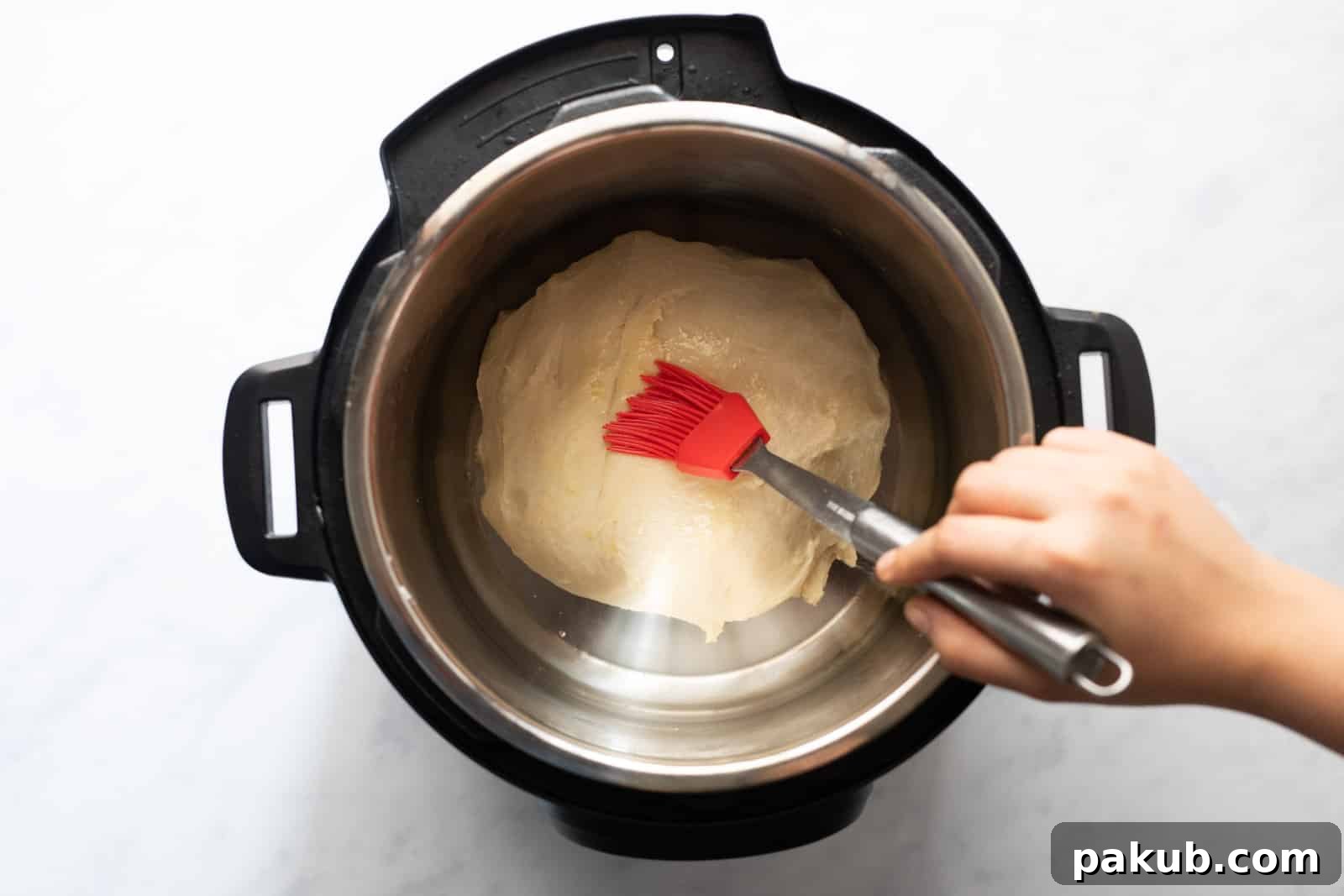
- Cover the Pot: Crucially, cover the Instant Pot’s inner insert with a glass lid or a sheet of aluminum foil. A clear glass lid is particularly advantageous as it allows you to observe the dough’s progress without disturbing the warm, humid environment. We strongly advise against using the Instant Pot’s own pressure cooking lid for proofing. Large amounts of rising dough can sometimes push against the lid, potentially causing it to seal or become difficult to remove, creating a messy and frustrating situation. Stick to a loose-fitting glass lid or foil.
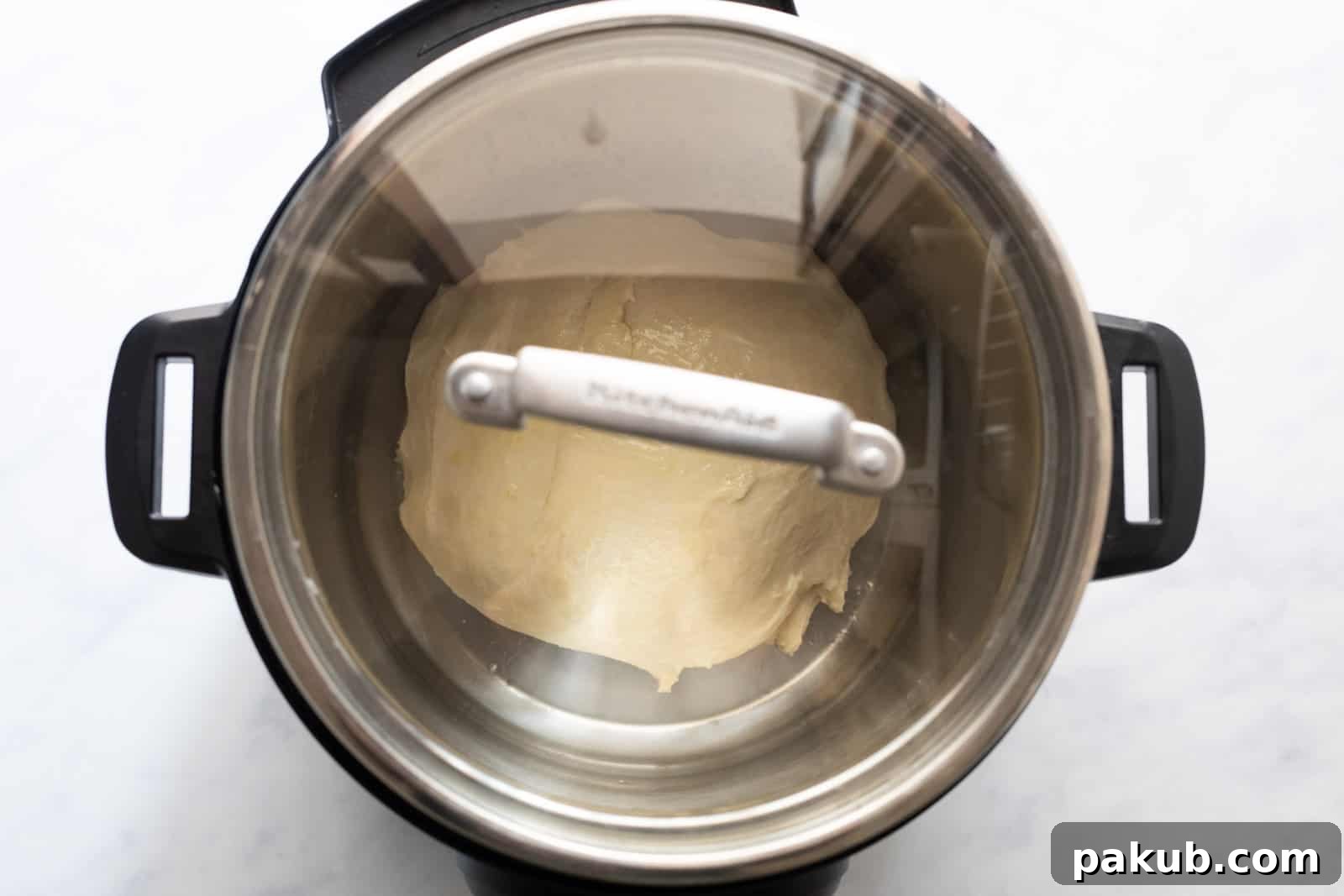
- Activate the Yogurt Function: Select the “Yogurt” function on your Instant Pot. Ensure you choose the “LOW” setting, as this provides the optimal gentle warmth for dough fermentation without cooking it. Since the Instant Pot’s built-in timer doesn’t typically beep or alert when using the Yogurt function, it’s essential to set an external timer for your desired proofing duration. This ensures you don’t over-proof your dough.
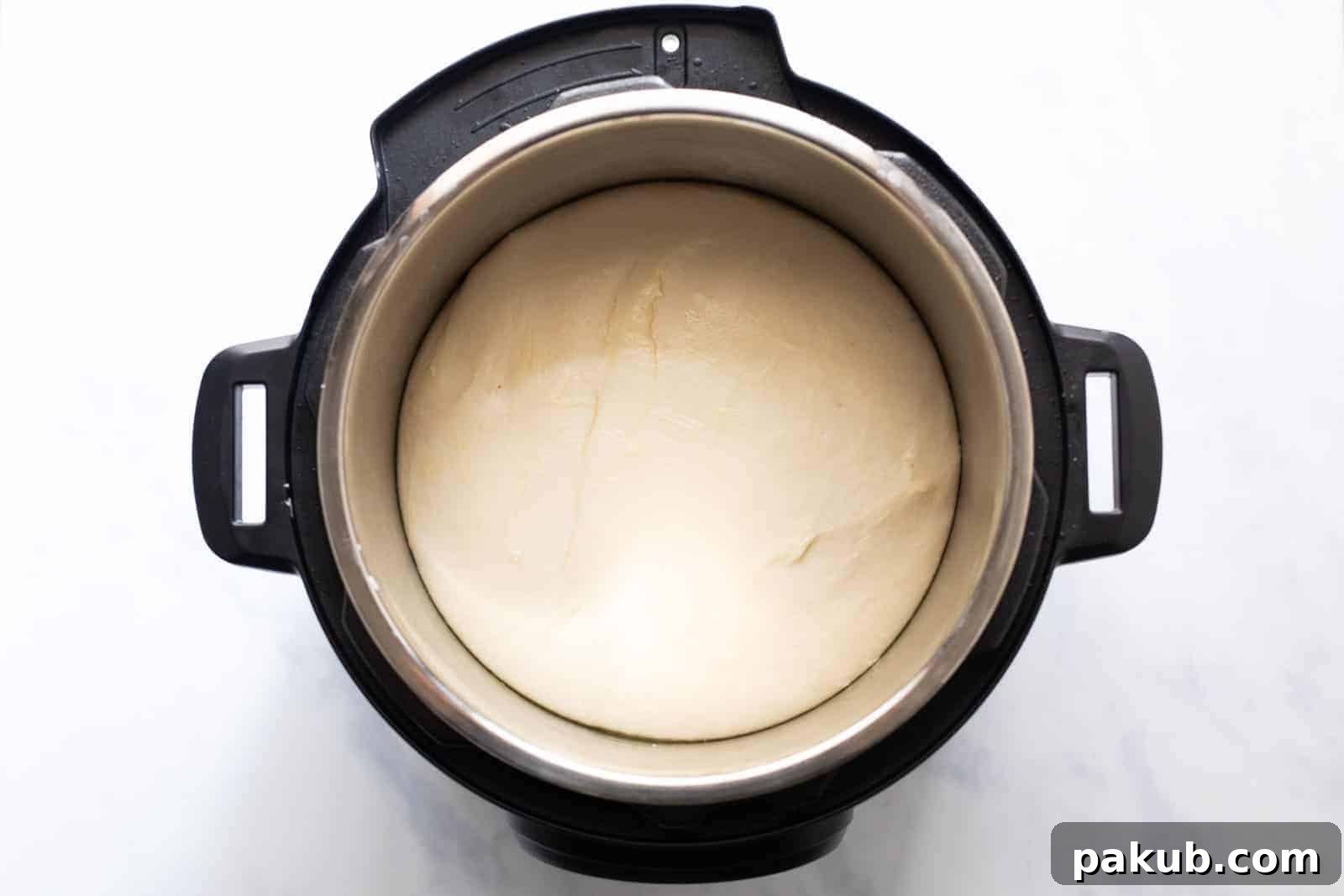
- Monitor and Proceed: Once your external timer signals that the proofing is complete, carefully remove the dough from the Instant Pot. It should have visibly doubled in size. At this point, you can proceed with shaping your bread as per your recipe’s instructions, or move directly to baking if it’s a single-proof recipe.
How Long Should You Proof Your Dough in the Instant Pot?
One of the most appealing aspects of using the Instant Pot for bread proofing is the dramatic reduction in time. As a general rule of thumb, you can typically halve the proofing time specified in a standard recipe that calls for countertop dough rising. For instance, if a traditional recipe suggests a 1 to 1.5-hour bench rest for the first proof, you can expect your dough to be perfectly proofed in the Instant Pot in approximately 30-45 minutes.
In our experience with recipes like our Pepperoni Cheese Bombs, which normally require a 60-90 minute proof, the Instant Pot consistently achieved a perfect rise in just 30 minutes. This means 30 minutes serves as an excellent starting point. Always remember that proofing times can vary slightly depending on factors like the specific yeast used, the temperature of your ingredients, and even the altitude. Therefore, begin checking your dough’s progress around the 30-minute mark to ensure it reaches the ideal doubled size. It’s crucial not to let the dough over-proof, which can happen if left too long, often resulting in a collapsed structure or a yeasty, alcoholic flavor. If your dough is significantly over 45 minutes and appears to be collapsing, it may be over-proofed.
Confirming a Perfect Proof: The “Poke Test” and Visual Cues
Knowing precisely when your dough is perfectly proofed is an art that comes with practice, but there are reliable methods to guide you. The primary indicator is always visual: the dough should appear visibly doubled in size, feeling light and airy.
However, if you’re uncertain or want to confirm, the “poke test” is your best friend. Gently and lightly poke the dough with a floured fingertip or knuckle. Observe how the dough reacts:
- If the dent bounces back quickly and completely: This indicates that the dough is under-proofed and needs a little more time to rise. The gluten structure is still too tight.
- If the dent collapses immediately or leaves a permanent deep indentation: This is a sign of over-proofing. The gluten structure has become too stretched and weak to hold the gas, leading to collapse. The resulting bread might be dense and lack structure.
- If the dent bounces back slowly and partially, almost returning to its original shape but leaving a slight indentation: Congratulations! Your dough is perfectly proofed and ready for the next stage. This means the gluten has relaxed enough to allow expansion, but still has sufficient structure to hold the rise.
Accurately Gauging “Doubled in Size”
For consistent baking results, accurately determining when your dough has doubled in size is key. While visual estimation is possible with experience, using a container with clear volume markings provides far more precise results. If your Instant Pot’s inner insert features such markings, take advantage of them by noting the dough’s initial volume. This makes it incredibly easy to track its expansion.
Alternatively, you can make your own temporary markings. Before placing the dough in the pot, measure a specific volume of water, pour it into the Instant Pot insert, and mark the water level on the exterior with a dry-erase marker or a piece of tape. Then, remove the water, add your dough, and mark its initial level. As the dough rises, you’ll have a clear visual guide to determine when it has precisely doubled. The Instant Pot’s steel insert often has measurement lines, which simplifies this process greatly, allowing you to confidently assess when your dough has reached its ideal proofing volume.
Proofing Shaped Dough in the Instant Pot: Considerations and Tips
While the Instant Pot excels at the initial bulk fermentation of a single mass of dough, proofing individually shaped items like buns, dinner rolls, or baguettes within it presents a few practical challenges. The main hurdle is space. Shaped breads require room to expand without touching each other, and the Instant Pot’s inner pot, while spacious for a single dough ball, is not designed for multiple small items.
Unless you possess a multi-tiered, stackable steaming rack specifically designed for your Instant Pot, you’ll find it difficult to proof more than 4-5 small buns or rolls at a time without them merging. If you are fortunate enough to have such an accessory, it opens up possibilities. Cut small squares of parchment paper, place each shaped roll or bun on its own square, and then arrange them on the tiers of your stackable tray. Proceed with proofing as described for bulk dough. Once proofed, you can carefully transfer the dough, along with its parchment paper, directly onto a baking tray, ready for the oven. This method streamlines the transfer process and helps maintain the dough’s delicate structure after its second rise.
Despite these considerations, the Instant Pot truly simplifies the art of bread making, especially for the initial rise. This innovative hack makes life much easier for home bakers, saving valuable time and delivering consistent, high-quality results. We encourage you to try this method and experience the difference for yourself! Share your baking triumphs and questions in the comments below – we’d love to hear how it goes!
Explore More Instant Pot Delights
The Instant Pot’s versatility extends far beyond bread proofing. If you’re looking for more ways to make the most of this incredible appliance, here are some of our favorite recipes that demonstrate its culinary prowess:
- Instant Pot Thai Chicken Curry: Aromatic and rich, this curry comes together in a fraction of the traditional time.
- Zero Cook Time Vegetables: Perfectly steamed, vibrant vegetables with minimal effort.
- Instant Pot Mexican Rice: A flavorful and fluffy side dish, cooked to perfection every time.
- Instant Pot Beef Bourguignon: Classic French comfort food made accessible for weeknights.
- Instant Pot Beef Stew: Tender, savory beef stew that tastes like it simmered all day.
5 out of 5 stars (2 votes)
Proofing Bread in the Instant Pot
Print Recipe
Ingredients
- 2 cup All Purpose Flour (maida)
- ¾ cup lukewarm Milk (+ extra for brushing)
- 2 tablespoon Sugar
- 1½ teaspoon Active Dry Yeast
- 2 tablespoon Butter (melted)
- ½ teaspoon Salt
- 1 tablespoon Oil
Instructions
-
In a large bowl of a stand mixer, combine together flour, sugar, and yeast. Using the dough hook attachment, gradually add all the lukewarm milk and begin to knead the dough.
-
Knead the dough for 6-8 minutes with the stand mixer, or 8-10 minutes if kneading by hand, until it becomes soft, smooth, and supple. Towards the end of the kneading process, add the melted butter and salt, and continue kneading for another 1-2 minutes until fully combined. Add a tiny bit of flour if the dough is excessively sticky, though it will firm up as you knead.
-
Once kneading is complete, shape the dough into a large, smooth ball. Lightly brush the entire surface of the dough with some oil to prevent it from drying out during proofing.
-
Prepare your Instant Pot for proofing: Brush the base and sides of the Instant Pot’s inner pot with the remaining oil. Carefully place the oiled dough ball directly into the inner pot. Cover the Instant Pot insert with a glass lid or a sheet of aluminum foil. Remember, do NOT use the Instant Pot’s original pressure cooker lid.
-
Turn on the Instant Pot and select the YOGURT function on the LOW setting. Set an external timer for 30 minutes (as the Instant Pot’s timer will not beep for this function). Once your external timer alerts you, check the dough to ensure it has doubled in size and has proofed sufficiently. If it hasn’t quite doubled, allow it an additional 5 minutes. After checking, press CANCEL and turn off the Instant Pot.
-
Gently remove the proofed dough from the inner pot. Shape it into dinner rolls or burger buns as desired. Place the shaped dough pieces on a baking tray that has been greased and lined with parchment paper. Cover the tray loosely and allow the dough to proof on the countertop for an additional 20 minutes (this is the second proof).
-
While the shaped dough is undergoing its second proof, preheat your oven to 180°C (350°F).
-
Once the second proof is complete, lightly brush the tops of the rolls with a little milk for a golden crust. If you wish, sprinkle with sesame seeds. Bake in the preheated oven for 20-25 minutes, or until the tops are beautifully golden brown and the rolls sound hollow when tapped on the bottom.
Notes
- If you do not own an Instant Pot, you can still proof your dough effectively. Place the kneaded dough in a lightly oiled bowl, cover it with a clean kitchen towel or plastic wrap, and set it in a warm, draft-free spot. This traditional method typically takes between 1-2 hours, depending on the ambient temperature and humidity. Once the dough has doubled in size, follow the remaining instructions to shape and bake.
- This versatile dough can be used for more than just dinner rolls. It’s excellent for making soft burger buns, or even delicious stuffed buns. For another fantastic baking idea, explore our recipe for pepperoni cheese bombs (which also includes an option with eggs!).
Nutrition
Enjoyed this recipe? Share your thoughts below!