
It’s berry season, a time of delicious indulgence! But before you enjoy those vibrant fruits, learn how to clean berries thoroughly for absolute safety and extended freshness.

Berry lovers, assemble! There’s nothing quite like the burst of flavor from a perfectly ripe strawberry, the sweet pop of a blueberry, or the delicate tang of a raspberry. These jewel-toned fruits are not only delightful to the palate but also packed with essential vitamins, antioxidants, and fiber. They’re a staple in everything from morning smoothies to decadent desserts, and a healthy snack all on their own.
However, beneath their appealing exterior often lies an invisible challenge: pesticides and other unwanted residues. Many commercially grown berries are treated with various chemicals to protect them from pests and diseases, and a quick rinse under the tap simply isn’t enough to remove these hidden contaminants. This crucial step is often overlooked, but knowing how to clean berries properly is paramount for enjoying them safely and preserving their quality.
The good news is, you don’t need fancy gadgets or harsh chemicals to ensure your berries are pristine. I’m excited to share a simple, natural, and incredibly effective berry cleaning hack that I rely on every single time. This method not only helps eliminate harmful substances but also contributes to keeping your berries fresh for longer. Let’s dive in and transform your berry-eating experience!
Table of Contents: Your Guide to Perfectly Clean Berries
- Introduction: Embrace Berry Season Safely
- The Unseen Threat: Why Just Rinsing Isn’t Enough
- The Ultimate Berry Cleaning Solution: The Science Behind the Sparkle
- Step-by-Step Guide: How to Wash Your Berries Like a Pro
- Beyond Cleaning: Mastering Berry Storage for Peak Freshness
- Frequently Asked Questions About Cleaning Berries
- Watch the Berry Cleaning & Storage Video Guide
- Conclusion: Enjoy Berry Season with Confidence
The Unseen Threat: Why Just Rinsing Isn’t Enough
It’s tempting to grab a handful of fresh berries straight from the container and pop them into your mouth, perhaps after a quick splash under the faucet. We’ve all done it. However, this common practice could be exposing you and your family to more than just the sweet taste of summer. Berries, with their delicate skins and porous surfaces, are particularly susceptible to holding onto various residues.
Pesticides and Chemical Residues
Many conventional farming practices rely on pesticides to protect crops from insects, fungi, and weeds. While these chemicals are regulated, residues can remain on the fruit even after harvest. Studies have consistently shown that berries, especially strawberries, often top lists like the Environmental Working Group’s (EWG) “Dirty Dozen,” which highlights produce with the highest pesticide loads. These residues can include insecticides, fungicides, and herbicides, which, when ingested, may pose potential health risks over time.
Dirt, Waxes, and Other Contaminants
Beyond chemical treatments, berries can also carry dirt, soil particles, tiny insects, and even invisible microbes from the field. Some fruits are also treated with waxes to improve their appearance and extend shelf life, which can trap unwanted substances. Simply rinsing with water may remove some loose dirt, but it often isn’t effective enough to dislodge these sticky or microscopic particles, nor does it effectively break down the bonds of chemical residues that cling to the fruit’s surface.
The delicate nature of berries means their surfaces often have tiny crevices and textures that provide ideal hiding spots for contaminants. The surface tension of plain water is often insufficient to penetrate these areas and truly cleanse the fruit. That’s why a more robust, yet gentle, cleaning method is essential for peace of mind and optimal health.
The Ultimate Berry Cleaning Solution: The Science Behind the Sparkle
So, what’s the secret to truly clean berries? It’s a remarkably simple, natural, and highly effective solution involving ingredients you likely already have in your pantry: water, baking soda, and white vinegar. This dynamic trio works synergistically to tackle various contaminants without harming your precious fruit.
The Power of Baking Soda (Sodium Bicarbonate)
Baking soda is a mild alkali known for its excellent cleaning properties. When mixed with water, it creates a slightly abrasive solution that helps to gently scrub away dirt, wax, and even some pesticide residues from the surface of berries. Its alkaline nature can also help to neutralize acidic compounds, making it effective at breaking down certain chemical bonds found in pesticides. Research suggests that a baking soda solution can be highly effective in degrading pesticide residues on fruit surfaces, making it a powerful ally in your fruit-cleaning arsenal.
The Acidity of White Vinegar (Acetic Acid)
White vinegar is another household hero, celebrated for its antimicrobial and disinfectant qualities. Its acetic acid content makes it a natural deterrent for bacteria, mold, and other microorganisms that can lurk on fruit surfaces and contribute to spoilage. Vinegar helps to kill germs and effectively removes stubborn residues, including those that might cause your berries to go bad faster. It also acts as a natural deodorizer, ensuring your berries taste fresh and clean.
How They Work Together (in a Water Solution)
While mixing concentrated baking soda and vinegar directly causes a fizzy reaction that neutralizes both, the cleaning method involves dissolving them separately in a larger volume of water. This allows their individual properties to work on the berries without excessive interaction between the two cleaning agents themselves. The water acts as a solvent, diluting the cleaning agents and allowing them to penetrate crevices. The baking soda works on breaking down residues and dirt, while the vinegar tackles bacteria and mold spores. Together, they create a comprehensive cleaning environment that far surpasses what plain water can achieve, ensuring your berries are not only visibly clean but truly sanitized.
Step-by-Step Guide: How to Wash Your Berries Like a Pro
This cleaning hack is incredibly straightforward, requiring minimal effort for maximum benefit. Follow these simple steps to transform your berries from potentially problematic to perfectly pristine.
1. Gather Your Supplies
- A large bowl or basin
- A colander
- Paper towels or a clean kitchen towel
- Fresh berries (strawberries, blueberries, raspberries, blackberries, etc.)
- White vinegar
- Baking soda
- Cold water
2. Prepare the Cleaning Solution
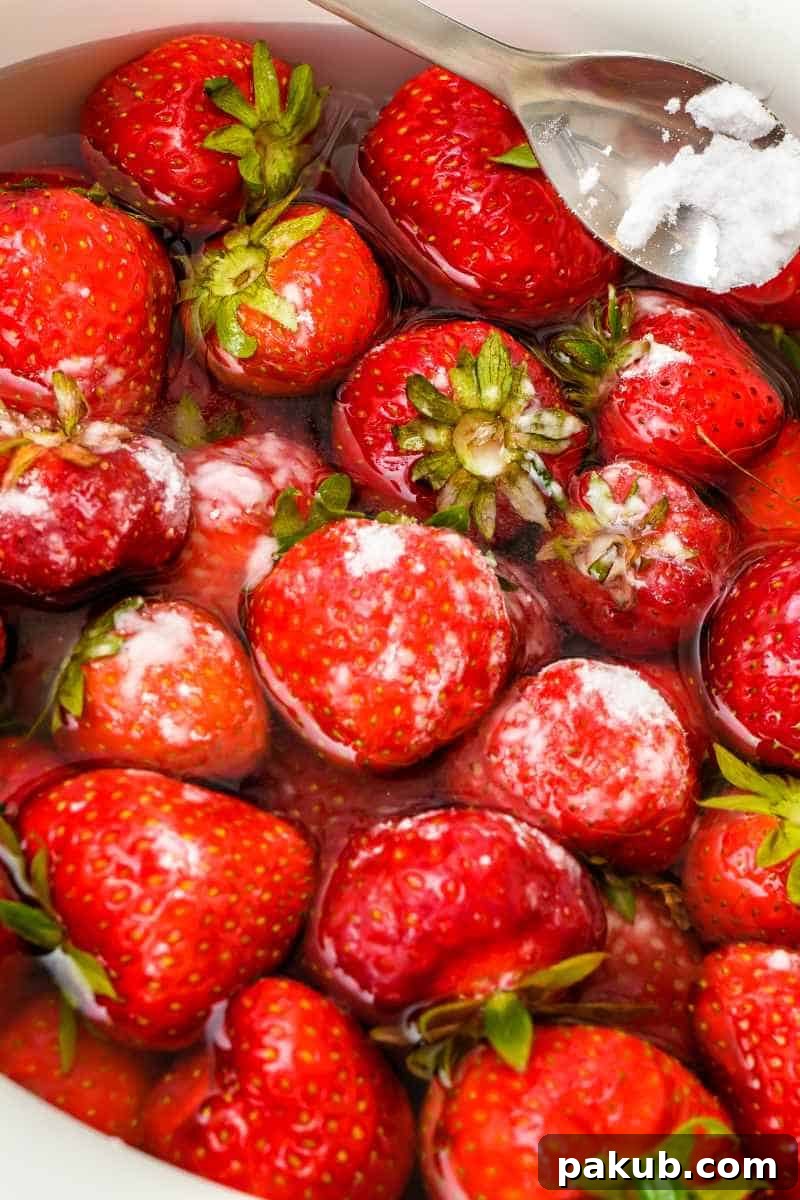
Fill your large bowl with approximately 3-4 cups of cold water. Add 1 cup of white vinegar and 1 tablespoon of baking soda to the water. Gently stir the solution until the baking soda mostly dissolves. Don’t worry if there’s a slight fizzing action when the baking soda is added to the vinegar-water mixture; it’s a natural reaction as the acid and base interact.
3. The Soaking Process
Carefully add your berries to the prepared cleaning solution. Ensure that all the berries are submerged. If you have a large quantity, you might need to clean them in batches. Allow the berries to soak for 5 minutes. For heavily soiled or pesticide-laden berries, you can extend the soaking time to up to 10-15 minutes. However, avoid soaking them for longer than 15 minutes, as over-soaking can cause the berries to absorb too much water, potentially affecting their texture and leading to a drier, less flavorful fruit or even hastening spoilage.
4. Thorough Rinsing
Once the soaking time is complete, carefully drain the berries using a colander. Rinse them thoroughly under cold, running water for at least 30-60 seconds. This step is crucial to remove any residual cleaning solution, ensuring your berries taste purely of their natural sweetness without any hint of vinegar or baking soda. Make sure to gently move the berries around in the colander to allow the water to reach all surfaces.
5. Essential Drying Techniques
This is arguably the most critical step for extending the shelf life of your berries after washing. Moisture is the enemy of fresh berries, encouraging mold growth and spoilage. Do not skip this!
- Paper Towel Method: Gently spread the rinsed berries in a single layer on several sheets of paper towels or a clean, absorbent kitchen towel. Pat them dry very gently. Repeat with fresh paper towels if necessary until they are completely dry to the touch.
- Salad Spinner Method: For delicate berries like raspberries, a salad spinner can be a game-changer. Place a small amount of berries in the spinner, making sure not to overcrowd it. Spin gently until the excess water is removed.
- Air Drying: If you have time, you can also spread the berries in a single layer on a clean towel or baking sheet lined with paper towels and allow them to air dry at room temperature for an hour or two, rotating them occasionally.
Ensure your berries are absolutely dry before moving on to storage. Any remaining moisture will drastically shorten their shelf life.
Beyond Cleaning: Mastering Berry Storage for Peak Freshness
You’ve put in the effort to thoroughly clean your berries; now let’s ensure they stay fresh and delicious for as long as possible. Proper storage is just as important as proper cleaning.
The Golden Rule: Dry Before Storing
As mentioned, moisture is the enemy. Even a tiny bit of dampness can lead to mold and spoilage. Ensure your berries are completely dry before putting them away. This step cannot be overemphasized!
Optimal Storage in the Refrigerator
Once dry, transfer your berries to an airtight container lined with a fresh paper towel. The paper towel will absorb any condensation, helping to keep the berries dry. Avoid overcrowding; ideally, store them in a single layer or in shallow layers to prevent crushing and promote air circulation. Seal the container and place it in the crisper drawer of your refrigerator. This method can help keep your cleaned berries fresh for up to a week, sometimes even longer for sturdier berries like blueberries.
Freezing Berries for Long-Term Enjoyment
If you have an abundance of berries or want to enjoy them beyond their fresh shelf life, freezing is an excellent option.
- After washing and thoroughly drying your berries, spread them in a single layer on a baking sheet lined with parchment paper.
- Place the baking sheet in the freezer for 2-3 hours, or until the berries are completely frozen solid. This prevents them from clumping together.
- Once frozen, transfer the berries to freezer-safe bags or containers. Remove as much air as possible from the bags to prevent freezer burn.
- Label with the date and store in the freezer for up to 6-12 months.
Frozen berries are perfect for smoothies, baking, jams, or sauces, allowing you to savor berry season all year round!
Frequently Asked Questions About Cleaning Berries
Can I use this method for other fruits and vegetables?
Absolutely! This baking soda and vinegar method is highly versatile. You can effectively use it to clean a wide range of fruits and vegetables, especially those with delicate skins or irregular surfaces that tend to harbor dirt and pesticides. Think grapes, apples, bell peppers, leafy greens, and even root vegetables. Just adjust the soaking time based on the fruit or vegetable’s sturdiness; delicate items might require less soaking time.
What kind of vinegar should I use?
For this cleaning solution, it’s best to use plain white distilled vinegar. It has a neutral flavor profile compared to other vinegars like apple cider vinegar or balsamic, ensuring it won’t impart any unwanted taste to your berries. Its acidity is also consistent and effective for cleaning purposes.
How long can I soak my berries?
A soak of 5 minutes is usually sufficient to do the trick, especially for lightly soiled berries. However, you can extend the soaking time to up to 10-15 minutes if you feel your berries require a deeper clean or if they are particularly resilient, like blueberries. It is crucial not to over-soak the berries for more than 15 minutes, as prolonged exposure to water can cause them to become waterlogged, leading to a mushy texture and potentially reducing their flavor and accelerating spoilage.
Will this method affect the taste of my berries?
No, not if done correctly! The key is the thorough rinsing step after the soak. Rinsing the berries generously under cold, running water will wash away all traces of the baking soda and vinegar solution. Your berries will taste fresh, clean, and exactly as nature intended – sweet and delicious, without any lingering vinegary or soapy flavor.
Does this apply to organic berries too?
Yes, even organic berries can benefit from this cleaning method! While organic produce is grown without synthetic pesticides, it can still harbor dirt, bacteria from the soil, tiny insects, or other environmental contaminants. Therefore, giving your organic berries a good wash with the baking soda and vinegar solution is still a wise practice to ensure they are as clean and safe as possible before consumption.
Watch the Berry Cleaning & Storage Video Guide
For a visual demonstration of how to perfectly wash and store your berries to keep them fresh longer, check out this helpful video:
Conclusion: Enjoy Berry Season with Confidence
Say goodbye to worries about hidden nasties on your berries! With this simple, natural, and incredibly effective cleaning hack, you can enjoy the bounty of berry season with complete confidence. No longer will you have to wonder if a quick rinse was truly enough. This easy-to-follow method ensures that your strawberries, blueberries, raspberries, and blackberries are not only free from pesticides, dirt, and bacteria but also stay fresh and delicious for longer.
Adopting this practice into your routine is a small step that yields significant benefits for your health and the longevity of your fresh produce. So go ahead, stock up on your favorite berries, apply this trusty hack, and savor every bite of these amazing fruits. Your taste buds and your body will thank you!
This article was researched and written by Navya Khetarpal.