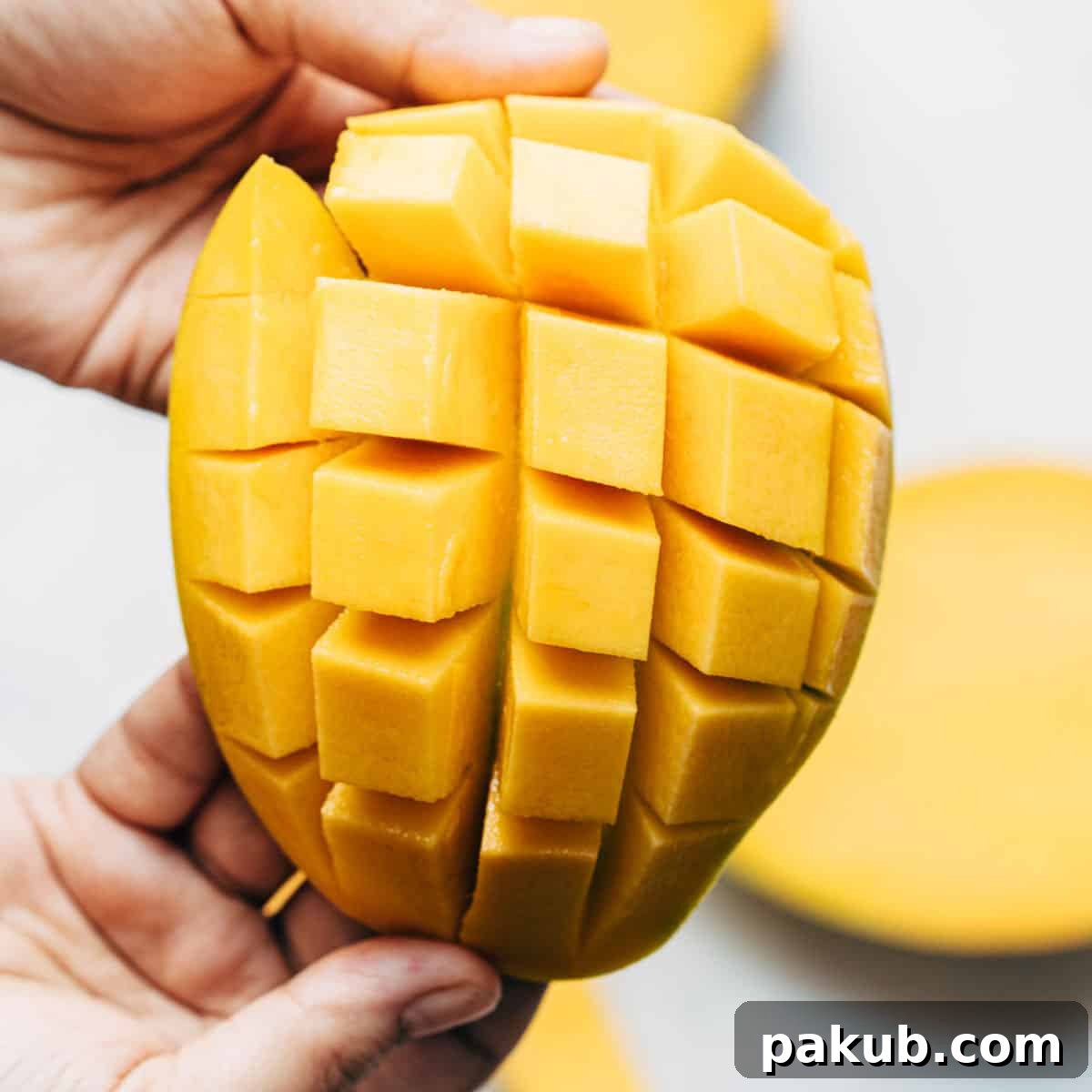
Embark on a culinary adventure as we guide you through the effortless art of cutting a mango like a seasoned chef! This comprehensive, step-by-step visual guide, complete with high-quality pictures, will transform your mango experience. Plus, get ready to explore a vibrant collection of irresistible mango recipes to make the most of your perfectly cut fruit.
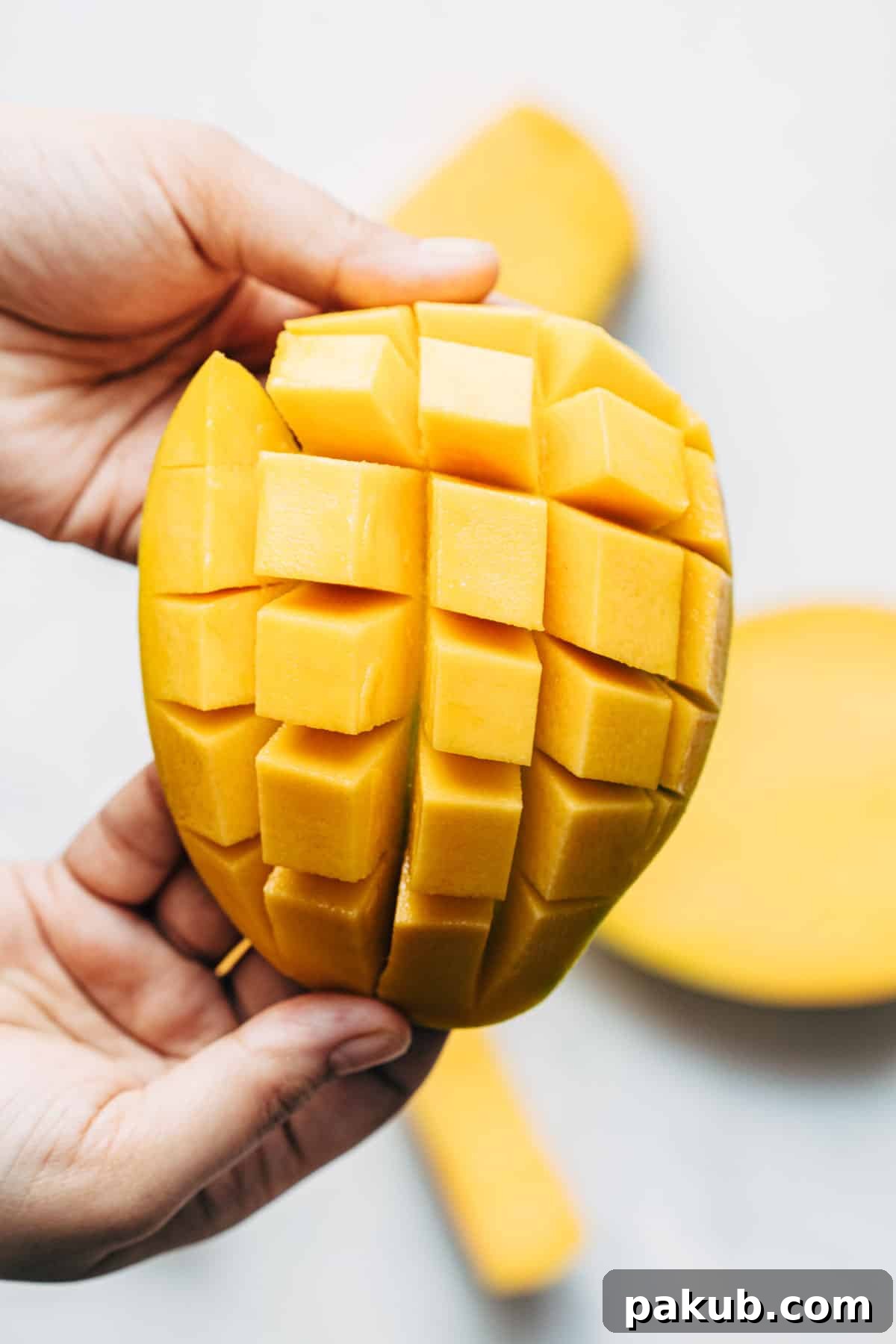
Universally celebrated as the “King of Fruits,” the mango truly lives up to its regal title. Its succulent sweetness, juicy texture, and aromatic tropical flavor make it an unparalleled delight, especially during the warm summer months. There’s nothing quite like indulging in a chilled, perfectly ripe mango, savoring each bite as its golden juices drip down your chin – a pure, unadulterated pleasure that makes life’s simple moments incredibly sweet.
However, we understand that the sheer joy of biting into a mango can often be preceded by a common challenge: cutting it. Many struggle with this tropical fruit, frequently ending up with a pulpy, somewhat messy experience rather than neat, appealing pieces. If you’ve ever felt intimidated by its unique pit or slippery skin, fret no more! You’ve come to the right place. In this detailed article, we will equip you with the knowledge and techniques to confidently cut a mango like a professional, ensuring every slice is a masterpiece.
Quick Walk Through: Mastering Mango Cutting
- How to Cut a Ripe Mango
- Method #1: Cutting a Ripe Mango Without Peeling
- Method #2: Cutting a Ripe Mango After Peeling
- Expert Tips for Cutting a Ripe Mango
- How to Cut a Raw Mango
- Popular Varieties of Mangoes
- Delectable Mango Recipes
How to Cut a Ripe Mango
Cutting a ripe mango can be a delightful experience when you know the right approach. Ripe mangoes are characterized by their vibrant color, a slight give when gently squeezed, and a sweet, fragrant aroma. While there are a few ways to tackle this juicy fruit, we’ll focus on two primary methods that yield excellent results, whether you prefer to peel first or slice straight through.
Method #1: Cutting a Ripe Mango Without Peeling (The “Hedgehog” or “Cheek” Method)
This popular method is perfect for direct consumption or when you need neat cubes for salads, salsas, or desserts. It’s often referred to as the “hedgehog” method due to the appearance of the scored flesh.
Step 01: Prepare Your Mango
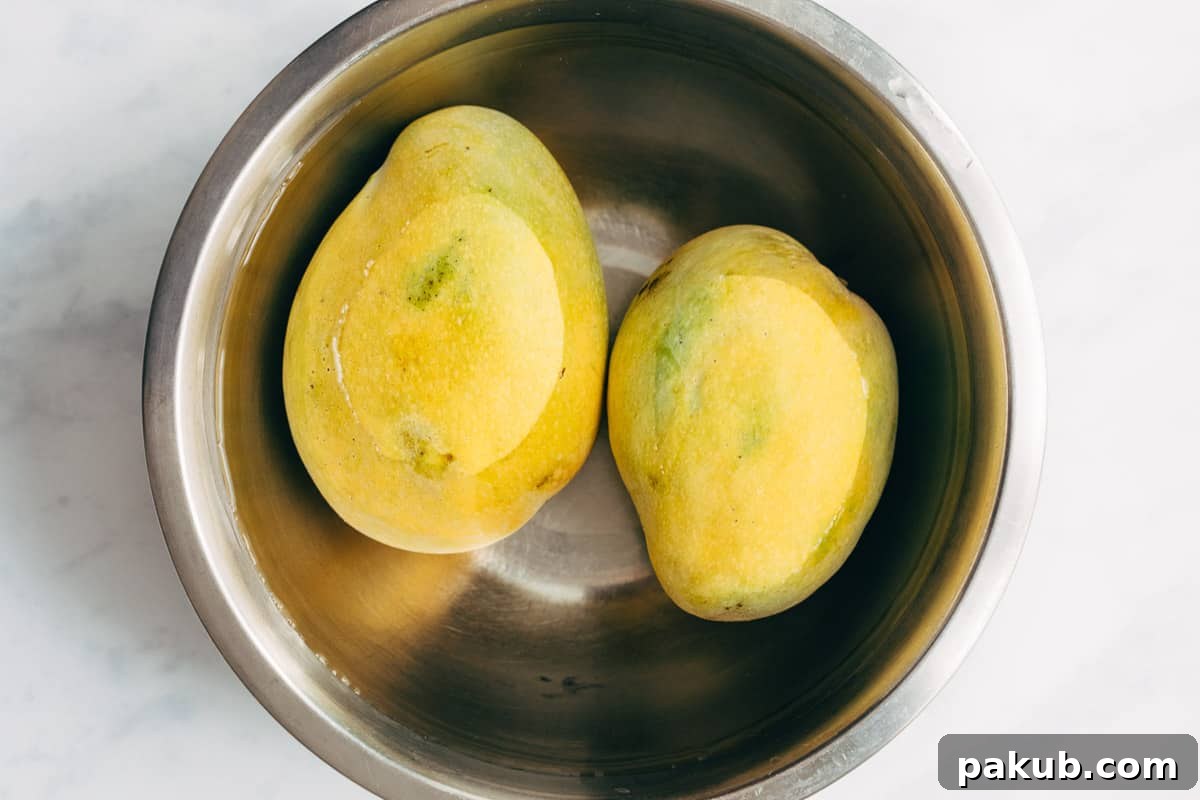
Begin by thoroughly washing your mango under cool running water, gently rubbing off any surface dirt or residue. For an enhanced experience, consider soaking mangoes in a bowl of water for 15-30 minutes. This traditional practice is believed to help reduce the fruit’s natural heat and sap, resulting in a more pleasant flavor and cooler temperature. After soaking, remove the mangoes, pat them dry, and they are ready to be cut and enjoyed immediately, or refrigerated for a chilled treat.
Step 02: Remove the Stem End
Carefully use a small paring knife to slice off a thin circular section around the stem. This creates a stable base and removes the fibrous, less palatable part of the fruit, preparing it for the main cuts.
Step 03: Locate the Pit and Slice the Cheeks
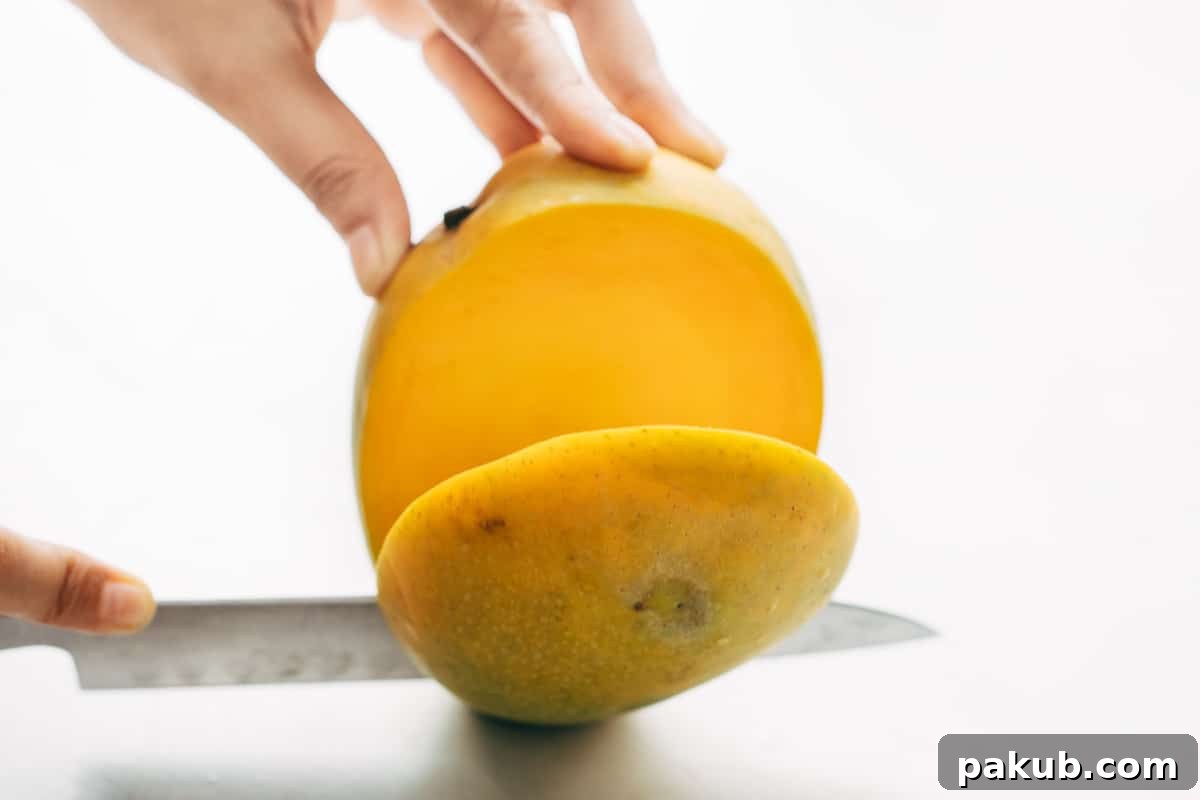
Hold the mango upright on your cutting board, with the stem end facing up. Visualize the large, flat pit running through the center of the mango. Position your knife approximately half an inch from the center line (where you estimate the pit to be) on one side. Carefully slice downwards, following the contour of the pit, to remove one “cheek” of the mango. Repeat this process on the other side to slice off the second main cheek. Aim to get as close to the pit as possible without cutting into it, maximizing the amount of juicy fruit you retrieve. The slight resistance from the pit will guide your knife.
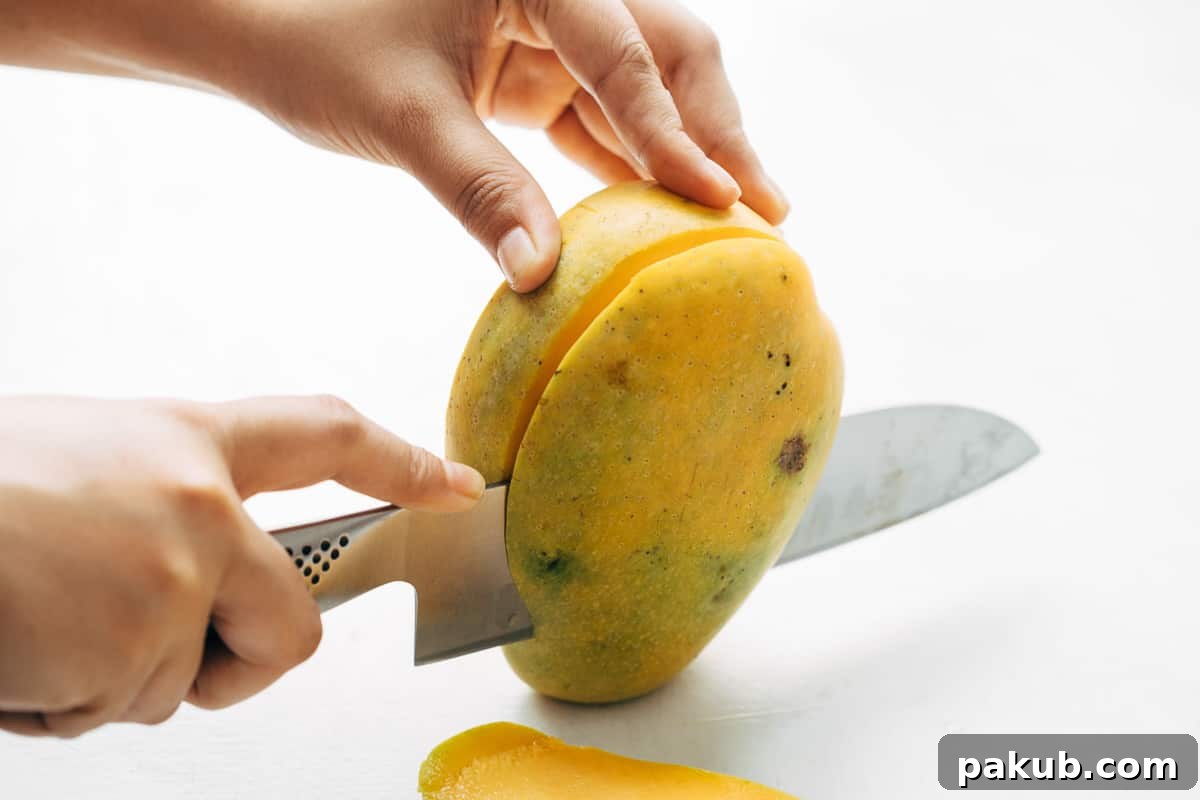
Step 04: Extract Remaining Fruit from the Sides
Once the two main cheeks are removed, you’ll be left with the central pit section. Don’t waste the precious fruit still clinging to its sides! Lay the pit section flat and carefully slice off any remaining fruit in wedge-shaped segments from the narrower sides of the pit. This ensures you get every bit of the delicious mango flesh.
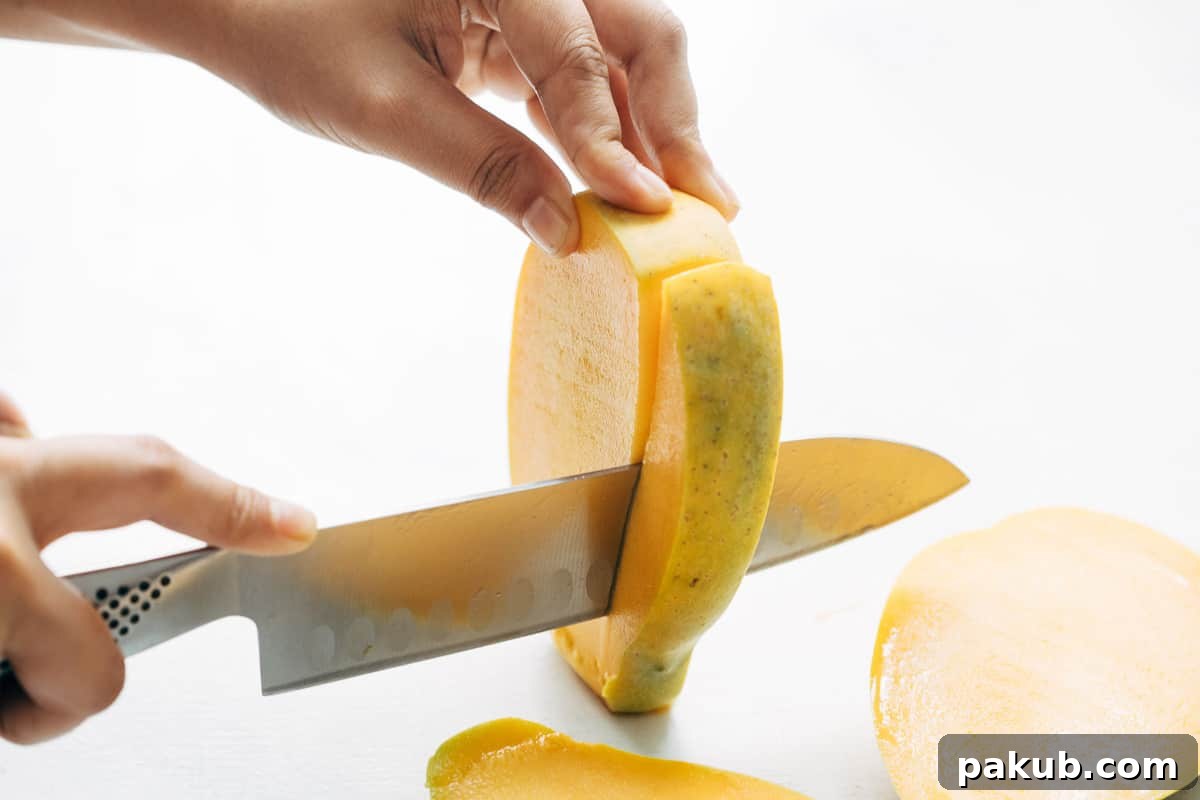
Step 05: Prepare the Cheeks for Dicing or Wedges
Take one of the mango cheeks you sliced earlier. You can either make straight vertical cuts to create long wedges, or proceed to dice it. If dicing, hold the cheek firmly in your palm (skin-side down). Use a paring knife to make parallel vertical cuts into the flesh, being careful not to cut through the skin.
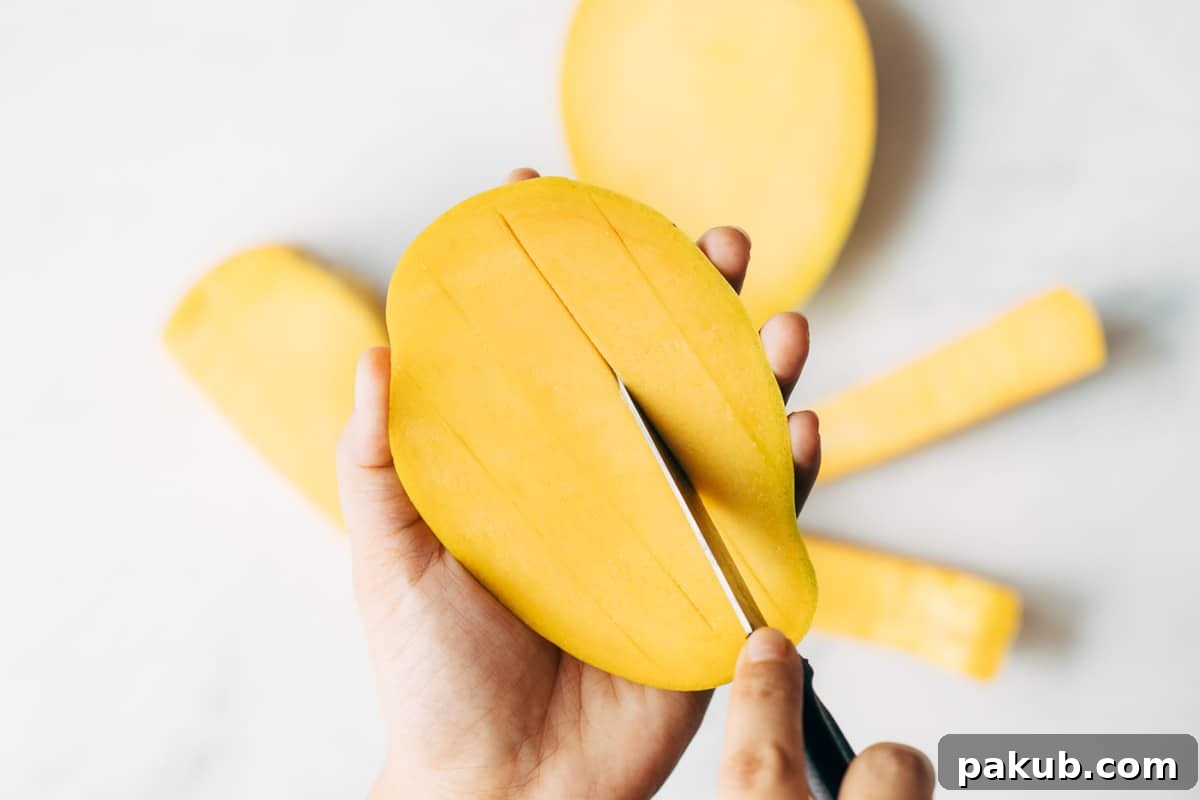
Step 06: Create Dices or Scoop Out Flesh
Following the vertical cuts from Step 05, rotate the mango cheek and make horizontal cuts, forming a grid pattern. Again, be careful not to cut through the skin. Now, you can gently push the skin from the back to “pop” out the diced mango, resembling a hedgehog. Alternatively, use a spoon to scoop out the perfectly formed mango dices directly from the skin. Repeat this process for the other cheek and any wedges you cut from the sides.
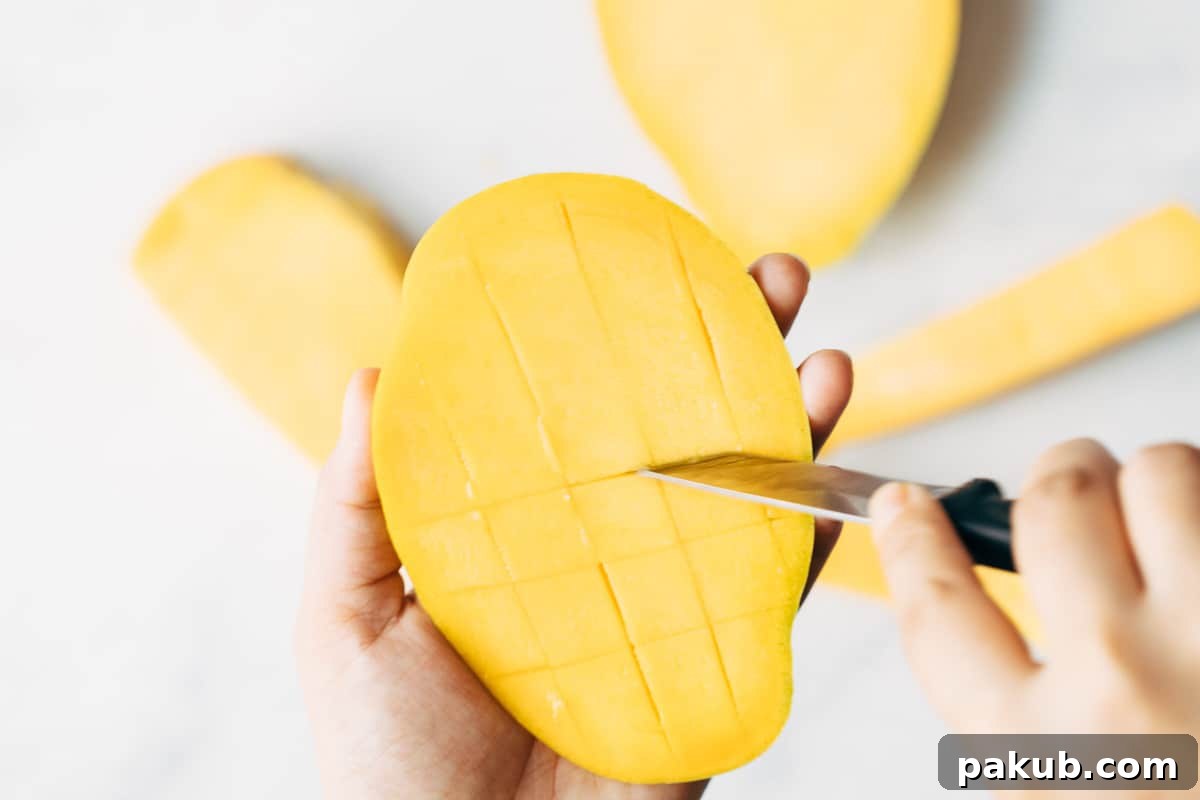
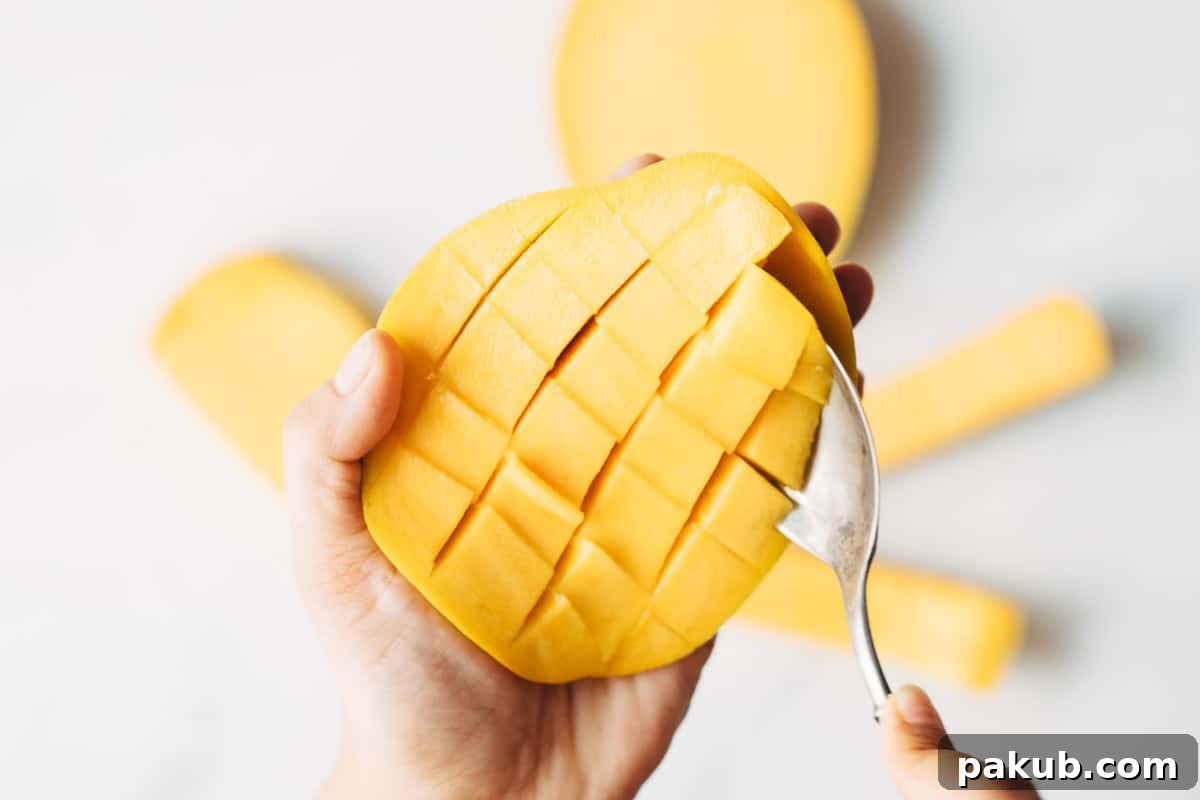
Optional – The “Glass Method” for Speedy Scoop-Out: For an even quicker way to extract the pulp from the cheeks, especially for softer mangoes, take a clean, sharp-edged glass. Hold one mango cheek firmly, skin-side out, in your palm. Align the rim of the glass at the lower edge where the flesh meets the skin. Gently but firmly slide the glass upwards along the curve of the mango cheek, scooping the entire semi-oval pulp out in one smooth motion. The whole segment of mango flesh will neatly fall right into the glass. Repeat for the other cheek.
Voila! Your perfectly cut mango pieces are now ready to be enjoyed as a snack, added to your favorite dishes, or served as a beautiful garnish!
Method #2: Cutting a Ripe Mango After Peeling
This method is ideal when you need to handle the mango entirely peeled, perhaps for blending into smoothies, purées, or preparing larger chunks. It requires a slightly firmer ripe mango to minimize slipperiness and waste.
Important Tip: Selecting Your Mango for Peeling
For this method, it’s crucial to select mangoes that are ripe but still quite firm to the touch. Avoid overly soft mangoes or those with dents, as they can be challenging to peel without creating a pulpy mess. A firm mango will hold its shape better during peeling and cutting.
Step 01: Gently Peel the Mango Skin
With a sharp paring knife or a vegetable peeler, carefully remove the skin. Start at the top (stem end) and work your way down in long, smooth strokes. The key here is to apply gentle, consistent pressure to remove only the thin skin, without digging deep into the precious mango flesh. Treat it with care; you’re not a superhero trying to rip it apart! Excessive pressure might cause the slippery fruit to fly out of your hand or needlessly squeeze out delicious juices.
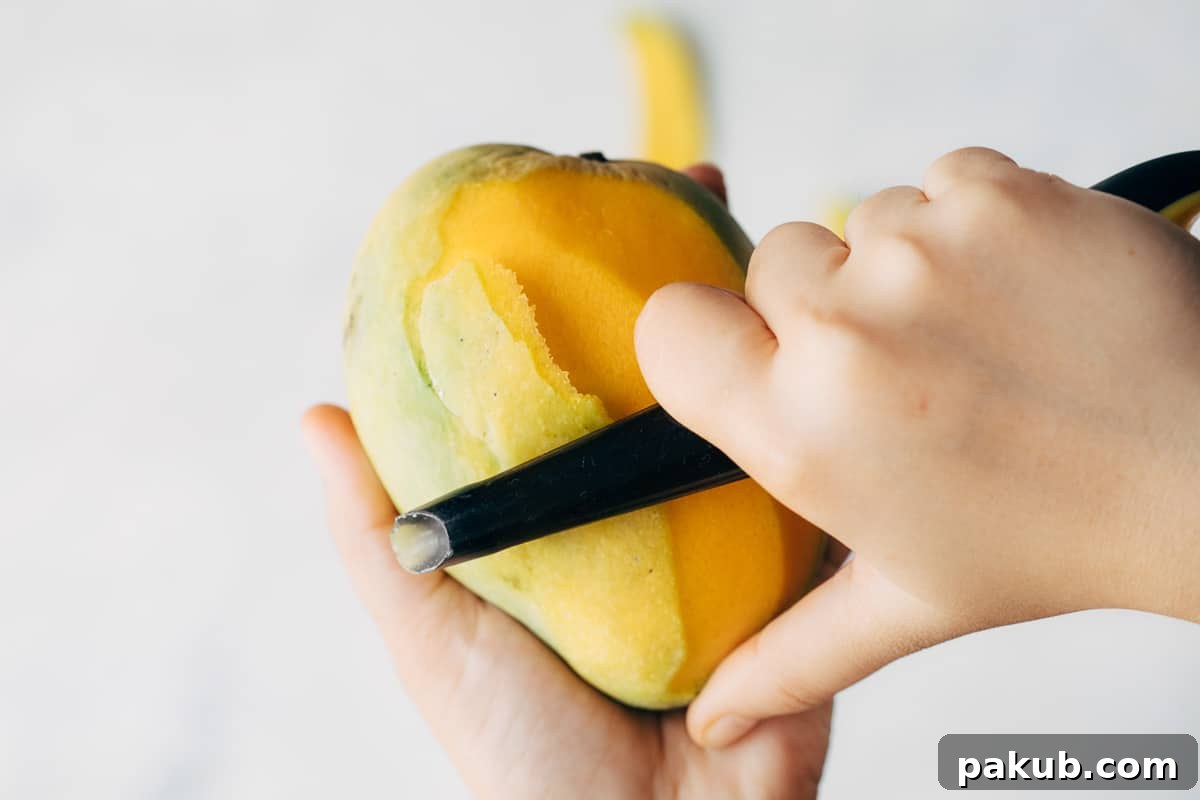
Step 02: Slice the Cheeks from the Peeled Mango
Once peeled, stand the mango upright on your cutting board. The process for cutting the cheeks is identical to Method #1. Visualize the flat, central pit and carefully slice off the two large “cheeks” on either side, getting as close to the pit as possible without cutting into it. Then, trim any remaining flesh from the sides of the pit.
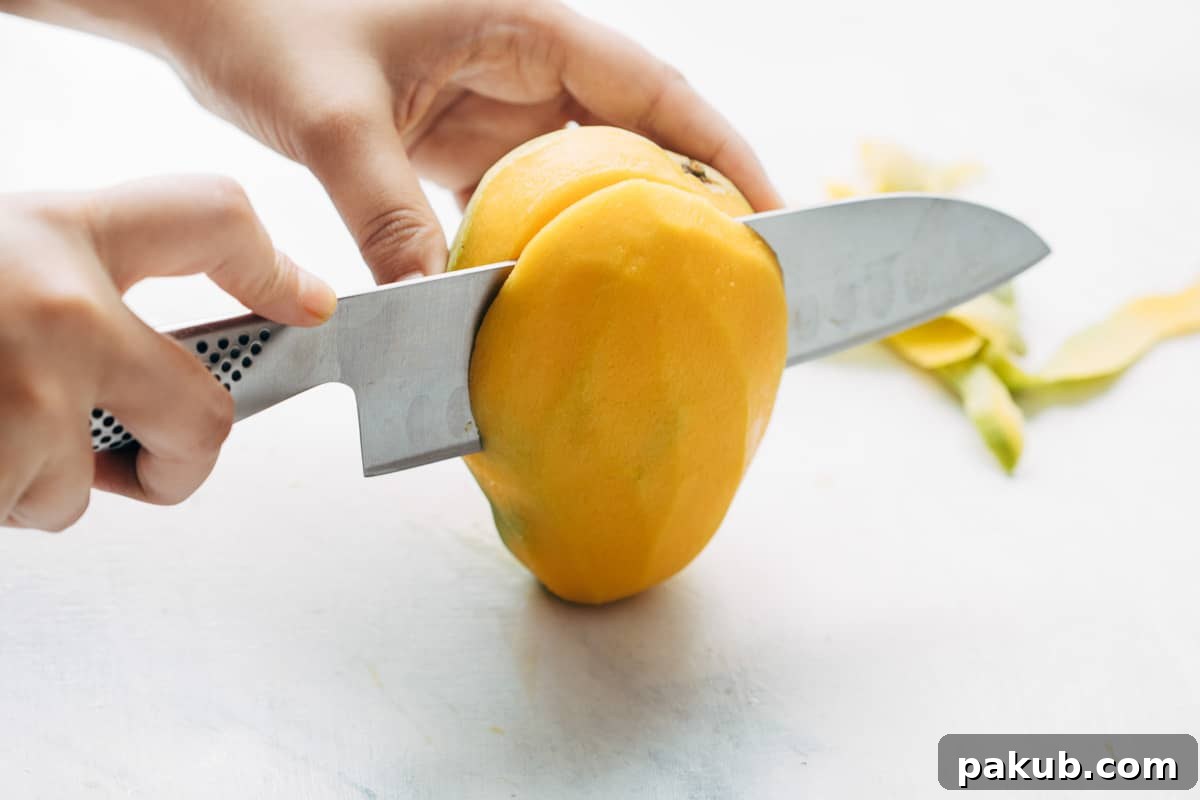
Step 03: Dice or Wedge as Desired
Now that you have the peeled mango cheeks and any side segments, you can easily cut them into your desired shape. For small, uniform dices, lay a cheek flat and make delicate horizontal and vertical cuts, forming a neat grid pattern. For elegant wedges, simply make parallel vertical cuts across the cheek, adjusting the thickness to your preference. This method offers excellent control and presentation for peeled mango pieces.
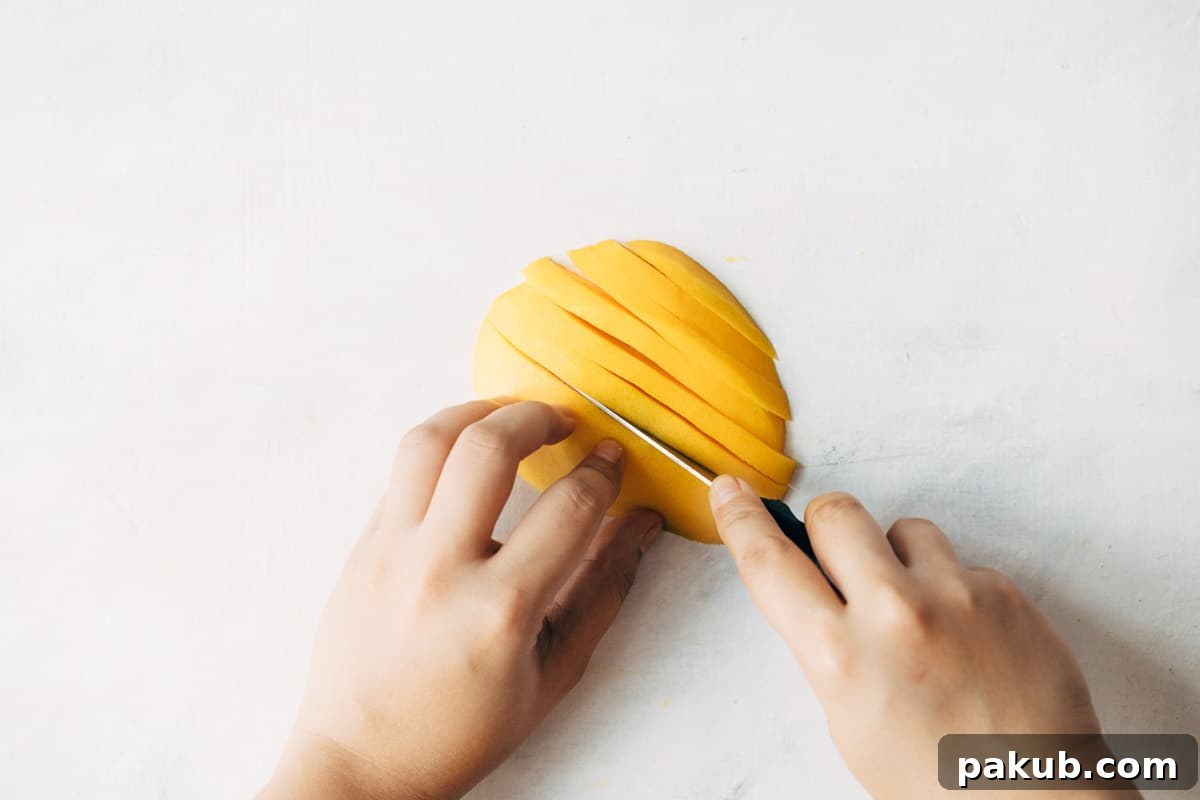
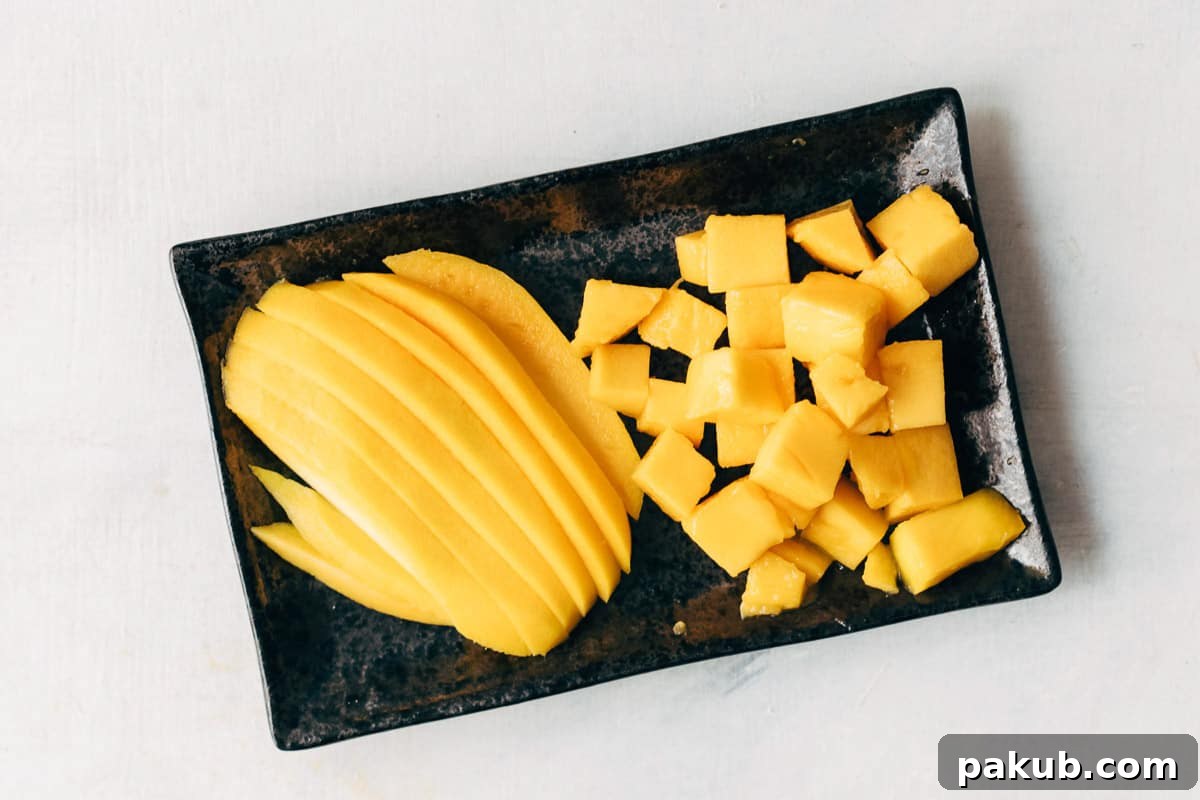
Expert Tips for Cutting a Ripe Mango
- Handle with Care During Peeling: Whether using a peeler or a knife, always peel the mango skin very gently and lightly. Avoid applying too much pressure or slicing too deep into the flesh. Being overly aggressive can result in significant fruit waste, as ripe mangoes are soft and easily damaged.
- Choose the Right Mango: For easier cutting and less mess, select mangoes that are ripe but still firm. They should have a slight give when gently pressed, but not feel mushy or have noticeable dents in the skin. A firm texture provides better control during slicing.
- Maintain a Gentle but Firm Grip: While peeling or slicing, hold the fruit delicately but firmly. Mangoes can be surprisingly slippery, especially when very ripe. Applying too much pressure might cause the fruit to slip from your hand and end up on the floor. A steady, controlled grip is key.
- Use a Sharp Knife: A sharp knife is your best friend when cutting any fruit, especially mangoes. A dull knife requires more force, increasing the risk of slips and producing jagged, uneven cuts. Invest in a good quality, sharp paring knife or a chef’s knife for precise results.
- Prevent Stains and Stickiness: Mango juice can be quite sticky and may stain surfaces. Work on a cutting board that can be easily cleaned, and have a damp cloth or paper towels nearby to wipe your hands and the knife as you go.
How to Cut a Raw Mango
While ripe mangoes are adored for their sweetness, raw (underripe) mangoes offer a completely different, yet equally delightful, culinary experience. Characterized by their vibrant green color and firm texture, similar to an apple, raw mangoes boast a distinct tart and sometimes sour flavor profile. Some varieties, like the elongated, pointed Totapuri from South India, offer a unique sweet-sour balance. Raw mangoes are incredibly versatile, used extensively in pickles, chutneys, savory dishes, and even enjoyed simply sliced with a sprinkle of salt and chili powder.
Step 01: Prepare and Peel the Raw Mango
Start by washing the raw mango thoroughly. Unlike ripe mangoes, the skin of a raw mango is typically tougher and often consumed, especially in some preparations. However, for most recipes, peeling is preferred. To peel a raw mango like a pro (especially varieties like Totapuri), first, carefully cut off the stem end. Then, place a sharp knife diagonally at about a 60-degree angle near the cut end. Begin to spin the mango slowly while guiding the knife to peel the skin off in a continuous, elegant ribbon. This method is not only efficient but also allows you to roll up the peeled skin into a decorative rose flower, perfect for garnishing salads or plates – because cooking truly is an art!
Step 02: Slice the Cheeks and Side Segments
Once peeled, position the mango on your cutting board. Similar to ripe mangoes, visualize the central pit. Carefully slice down both sides to remove the two main “cheeks.” Then, lay the pit flat and trim any remaining flesh from its narrower sides in wedge shapes. Raw mango flesh is much firmer than ripe, making these cuts cleaner and easier to manage.
Step 03: Cut into Desired Shapes
With the cheeks and side segments separated, you can now cut the raw mango into your desired shape. For salads or chutneys, thin slices or small dices are often preferred. For pickles, larger, more robust chunks might be ideal. The firm texture of raw mango allows for very precise cuts, making it easy to achieve uniform pieces for any recipe.
Recipe Suggestion: Raw Mango and Turmeric Rice is a vibrant, flavorful dish that perfectly utilizes the tanginess of raw mangoes, creating a delightful culinary experience.
Popular Varieties of Mangoes Around the World
Mangoes are not just a fruit; they are a cultural icon in many parts of the world, especially in India, which boasts an incredible diversity of varieties. While thousands of mango types exist, about a dozen stand out for their exceptional flavor, juicy texture, and aromatic appeal, earning them a coveted spot on connoisseurs’ lists. These varieties are celebrated for their suitability for fresh eating, while others are prized for their versatility in cooking – transforming into pickles, chutneys, vibrant dips, rich curries, or simply enjoyed with a sprinkle of salt and red chili powder.
The **Alphonso**, often hailed as the “King of Mangoes” in India, is arguably the most famous and highly sought-after variety. Known locally as Ratnagiri, Devgarh, or Hapus, it is predominantly cultivated in the Konkan region of Maharashtra. Its unparalleled creamy texture, rich, non-fibrous pulp, and distinct sweet flavor make it an unbeatable choice, justifying its premium price, which can range significantly depending on the season and region. Its exquisite taste is the primary reason why Indians revere it as the supreme fruit.
Beyond the Alphonso, India offers a treasure trove of other esteemed varieties:
- Raspuri and Badami (Karnataka Alphonso): From the southern state of Karnataka, these varieties are known for their sweet and tangy flavor, often used in pulps and juices. Badami, with its smooth, fiberless flesh, is a close contender to the Alphonso.
- Chausa: Originating from North India, particularly Uttar Pradesh, Chausa mangoes are incredibly sweet and aromatic with a distinct honey-like flavor. They are best enjoyed when fully ripe, often sucked directly from the fruit.
- Dasheri and Langra: Also from Uttar Pradesh, Dasheri mangoes are long and oval-shaped with a sweet, fragrant pulp, while Langra mangoes are known for their slightly sour yet delicious flavor and greenish-yellow skin even when ripe.
- Kesar: Hailing from Gujarat, the Kesar mango is celebrated for its distinctive aroma and vibrant saffron-colored pulp, making it a favorite for desserts and milkshakes.
- Neelam: Predominantly grown in Hyderabad, Neelam mangoes are available later in the season. They are smaller, with a pleasant aroma and slightly acidic, sweet taste.
- Himsagar: From Bengal, Himsagar is revered for its intensely sweet taste and rich, aromatic pulp, considered one of the best for fresh consumption in its region.
Beyond India, varieties like the **Tommy Atkins** and **Kent** are widely cultivated globally, known for their commercial viability, longer shelf life, and mild, sweet flavors. The **Ataúlfo** (also known as Honey or Champagne mango) from Mexico offers a creamy, buttery texture with a rich, sweet taste and very little fiber. Exploring these diverse varieties is a journey through different flavor profiles, textures, and aromas, each offering a unique mango experience.
Delectable Mango Recipes to Savor
As passionate admirers of mangoes, we believe that the joy of this fruit extends far beyond just eating it fresh. Every season presents an exciting opportunity to transform mangoes into a myriad of delicious creations. Whether you have an abundance of ripe, sweet mangoes or a tangy raw variety, there’s a perfect recipe waiting for you. Here are some of our absolute favorite mango recipes that you absolutely must try this year to experience the versatility and magic of this incredible fruit:
- Luxurious Mango Cheesecake Mousse
- Zesty Mango Cilantro Salad Dressing
- Authentic Mangalorean Ripe Mango Curry
- Creamy Homemade Mango Ice Cream
- Refreshing Grilled Chicken Mango Salad
- Exotic Thai Peanut Mango Quinoa Salad
- Delicate No Bake Mango Cheesecake Mousse Jars
- Tangy Mango Mustard Dipping Sauce
- Fresh Mango Bell Pepper Spring Rolls
- Nutritious Healthy Peach Mango Smoothie
- Flavorful Fish Tacos with Mango Salsa
- Light Prawn and Mango Salad with Cucumber Noodles
- Savory Raw Mango Turmeric Brown Rice
- Spicy Mango Jalapeno Fizzy Cocktail
- Energizing Mango Chia Seed Breakfast Drink
Mastering the art of cutting a mango is a skill that truly enhances the enjoyment of this magnificent fruit. With the techniques and tips shared in this guide, you can confidently prepare both ripe and raw mangoes, transforming them from a challenging fruit into a culinary delight. Experiment with these methods, discover your favorite way to enjoy them, and dive into the endless possibilities that mangoes offer, from refreshing snacks to exotic dishes. Happy cutting, and even happier eating!