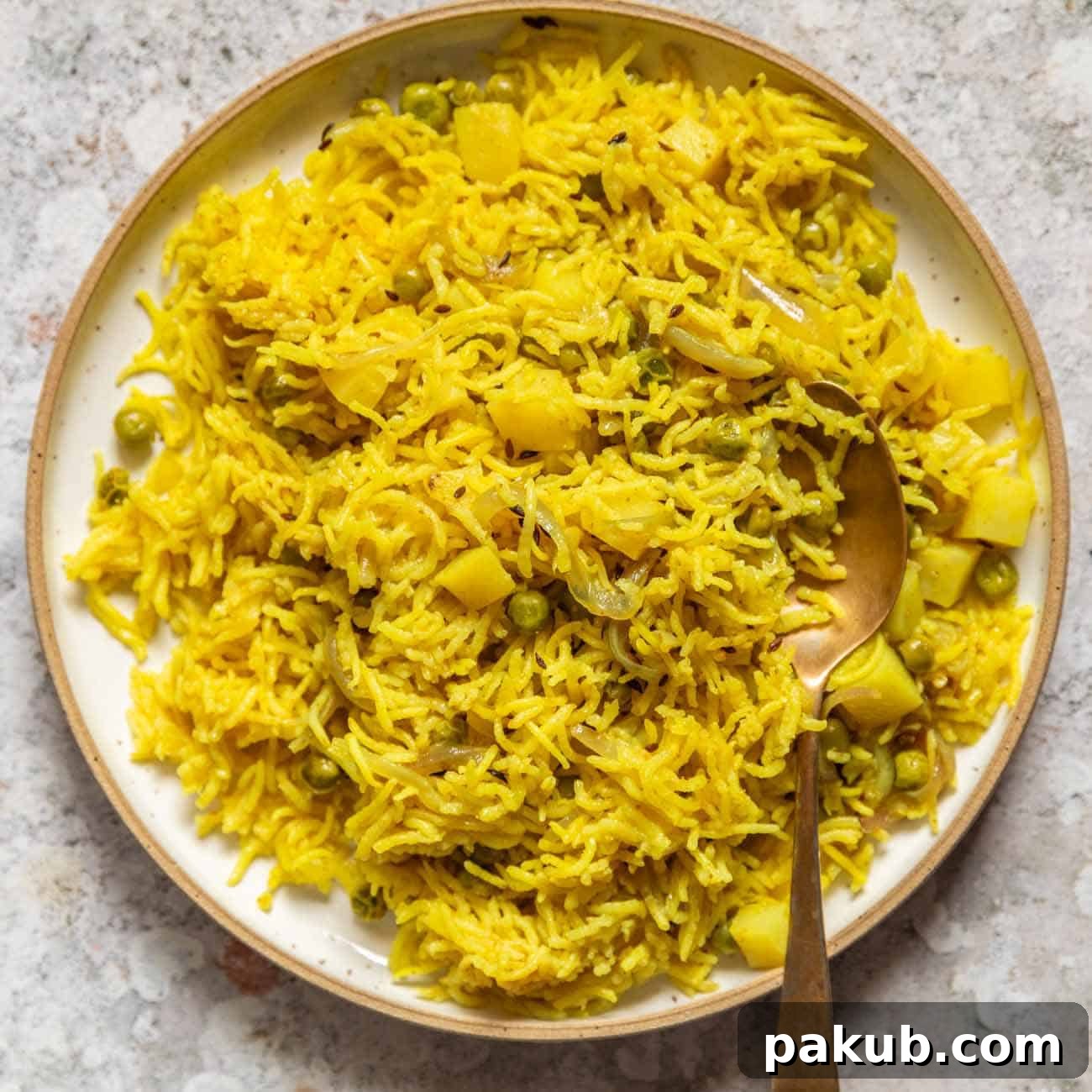
Tahari, often referred to as Tehri, is a celebrated one-pot rice dish that holds a special place in the hearts and homes of Uttar Pradesh, India. This simple yet profoundly satisfying vegetarian delight blends fragrant rice with an assortment of fresh winter vegetables like potatoes, green peas, and cauliflower, creating a meal that is both hearty and heartwarming. It’s the perfect culinary answer for those days when you seek a dish that is effortlessly prepared, deeply comforting, and utterly delicious.
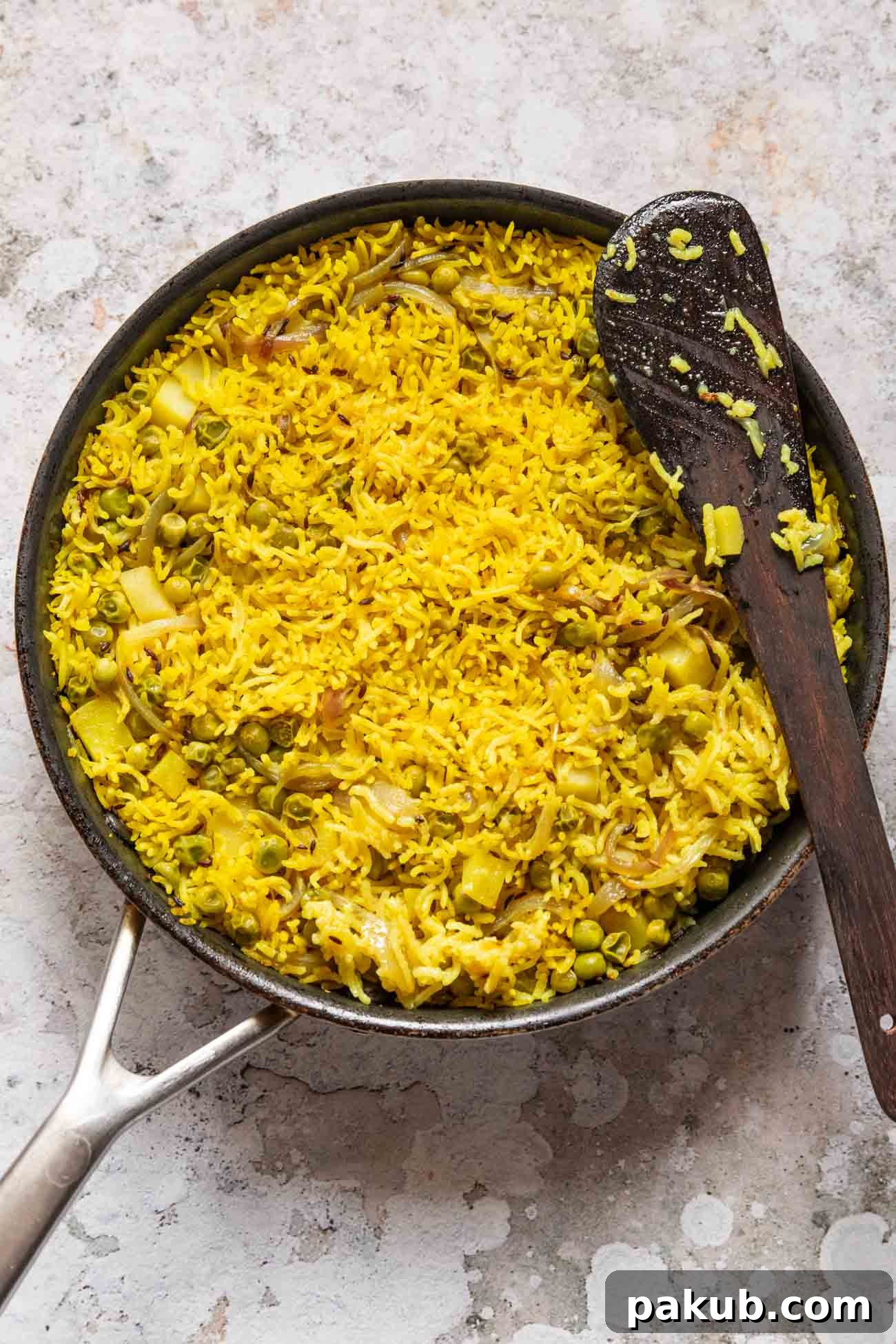
There’s a unique magic to dishes that evoke strong memories and a sense of home. For many, including myself, Tahari is one such dish. Growing up, the aroma of spices and simmering rice would often fill our home on weekends. After a substantial lunch, my mother would prepare Tahari for a light yet incredibly comforting dinner. This golden-hued rice dish, originating from the vibrant state of Uttar Pradesh in India, is a testament to the power of simplicity in cooking. It’s not just a recipe; it’s a cultural staple, a narrative of flavors, and a warm embrace in a bowl.
Tahari stands out in Indian cuisine for its straightforward preparation and profound flavors. Unlike its more elaborate cousins, biryani and pulao, Tahari embraces a minimalist approach without compromising on taste or texture. Its one-pot nature makes it an incredibly appealing option for busy weeknights, or a delightful treat when you simply crave something homemade and soul-satisfying. The harmonious blend of fragrant basmati rice, tender vegetables, and aromatic spices creates a symphony of flavors that is both inviting and deeply satisfying. This humble dish is incredibly versatile, adapting to whatever fresh produce is available, making it a sustainable and practical choice for any kitchen.
Beyond its ease of preparation, Tahari offers a wealth of benefits. For parents with picky eaters, it’s a brilliant way to sneak in extra vegetables, as their flavors meld seamlessly with the rice and spices. It travels exceptionally well, making it an excellent choice for school tiffins or office lunchboxes. Whether you’re returning from a long vacation yearning for familiar comforts or simply looking for a wholesome and quick meal, Tahari consistently delivers. Its rich texture and vibrant flavors are sure to become a beloved addition to your culinary repertoire.
The Essence of Tahari: A Culinary Journey from Uttar Pradesh
Tahari, or Tehri, is more than just rice and vegetables; it’s a celebration of seasonal produce and aromatic spices, deeply rooted in the culinary traditions of Uttar Pradesh. This region of northern India is known for its rich and diverse vegetarian cuisine, and Tahari epitomizes this heritage. While often compared to vegetable pulao, Tahari possesses its own distinct identity, characterized by its characteristic golden-yellow color (courtesy of turmeric) and a slightly different spice profile that leans towards earthy and comforting notes rather than overtly spicy ones.
The beauty of Tahari lies in its ability to transform simple ingredients into an extraordinary meal. The process of slow-cooking rice with spices and vegetables allows the flavors to meld beautifully, creating a dish where every grain of rice is infused with fragrant goodness. It’s a testament to the fact that you don’t need exotic ingredients or complex techniques to create something truly memorable. Tahari embodies the warmth of home cooking, making it a perfect meal for family gatherings or a quiet evening in.
Essential Ingredients for the Best Tahari
Crafting the perfect Tahari begins with selecting the right ingredients. Each component plays a vital role in building the dish’s distinct flavor profile and comforting texture. Here’s a detailed look at what you’ll need to create this amazing vegetarian delight:
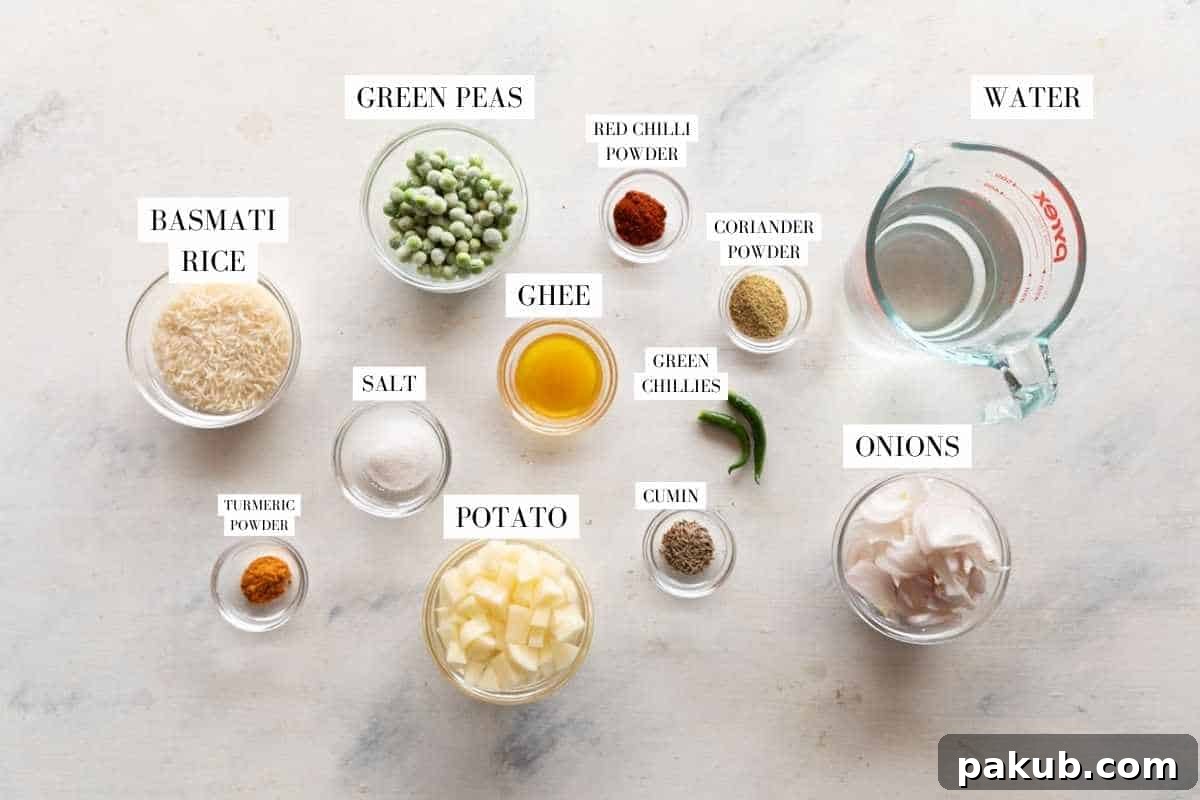
- Ghee (Clarified Butter): This is the secret ingredient that elevates Tahari from good to extraordinary. Cooking the dish in ghee imparts a rich, nutty flavor and a beautiful aroma that is traditionally associated with authentic Indian cooking. While you can substitute it with a neutral cooking oil for a vegan version, ghee truly delivers an unmatched depth of flavor and a silky texture to the rice.
- Aromatic Spices: Tahari relies on a select group of ground and whole spices to create its signature taste.
- Cumin Seeds (Jeera): These are typically added first to hot ghee, where they splutter and release a warm, earthy aroma, forming the aromatic base of the dish.
- Turmeric Powder: Essential for Tahari’s vibrant golden hue and its numerous health benefits, turmeric adds a subtle earthiness.
- Coriander Powder: Offering a mild, citrusy, and slightly sweet flavor, coriander powder adds depth and complexity to the spice blend.
- Chilli Powder (or Red Chilli Powder): This provides a gentle warmth and spiciness. Adjust the quantity according to your heat preference.
- Green Chillies: Fresh green chillies, slit or chopped, add a pungent, fresh heat that brightens the overall flavor profile. Their intensity can be adjusted based on preference.
- Optional but recommended: A pinch of garam masala can be added towards the end for an extra layer of warmth and complexity. Fresh ginger and garlic paste can also be incorporated during the initial sauté for a richer base.
- Onions: Sliced onions are sautéed until softened, forming a sweet and savory base that adds essential flavor and body to the dish. Their slight caramelization contributes to the overall depth.
- Fresh Vegetables: Tahari is a fantastic vehicle for seasonal vegetables. The original recipe often features:
- Potatoes: Cut into cubes, potatoes become tender and absorb the spices, adding a satisfying starchiness.
- Green Peas: Fresh or frozen green peas provide a burst of sweetness, color, and a pleasant texture.
- Other popular additions include cauliflower florets, diced carrots, green beans, and even bell peppers or tomatoes, especially in winter when these vegetables are at their freshest. Don’t hesitate to experiment with what’s in season!
- Rice: The choice of rice is crucial for the texture of Tahari.
- Basmati Rice: Known for its long grains, distinct aroma, and fluffy texture when cooked, basmati rice is the preferred choice for Tahari. Its grains remain separate and don’t clump together, making for an aesthetically pleasing and delicious dish.
- Any other good quality long-grain rice can also be used, but ensure it’s suitable for one-pot cooking to achieve the desired fluffy outcome.
- Salt: Essential for seasoning and enhancing all the flavors in the dish. Adjust to taste.
- Water: The correct water-to-rice ratio is critical for perfectly cooked, fluffy Tahari.
How to Make the Best Tahari: A Step-by-Step Guide
Creating a delicious one-pot Tahari is a straightforward process that yields incredibly rewarding results. Follow these steps to prepare a batch of perfectly flavored and fluffy rice:
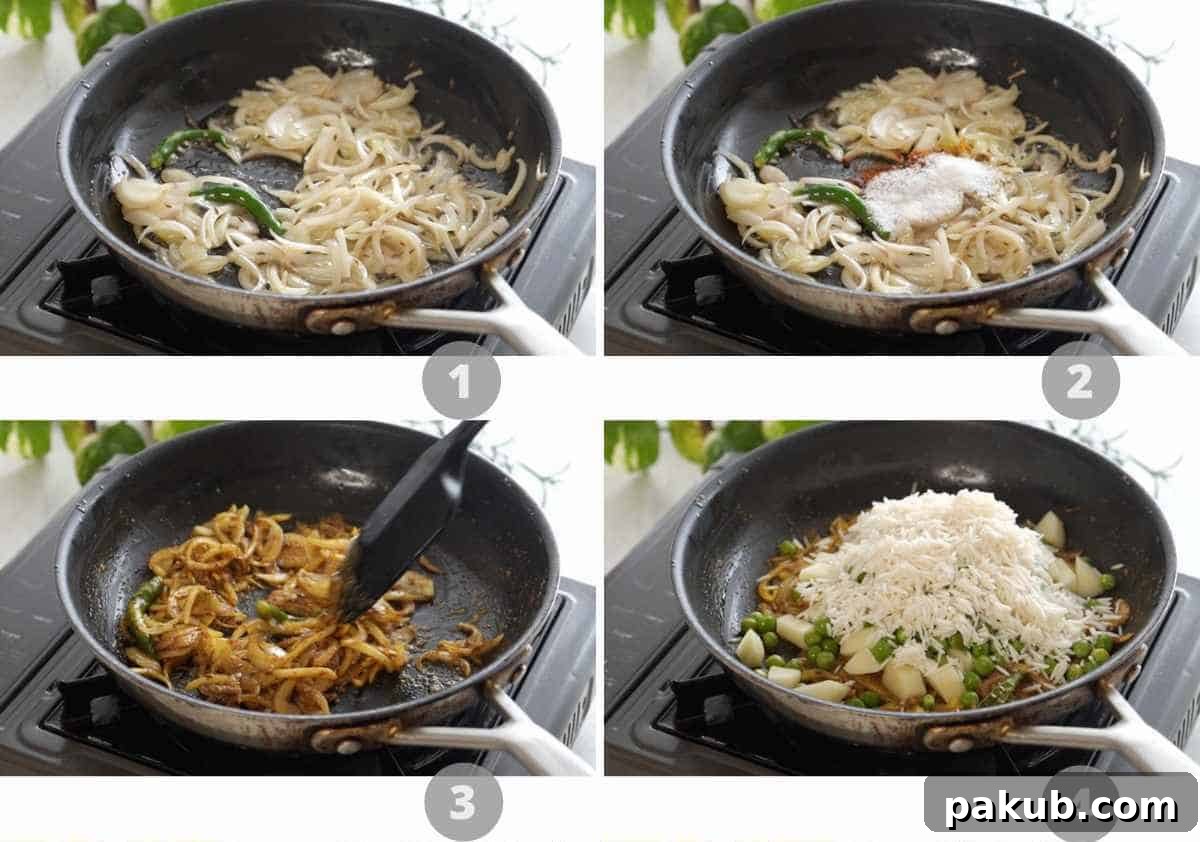
- Prepare Your Ingredients: Before you begin cooking, ensure all your vegetables are washed and chopped, onions are sliced, and spices are measured. Crucially, wash your basmati rice thoroughly under running water until the water runs clear, then soak it in fresh water for at least 15-20 minutes. This step is vital for achieving separate, fluffy grains and ensuring even cooking. After soaking, drain the rice completely.
- Heat the Ghee and Temper Spices: In a heavy-bottomed pan or Dutch oven, heat the ghee over a medium flame. Once the ghee is hot and shimmering, add the cumin seeds (jeera). Allow them to splutter and turn golden brown – this indicates they have released their aromatic oils and formed the flavor base for your Tahari. Be careful not to burn them.
- Sauté Aromatics: Immediately add the green chillies and sliced onions to the pan. Sauté the onions for about 1-2 minutes, stirring occasionally, until they soften and become translucent. You don’t need to caramelize them deeply for Tahari, just soften them enough to release their flavor.
- Add the Ground Spices: Reduce the flame to low. Add the coriander powder, turmeric powder, chilli powder, and salt. Stir continuously for about 30 seconds to a minute. This step, known as “bhunao,” allows the dry spices to toast lightly and release their full aroma without burning. Cook until the raw smell of the spices disappears.
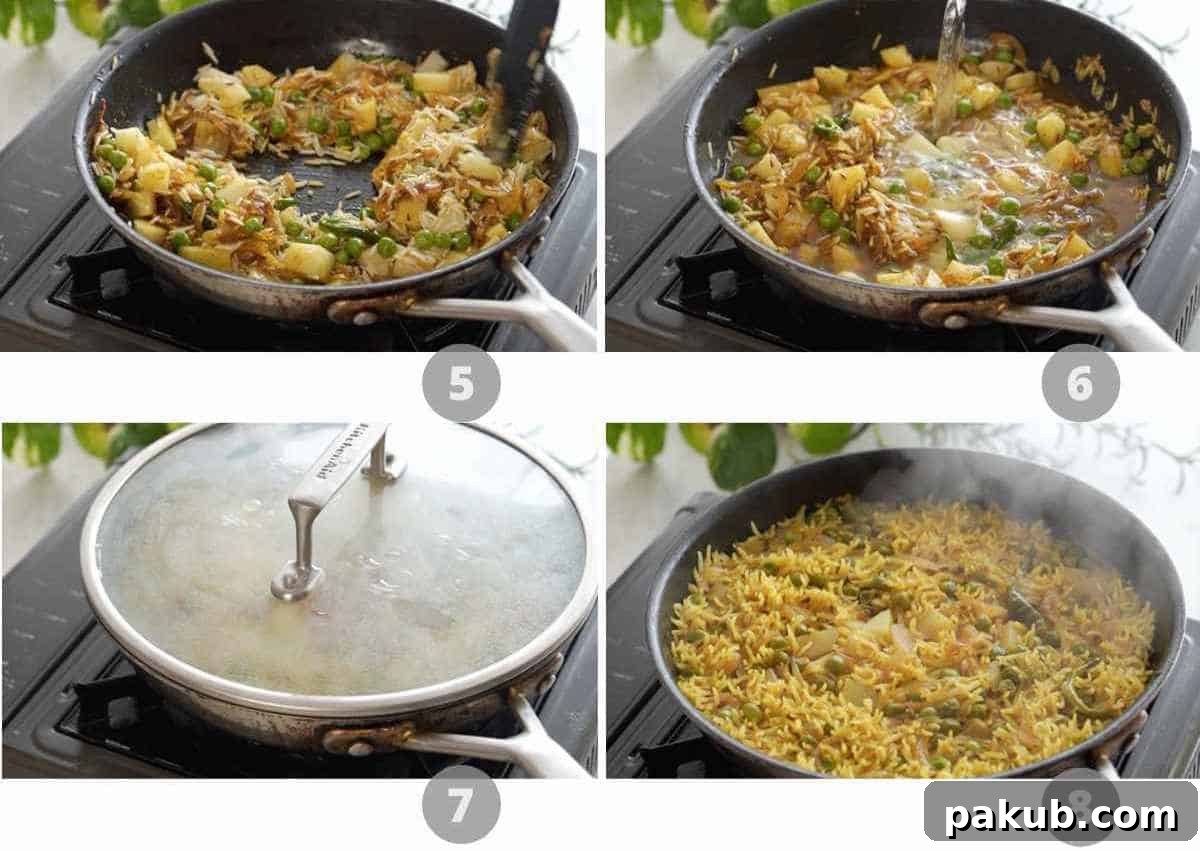
- Incorporate Vegetables and Rice: Increase the flame slightly to medium. Add the cubed potatoes, green peas, and the previously washed and thoroughly drained basmati rice to the pan.
- Toast the Rice and Vegetables: Gently sauté the rice and vegetables with the spices for 2-3 minutes. This step is crucial; toasting the rice slightly helps to seal its outer layer, preventing it from becoming sticky and ensuring each grain cooks separately and fluffs up beautifully. You’ll notice a fragrant aroma emanating from the pan when the rice is sufficiently toasted.
- Add Water and Bring to a Boil: Carefully pour in the measured water. Stir gently once to combine all the ingredients without breaking the rice grains. Increase the flame to high and bring the mixture to a rapid boil. This high heat ensures that the cooking process starts quickly and evenly.
- Simmer and Cook: As soon as the water comes to a rolling boil, immediately reduce the flame to its lowest setting. Cover the pan tightly with a lid. Allow the Tahari to simmer undisturbed for approximately 10-12 minutes. During this time, the rice will absorb the water and cook through, becoming tender and fluffy. Resist the urge to lift the lid during this crucial cooking phase.
- Rest and Serve: Once the cooking time is complete, turn off the flame. Do NOT open the lid immediately. Let the Tahari rest, covered, for another 10 minutes. This resting period is essential as it allows the steam to redistribute, further plumping up the rice grains and ensuring a perfectly fluffy texture. After resting, gently fluff the Tahari with a fork. Serve hot, ideally with a refreshing raita, pickle, or plain yogurt.
Top Tips for a Flawless Tahari
Achieving the perfect Tahari every time is simple with a few key considerations:
- Embrace Vegetable Versatility: While potatoes and green peas are traditional, Tahari is incredibly forgiving. Feel free to use a variety of winter vegetables available in your fridge. Adding cauliflower, carrots, green beans, or even diced bell peppers can enhance both the flavor and nutritional value. Experiment with different combinations to find your family’s favorite blend.
- The Art of Roasting Rice: Never skip the step of gently roasting the rice with the spices for a few minutes before adding water. This step is fundamental to achieving fluffy, separate grains of rice that don’t stick together. It slightly toasts the rice, enhancing its nutty flavor and creating a barrier that prevents mushiness.
- Perfect Water Ratio: The ideal water-to-rice ratio is crucial. For basmati rice, a good starting point is 1 part rice to 1.25-1.5 parts water, depending on the age and type of rice. Too much water will result in mushy rice, while too little will leave it undercooked.
- Soaking the Rice: Soaking basmati rice for 15-20 minutes helps the grains absorb some water, leading to more even cooking and a longer, more separate texture. Always drain it thoroughly after soaking.
- Don’t Peek! The “Dum” Factor: Once the pan is covered and simmering, resist the temptation to lift the lid. The “dum” cooking method (cooking in its own steam) is essential for the rice to cook perfectly and for flavors to infuse completely. Interrupting this process releases precious steam, affecting the final texture.
- Resting Period is Key: Allowing the Tahari to rest off the heat, still covered, for 10 minutes after cooking is vital. This allows the remaining steam to gently finish cooking the rice and ensures a truly fluffy and well-distributed dish.
- Adjust Spice Levels: The amount of green chillies and chilli powder can be adjusted to suit your personal preference for heat. For a milder version, reduce the chillies; for a spicier kick, add a little more.
Frequently Asked Questions About Tahari
While all three are popular Indian rice dishes, their preparation methods and complexity set them apart. Pulao typically involves cooking rice and other ingredients (vegetables or meat) together in a single pot, often seasoned with milder spices. Biryani is a more elaborate dish, traditionally prepared in layers of marinated meat or vegetables and partially cooked basmati rice, then slow-cooked (dum cooking) to allow flavors to meld. Biryani often uses a richer, more complex blend of spices and is considered a celebratory dish. Tahari is similar to a vegetarian pulao in its one-pot preparation but has its own distinct identity. It is predominantly vegetarian, often characterized by its golden color from turmeric, and features a simpler yet deeply comforting spice profile, focusing on vegetables like potatoes and peas. While some biryanis and Tahari use a form of “dum” cooking, the layering and marination are key differentiators for biryani.
Absolutely! While Tahari is traditionally vegetarian, you can easily adapt it into a delicious non-vegetarian version. Simply add pieces of chicken or mutton along with the vegetables. Keep in mind that the cooking time will increase significantly depending on the type of meat used to ensure it is thoroughly cooked and tender. Marinating the meat beforehand can also add to the flavor and tenderness.
Yes, it is highly recommended to soak the rice, especially basmati rice, for about 15-20 minutes before cooking. Soaking allows the rice grains to absorb some water, which helps them cook more evenly and prevents them from breaking. It also contributes to achieving that desirable fluffy, separate grain texture in the final dish.
Tahari is incredibly versatile. While potatoes and green peas are classics, you can incorporate a wide range of vegetables. Popular choices include cauliflower, carrots, green beans, bell peppers, and even tomatoes for a slightly tangy touch. Using seasonal vegetables will always yield the freshest and most flavorful results. Don’t be afraid to experiment with what you have on hand!
To boost the health factor, you can increase the vegetable content, using a wider variety of colorful vegetables. While ghee adds flavor, you can use a smaller amount or opt for a healthy oil. Brown basmati rice can also be used for increased fiber, though the cooking time and water ratio will need adjustment. Turmeric, a key spice, is already known for its anti-inflammatory properties.
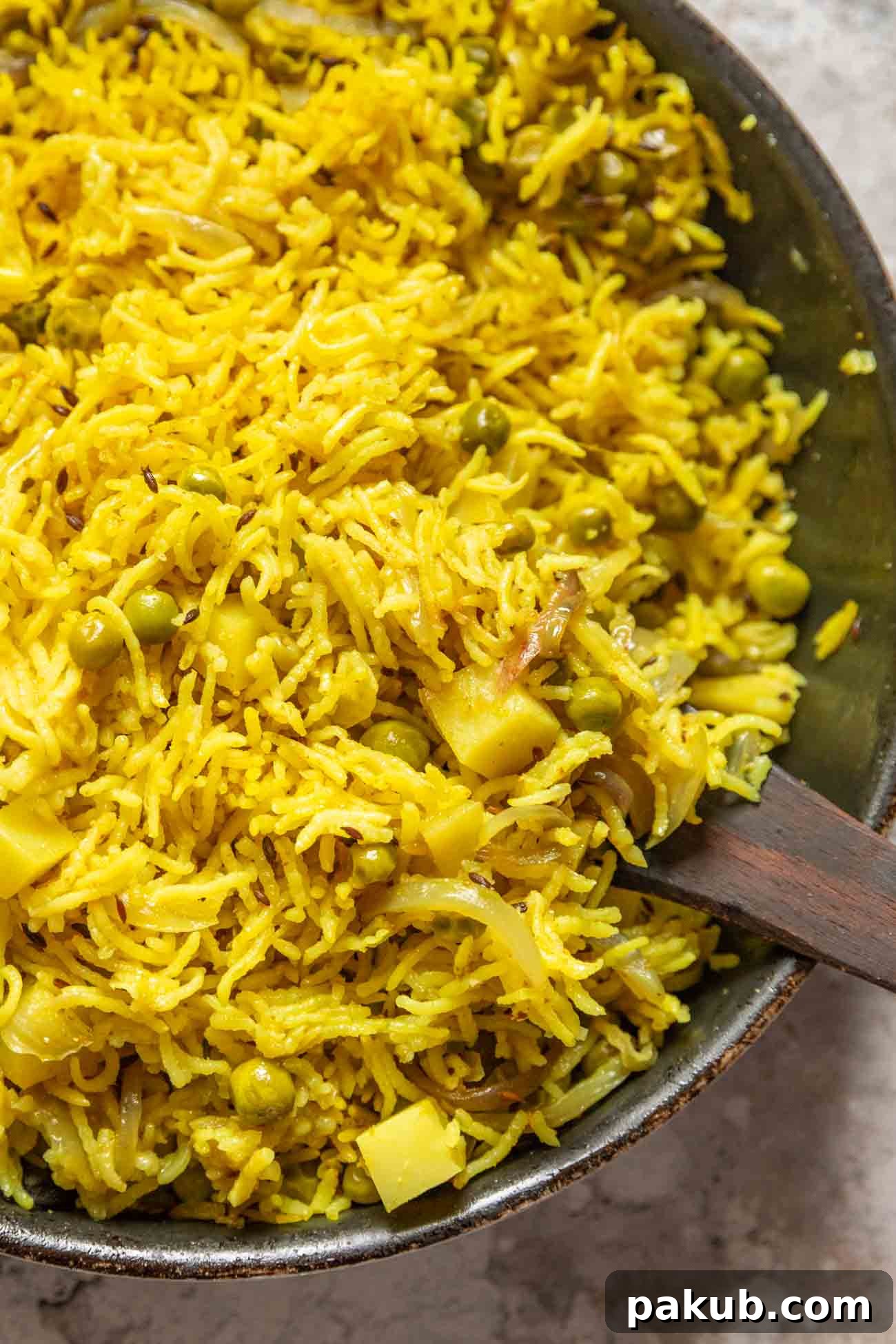
Tahari is often considered a complete meal on its own, given its blend of carbohydrates, vegetables, and flavors. However, serving it with a refreshing accompaniment can elevate the dining experience. A simple vegetable raita or an onion raita (yogurt with chopped onions and spices) provides a cooling contrast to the warm spices of the Tahari. Pickles (achaar), a fresh green salad, or crispy papad also make excellent side dishes, adding texture and a burst of complementary flavors. Its ease and speed of preparation make it a perfect option for a busy working day, transforming quickly into a wholesome and deeply satisfying meal.
Watch The Tahari Recipe Video
Watch this step-by-step video to master the art of making delicious Tahari at home!
LOVE THIS RECIPE? Subscribe to our newsletter and be the first to receive all new recipes and culinary inspiration directly in your inbox!
Tahari Recipe
By: Richa
Tahari, a beloved rice dish in Uttar Pradesh, is a go-to for vegetarians. This one-pot wonder combines rice with winter veggies like potatoes, green peas, and cauliflower. It’s a delightful, comforting dish, ideal for those days when you crave something easy yet satisfying!
Prep Time: 5 mins
Cook Time: 20 mins
Total Time: 25 mins
Servings: 4 people
Pin Recipe
Rate Recipe
Print Recipe
Ingredients
- 2 tablespoons Ghee
- 1 teaspoon Jeera (cumin seeds)
- 2 Green Chillies
- 1 Onion, sliced
- 2 teaspoon Coriander Powder
- 1/2 teaspoon Turmeric Powder
- 1 teaspoon Chilli Powder
- 1 teaspoon Salt
- 1 Potato, cut into 1-inch cubes
- 1/2 cup Green Peas
- 1 cup Basmati Rice, washed, soaked for 1/2 hour and drained
- 1 1/4 cup Water
Instructions
- Heat ghee in a pan over medium flame. Add jeera (cumin) and once it starts spluttering, add green chillies and onions.
- Sauté onions for a minute just to soften them a bit. Then, add coriander powder, turmeric powder, chilli powder and salt. Stir to combine and cook until the raw aroma from the masalas disappears.
- Add potatoes, green peas and the drained rice. Saute this for 2-3 minutes to toast the rice. The rice should release a fragrant aroma.
- Pour water and bring it to a quick boil over a high flame. Turn it down to a simmer immediately and cook covered for 10-12 minutes until the rice is cooked and fluffy. Turn off the flame and rest for 10 minutes, then serve hot with raita.
Notes
- You can use potatoes and green peas, or any other vegetables you prefer, such as cauliflower, tomatoes, carrots, or beans.
- Always roast the rice with the spices for a few minutes before adding water. This ensures the cooked dish has fluffy, separate grains of rice.
Nutrition
Carbohydrates: 217g
Protein: 24g
Fat: 33g
Saturated Fat: 19g
Polyunsaturated Fat: 2g
Monounsaturated Fat: 10g
Cholesterol: 77mg
Sodium: 2677mg
Potassium: 1605mg
Fiber: 19g
Sugar: 14g
Vitamin A: 1572IU
Vitamin C: 91mg
Calcium: 184mg
Iron: 7mg
Enjoyed this recipe? We’d love to hear from you! Please consider rating this recipe and leaving a comment below to share your experience and tips. Your feedback helps us improve and inspires other home cooks!