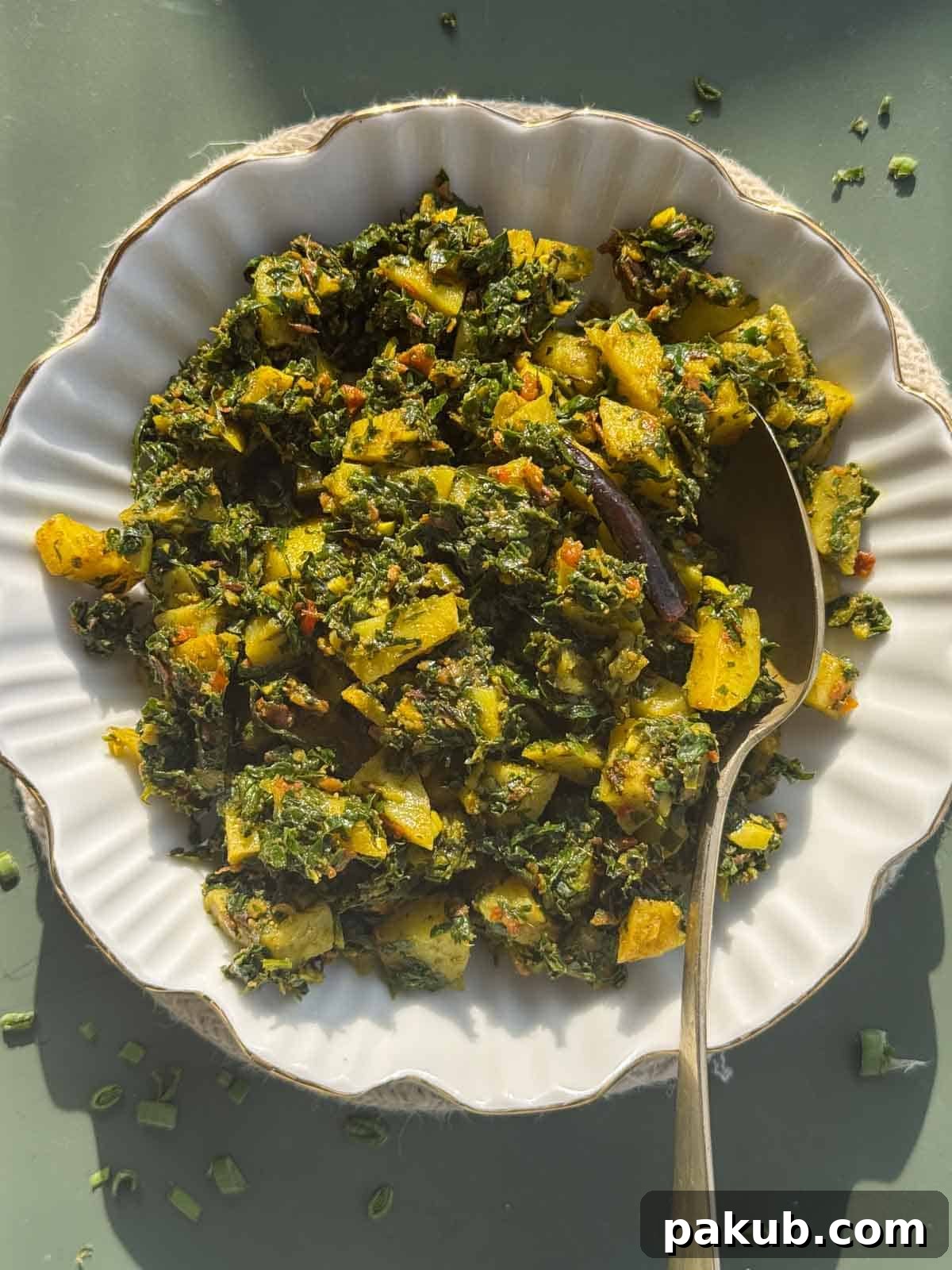
Embrace the cozy flavors of winter with this classic Methi Aloo. This simple, comforting, and deeply satisfying fenugreek and potato stir-fry is a celebration of fresh seasonal produce, designed to bring warmth and authentic taste to your dining table.
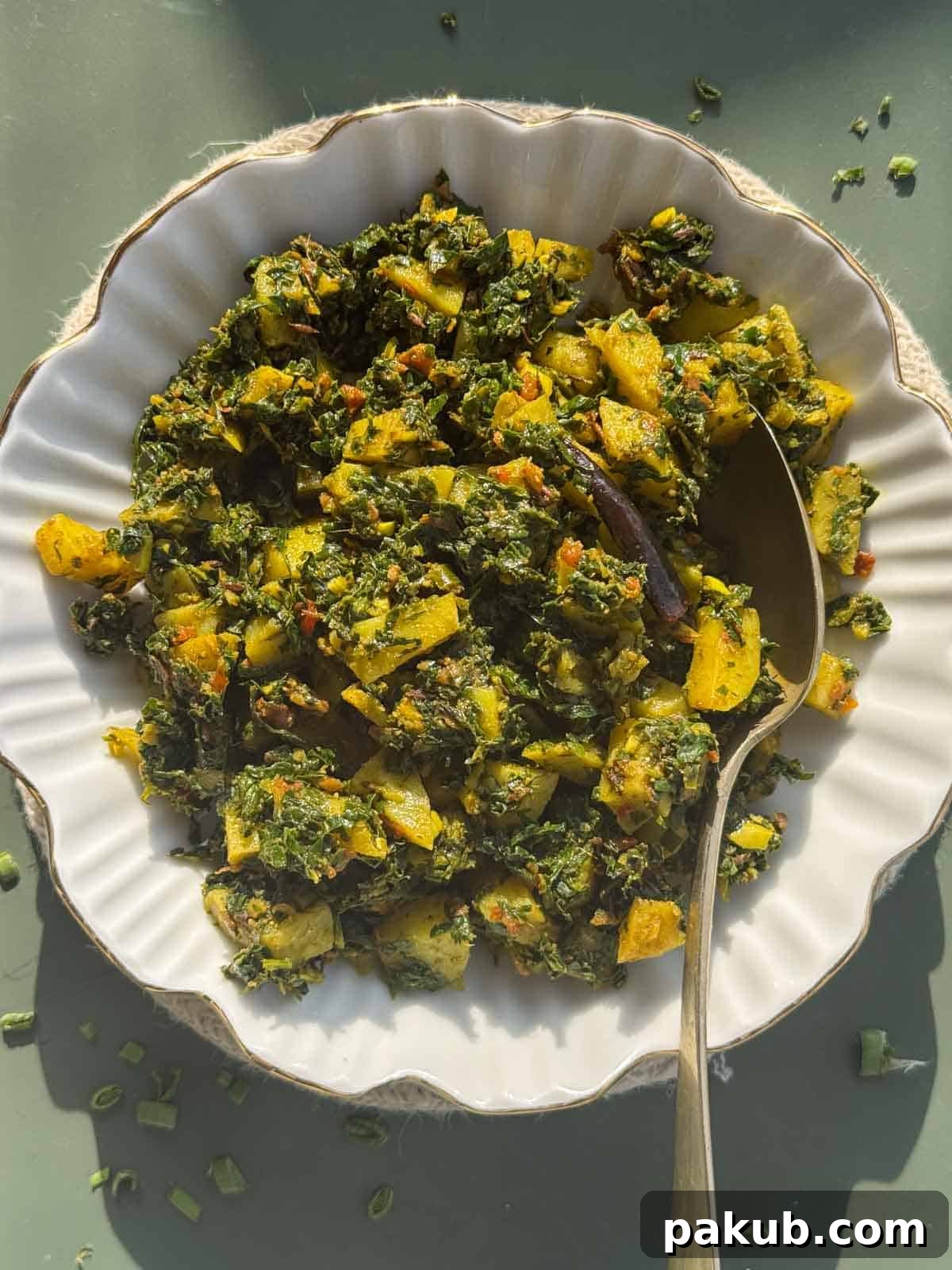
There’s nothing quite like the subtle earthiness of fresh fenugreek leaves, or methi, especially when they are at their seasonal peak during the cooler months. This traditional Methi Aloo sabzi (a dry Indian vegetable dish) is a testament to the beauty of simple ingredients coming together to create a profoundly flavorful and wholesome meal. It’s an everyday staple in many Indian households, cherished for its comforting appeal and straightforward preparation.
The magic of Methi Aloo lies in its delicate balance. Fresh fenugreek, known for its distinct, slightly bitter yet aromatic profile, is beautifully complemented by the humble potato. The starchiness of the potatoes mellows the fenugreek’s sharpness, creating a harmonious blend of textures and tastes that is both nourishing and incredibly satisfying. When cooked with care, this dish avoids any overpowering bitterness, instead delivering a rich, earthy flavor that lingers delightfully.
Beyond its incredible taste, Methi Aloo is a versatile dish that fits seamlessly into any meal plan. It’s light enough not to feel heavy, yet hearty enough to provide sustained energy, making it an ideal choice for both quick weeknight dinners and leisurely weekend lunches. Much like other beloved fenugreek recipes such as Methi Thepla (fenugreek flatbreads), this sabzi offers an easy and delicious way to incorporate the goodness of fresh methi into your diet throughout the winter season. With minimal ingredients and simple steps, you’ll find yourself reaching for this recipe again and again.
Jump to Section: The Ultimate Methi Aloo Guide
- The Essence of Methi Aloo: Key Ingredients
- Why You’ll Adore This Comforting Sabzi
- Mastering Methi Aloo: Step-by-Step Recipe
- Frequently Asked Questions About Methi Aloo
- Expert Tips for Perfect Methi Aloo
- Storage and Reheating Advice
- Delightful Serving Suggestions
- Creative Customisation Ideas
- Nutrition Highlights
The Essence of Methi Aloo: Key Ingredients
Crafting the perfect Methi Aloo involves a selection of fresh, aromatic, and foundational ingredients, each playing a crucial role in developing its signature flavor profile. Here’s a detailed look at what you’ll need:
- Fresh Methi (Fenugreek Leaves): The star of our dish, fresh methi leaves are indispensable. They contribute a unique earthy flavor with a characteristic subtle bitterness that makes the dish truly authentic. When buying, look for bright green, crisp leaves without any yellowing. Proper preparation, including soaking, is key to managing their bitterness.
- Potatoes (Aloo): These provide the much-needed comfort and structural foundation for the sabzi. Their starchy nature not only makes the dish filling but also expertly balances the potent flavor of methi. Opt for firm, medium-sized potatoes. Cutting them into even, small cubes ensures they cook uniformly and quickly.
- Aromatics:
- Ginger: Adds a warm, pungent undertone, enhancing the overall flavor. Finely chop for best integration.
- Garlic: Provides a robust, savory depth that pairs wonderfully with fenugreek. Minced or finely chopped garlic works best.
- Green Chillies: For a fresh burst of heat and vibrant flavor. Adjust the quantity to your spice preference; finely chop for even distribution.
- Cumin Seeds (Jeera): Used in tempering, they impart an earthy, warm aroma at the beginning of the cooking process when bloomed in hot oil.
- Dried Red Chilli: Offers a smoky, gentle heat and a beautiful visual element. Break into two pieces to release its flavor.
- Spices & Seasoning: A thoughtful blend of ground spices is essential for building layers of flavor and ensuring the dish remains balanced.
- Coriander Powder: Adds a warm, citrusy note and acts as a mild thickening agent.
- Cumin Powder: Reinforces the earthy notes from the whole cumin seeds, adding depth.
- Turmeric Powder: Imparts a beautiful golden hue and offers anti-inflammatory properties, a staple in Indian cooking.
- Amchur (Dry Mango Powder): A tangy touch that brightens the flavors and helps to further mitigate any lingering bitterness from the methi, adding a pleasant sourness.
- Salt: Essential for seasoning and also plays a crucial role in reducing methi’s bitterness during the initial soaking process.
- Asafoetida (Hing): A pungent spice that adds a unique savory aroma, often used in Indian vegetarian cooking to aid digestion and enhance flavor, especially with legumes and leafy greens. A tiny pinch goes a long way.
- Tomatoes: Finely chopped tomatoes contribute a mild acidity and sweetness, helping to meld all the flavors together and create a cohesive sabzi. They also add a slight sauciness that coats the potatoes and methi beautifully. Ripe, firm tomatoes are ideal.
- Cooking Oil: A neutral-flavored oil like groundnut oil, sunflower oil, or canola oil is ideal as it allows the natural flavors of the methi and spices to shine through without interference. Ghee can also be used for a richer, more traditional flavor, especially during winter.
Why You’ll Adore This Comforting Sabzi
Methi Aloo is more than just a dish; it’s an experience of comfort and well-being, especially during the colder months. Its enduring popularity stems from a delightful combination of taste, nutrition, and ease of preparation:
- Perfect Flavor Harmony: The inherent slight bitterness of fresh fenugreek (methi) is masterfully softened and balanced by the earthy, starchy goodness of potatoes. This culinary partnership creates a symphony of flavors that is complex yet incredibly comforting, avoiding any harsh or overwhelming notes. The mild tang from tomatoes and amchur further brightens the profile, resulting in a taste that resonates with warmth and tradition. It’s a savory delight that satisfies the palate without being overly rich.
- Wholesome and Nutritious: Fresh methi is a powerhouse of nutrients, making this dish an excellent addition to a healthy diet. It’s an abundant source of dietary fiber, which is vital for healthy digestion, preventing constipation, and promoting overall gut health. Rich in iron, methi helps in boosting hemoglobin levels and combating fatigue, while its wealth of antioxidants supports overall immunity and protects against cellular damage. Potatoes, on the other hand, provide sustained energy through complex carbohydrates, making the meal satisfying and filling. Together, they form a balanced vegetarian dish that nourishes without feeling heavy. Methi is also known for its potential benefits in managing blood sugar levels.
- Quick and Easy to Prepare: Despite its rich, authentic flavors, Methi Aloo is remarkably straightforward to cook, making it ideal for home cooks of all skill levels. With readily available pantry staples and a few fresh ingredients, you can have a delicious, homemade meal on the table in under 30 minutes. This efficiency makes it a perfect choice for busy weeknights when you crave something authentic, healthy, and satisfying but are short on time. Its simple steps also ensure minimal cleanup.
- A Taste of Home: This sabzi evokes a profound sense of nostalgia and homestyle cooking for many. It’s a staple in countless Indian homes, deeply rooted in culinary traditions passed down through generations. Serving Methi Aloo is like wrapping yourself in a warm, flavorful embrace, offering a taste of simple pleasures and heartfelt cooking that transcends mere sustenance. It’s the kind of food that brings families together around the dining table.
- Versatility in Serving: Methi Aloo pairs wonderfully with a wide range of Indian breads like hot rotis, fluffy phulkas, or flaky parathas, each offering a different textural experience. It’s equally delicious served alongside plain steamed rice and a simple dal for a complete meal. It can also stand alone as a light yet satisfying meal or a flavorful side dish to a larger spread. Its adaptability means it can fit into any meal setting, from a casual family dinner to a more elaborate gathering, always delivering on taste and comfort.
Ultimately, Methi Aloo is a celebration of seasonal ingredients transformed into a soul-satisfying dish that offers both delightful taste and impressive health benefits. It’s an accessible and rewarding way to explore the rich tapestry of Indian cuisine from the comfort of your own kitchen.
Mastering Methi Aloo: Step-by-Step Recipe
Authentic Methi Aloo (Fenugreek & Potato Stir-fry)
Richa
5 mins
20 mins
25 mins
4 servings
Ingredients
- 3 ½ cups (140 grams) fresh methi (fenugreek leaves), packed
- 3 cups water (for soaking methi)
- 2 teaspoons salt, divided (1 ½ tsp for soaking, ½ tsp for cooking)
- 1 tablespoon groundnut or any neutral flavored cooking oil
- ½ teaspoon cumin seeds (jeera)
- ⅛ teaspoon asafoetida (hing)
- 1 dried red chilli, broken into 2 pieces
- 2 medium potatoes (approx. 220 grams or 1 cup), peeled and chopped into ¼ inch cubes
- ½ teaspoon finely chopped ginger
- 1 teaspoon finely chopped garlic
- 1 green chilli, finely chopped (adjust to your preferred spice level)
- 1 large tomato (approx. 100 gms or ¼ cup + 2 tablespoons), finely chopped
- 1 teaspoon coriander powder
- ¼ teaspoon cumin powder
- ¼ teaspoon turmeric powder
- ½ teaspoon amchur powder (dry mango powder)
Instructions
- Prepare the Methi: In a large bowl, combine 3 cups of water and 1 ½ teaspoons of salt. Add the fresh methi leaves and let them soak for 20-30 minutes. This crucial step significantly helps in drawing out and reducing the natural bitterness of the fenugreek leaves. After soaking, thoroughly squeeze out all the water from the leaves using your hands or a muslin cloth, then finely chop them. Set aside on a plate.
- Temper the Spices & Cook Potatoes: Heat 1 tablespoon of groundnut or neutral oil in a wide, heavy-bottomed pan or kadai over medium heat. Once the oil is hot and shimmering, add ½ teaspoon of cumin seeds. Allow them to splutter and turn golden brown and fragrant (this usually takes about 10-15 seconds). Immediately add ⅛ teaspoon of asafoetida (hing) and the dried red chilli pieces. Sauté for another few seconds until the chillies are fragrant and slightly darkened. Now, add the evenly chopped potato cubes to the pan. Cook the potatoes on low to medium heat for 7-8 minutes, stirring occasionally, until they are about 75% cooked through, slightly tender, and have developed a light golden crust.
- Add Aromatics & Tomatoes: To the partially cooked potatoes, add ½ teaspoon of finely chopped ginger, 1 teaspoon of finely chopped garlic, and 1 finely chopped green chilli. Sauté for 1-2 minutes until the aromatics are fragrant and their raw smell disappears, ensuring they don’t burn. Next, add the finely chopped large tomato along with the remaining ½ teaspoon of salt, 1 teaspoon of coriander powder, ¼ teaspoon of cumin powder, ¼ teaspoon of turmeric powder, and ½ teaspoon of amchur powder. Mix everything well, ensuring the spices coat the vegetables evenly. Cover the pan and cook for 3-4 minutes, or until the tomatoes have softened, turned mushy, and the oil begins to separate, forming a light gravy-like consistency.
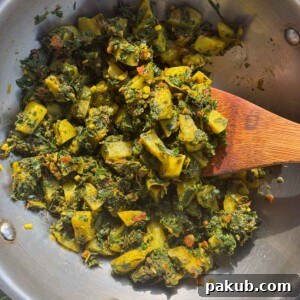
- Incorporate Methi & Finish: Remove the lid from the pan. Add the finely chopped and thoroughly squeezed methi leaves to the potato and tomato mixture. Mix them gently but thoroughly with the vegetables. Continue to cook the sabzi uncovered for 5-7 minutes over medium heat, stirring occasionally. Cooking uncovered is important as it allows any excess moisture released by the fenugreek leaves to evaporate, preventing the dish from becoming watery or soggy. This process also helps the methi to slightly roast and integrate its flavors beautifully. Once the methi is well combined, slightly wilted, and the potatoes are fully tender and cooked through, your aromatic Methi Aloo is ready to be served hot.
Nutrition Highlights (per serving, approximate)
Calories: 234 kcal, Carbohydrates: 35g, Protein: 11g, Fat: 6g, Saturated Fat: 1g, Polyunsaturated Fat: 1g, Monounsaturated Fat: 2g, Sodium: 1219mg, Potassium: 578mg, Fiber: 6g, Sugar: 3g, Vitamin A: 370IU, Vitamin C: 43mg, Calcium: 33mg, Iron: 6mg
Frequently Asked Questions About Methi Aloo
While kasuri methi has its own distinct aroma and is fantastic in many Indian dishes, it cannot fully replace the fresh fenugreek leaves in this Methi Aloo recipe. Fresh methi provides a unique texture, a vibrant green color, and a more robust, earthy flavor that is absolutely central to this dish. Kasuri methi, being dried, has a much more concentrated and somewhat different flavor profile, lacking the freshness and subtle crispness of fresh leaves. If fresh methi is absolutely unavailable, you can add a small pinch (about 1 teaspoon, crushed between your palms) of kasuri methi at the very end of cooking for a hint of fenugreek aroma, but please be aware that the overall flavor and texture of the sabzi will be noticeably different from the traditional fresh version.
Aloo methi is traditionally celebrated for its simplicity and the prominent, perfectly balanced pairing of fenugreek and potatoes. Adding other vegetables like carrots, peas, bell peppers, or even eggplant will undoubtedly change the flavor profile and balance of the dish, potentially overshadowing the distinctive taste of methi. If you choose to incorporate other vegetables, we recommend keeping the quantities minimal to ensure the fresh methi and potatoes remain the primary focus. Root vegetables that can hold their shape and absorb flavors well, like finely diced carrots or peas, might work best if added judiciously during the potato cooking stage. Ensure they don’t overpower the main ingredients.
Bitterness in Methi Aloo is a common concern but easily preventable with proper technique. The most frequent reasons include skipping the crucial initial soaking step of the methi leaves in salted water, or not thoroughly squeezing out enough water after soaking. These steps help to draw out and neutralize some of the naturally bitter compounds. Additionally, overcooking methi at excessively high heat or adding it too early in the cooking process (before the potatoes are mostly cooked) can intensify its natural bitterness. Using very mature or slightly wilted fenugreek leaves, rather than fresh, tender ones, can also contribute to a stronger bitter taste. Finally, an imbalance in spices, particularly insufficient souring agents like tomato or amchur, can make the bitterness more prominent.
Reducing methi’s bitterness is paramount to a delicious Aloo Methi. The most effective method is to soak the fresh methi leaves in salted water for about 20-30 minutes. The salt helps draw out the bitter juices. After soaking, ensure you squeeze them very, very well to remove as much water as possible before chopping and cooking. This step alone can drastically mellow the bitterness. Another important tip is to cook the methi uncovered once it’s added to the pan. This allows excess moisture and any remaining bitter compounds to evaporate, resulting in a milder, more pleasant flavor. Incorporating acidic ingredients like finely chopped tomatoes and amchur (dry mango powder) also plays a vital role in balancing and brightening the flavors, further cutting through any potential bitterness. A final squeeze of lemon juice at the end can also work wonders.
Yes, you can adapt this recipe for an Instant Pot or pressure cooker for faster cooking, though the texture might vary slightly. To do so, follow these steps: Use the Sauté mode to temper the spices and cook the potatoes until slightly tender, as described in the recipe. Then, add the tomatoes and powdered spices, followed by the soaked and thoroughly squeezed methi leaves. Add a minimal amount of water (about ¼ cup is usually sufficient, as methi releases its own moisture) to prevent scorching. Pressure cook on high for 3-4 minutes, followed by a quick pressure release. Be careful not to overcook the methi under high pressure, as it can turn mushy and intensely bitter if cooked for too long.
For Methi Aloo, waxy or all-purpose potatoes tend to work best. Varieties like Yukon Gold, red potatoes, or new potatoes are excellent choices because they hold their shape well during cooking and don’t become overly mushy. They also absorb the flavors of the methi and spices beautifully. Starchy potatoes like Russets can also be used, but they might break down more easily, creating a slightly creamier, less defined texture for the potato cubes. The key, regardless of potato type, is to cut them into even, small cubes to ensure consistent cooking and tender results.
Expert Tips for Perfect Methi Aloo
Achieving a perfectly balanced and flavorful Methi Aloo is simple and rewarding when you follow these expert tips:
- Don’t Skip the Soaking: This is arguably the most crucial step for reducing methi’s bitterness significantly. Soaking the fresh fenugreek leaves in generously salted water for 20-30 minutes, followed by a thorough squeeze to remove all excess water, can make a world of difference to the final taste. It helps draw out some of the bitter compounds without compromising the distinct earthy flavor that makes methi so unique.
- Evenly Sized Potato Cubes: Precision in cutting your potatoes is key for uniform cooking. Aim for small, uniform ¼-inch cubes. This ensures that all the potato pieces cook evenly and at the same rate, becoming tender simultaneously. Unevenly cut potatoes can lead to some pieces being raw and hard while others are overcooked and mushy, disrupting the texture of the sabzi. Even cuts also contribute to a faster overall cooking time.
- Cook Methi Uncovered: Once you add the chopped methi leaves to the pan, resist the urge to cover it. Cooking the sabzi uncovered allows any excess moisture released by the fenugreek leaves to evaporate efficiently. This vital step prevents the dish from becoming watery or soggy, and crucially, it allows the methi to slightly roast and caramelize, which intensifies its desired flavors and further minimizes any potential bitterness.
- Gentle Spice Hand: Aloo Methi shines when the natural, earthy flavors of the fenugreek and tender potatoes are allowed to be the star. Use spices sparingly and measure lightly. The goal is to enhance and complement the core ingredients, not to overpower them. Additionally, be mindful of not over-roasting the dry spices during tempering, as this can make them taste burnt and bitter, detracting from the fresh, vibrant flavors of the dish.
- Freshness is Key: Always prioritize using the freshest possible methi leaves. Look for vibrant green, crisp leaves without any yellowing, wilting, or brown spots. Fresh, tender methi will yield the best flavor and texture. Older or slightly wilted fenugreek tends to be more bitter and less aromatic.
- Adjusting Spice Levels: The beauty of home cooking lies in customization. If you prefer a spicier sabzi, you can increase the amount of green chilies or add a pinch of red chili powder along with the other dry spices. For a milder version, deseed the green chilies or use fewer, or even omit them entirely if you’re sensitive to heat.
Storage and Reheating Advice
Proper storage ensures your Methi Aloo remains delicious for longer, though like most fresh sabzis, it is truly best enjoyed fresh:
- In the Fridge: Allow the Methi Aloo sabzi to cool completely to room temperature before transferring it to an airtight container. Stored properly, it can be kept in the refrigerator for up to 2-3 days. This ensures its freshness and prevents bacterial growth.
- At Room Temperature: This sabzi, like most cooked Indian dishes, contains fresh vegetables and spices and should not be left at room temperature for more than 2-3 hours, especially in warm climates, to prevent spoilage and maintain food safety. Always refrigerate promptly after cooling.
- Freezing: Freezing is generally not recommended for Methi Aloo. Both fenugreek leaves and potatoes tend to lose their desirable texture upon thawing, often becoming mushy and watery. The methi can also develop a more pronounced bitterness after being frozen and reheated, affecting the overall flavor profile. For the best culinary experience, always aim to cook and consume it fresh or within a couple of days from the fridge.
- Reheating Tip: To reheat Methi Aloo, transfer the desired portion to a wide pan or kadai and warm it gently over low to medium heat, stirring occasionally. This method helps to retain its texture and prevents it from becoming soggy. If the sabzi appears too dry during reheating, add a small splash of water or a teaspoon of oil to bring back some moisture and prevent sticking. Avoid reheating in a microwave if possible, as it can sometimes make the potatoes rubbery and alter the texture of the methi.
Delightful Serving Suggestions
Aloo Methi is wonderfully comforting on its own, but it truly shines when paired thoughtfully with other Indian staples to create a complete and satisfying meal. Here are some delightful suggestions:
- With Roti or Phulka: This is the quintessential and most traditional pairing. Soft, warm homemade rotis or light, puffed phulkas are the perfect vehicle for scooping up the flavorful sabzi. Their subtle taste and soft texture allow the distinct earthy and savory flavors of the Methi Aloo to be the undisputed star of the show without any distraction, creating a truly authentic Indian dining experience.
- With Paratha: For a slightly richer and more indulgent meal, serve Methi Aloo with a flaky Lachha Paratha or a plain, freshly made paratha. The added richness from the ghee or oil used in making the paratha, combined with its crisp and layered texture, makes the meal feel more substantial and luxurious, especially perfect for a hearty lunch or a comforting dinner.
- With Dal and Rice: Transform Methi Aloo into a complete, wholesome, and traditional Indian thali by serving it alongside a simple yet flavorful Dal Tadka (tempered lentil soup) and fluffy steamed Basmati rice. This classic combination offers a balanced meal with diverse textures, contrasting flavors, and comprehensive nutrition, providing both comfort and satiety.
- With Curd or Raita: A spoonful of plain, chilled yogurt (curd) or a light, refreshing Cucumber Raita provides a wonderful cooling contrast to the warmth and mild spice of the Methi Aloo. The tanginess and creamy texture of the curd help to cut through any richness and balance the flavors, keeping the meal feeling light and refreshing, especially enjoyable on warmer days or with spicier variations of the sabzi.
- With Fresh Salad: For an added crunch, vibrant freshness, and extra vitamins, serve Methi Aloo with a simple side salad. A classic Indian kachumber (finely chopped onion, tomato, and cucumber salad, seasoned with salt and lemon juice) or an Asian Cucumber Salad offers a refreshing bite that perfectly complements the cooked vegetables, adding a delightful textural dimension to your meal.
Creative Customisation Ideas
While Methi Aloo is delicious and satisfying in its traditional form, it’s also wonderfully adaptable to personal preferences and dietary needs. Here are some creative ideas to tweak the recipe and make it your own:
- Elevate with a Garlic Finish (Lehsun ka Tadka): For garlic lovers seeking an extra layer of rustic flavor, try this simple yet impactful trick: lightly crush an extra clove or two of fresh garlic and sauté them in a tiny bit of ghee or oil in a separate small pan at the very end of cooking, just before serving. Once fragrant and golden, pour this aromatic garlic tempering (lehsun ka tadka) directly over the prepared sabzi and gently mix it in. This adds an intense, aromatic garlic flavor boost that is incredibly satisfying.
- Hearty One-Pan Meal (Crispier Potatoes): To make the sabzi even more substantial and suitable for a standalone meal, you can modify the potato cooking process. After tempering the spices, add the potato cubes a little earlier and let them pan-fry or brown slightly on all sides before proceeding with the rest of the recipe. This extra step develops a deeper, richer flavor in the potatoes and adds a satisfying crispiness to their exterior, making the dish feel more robust and fulfilling.
- Richness with Ghee: For an added layer of rich, nutty flavor and a truly authentic Indian aroma, especially appealing during colder seasons, consider finishing the dish with a generous drizzle of pure ghee instead of oil, or replace a portion of the cooking oil with ghee. This simple swap enhances the aroma and taste, making it feel even more luxurious and comforting.
- Spice it Up (or Down): The beauty of home cooking allows you to tailor the heat level precisely. Adjust the spiciness by modifying the amount of green chilies you add. For extra heat, you can also include ½ teaspoon of red chili powder along with the other dry spices in step 3. For a milder version, deseed the green chilies or use fewer, or even omit them entirely if you’re sensitive to heat.
- Add a Citrusy Zing: A squeeze of fresh lemon or lime juice just before serving can work wonders. This bright, acidic addition instantly lifts and freshens all the flavors, further cutting through any lingering bitterness of the methi and adding a refreshing tang that truly awakens the palate.
- Protein Boost: For a more complete and protein-rich meal, consider adding some pan-fried paneer (Indian cheese) cubes or pre-cooked chickpeas. Add the paneer cubes in the last few minutes of cooking so they gently warm through and absorb flavors, or add chickpeas along with the methi. Ensure they are added at a stage that allows them to absorb the wonderful flavors without becoming mushy or overcooked.
- Onion Inclusion: While traditional Methi Aloo often skips onions to let the methi shine, a finely chopped onion can be added after the cumin seeds and sautéed until golden brown before adding the potatoes. This will add a sweet, savory depth to the base of the sabzi.
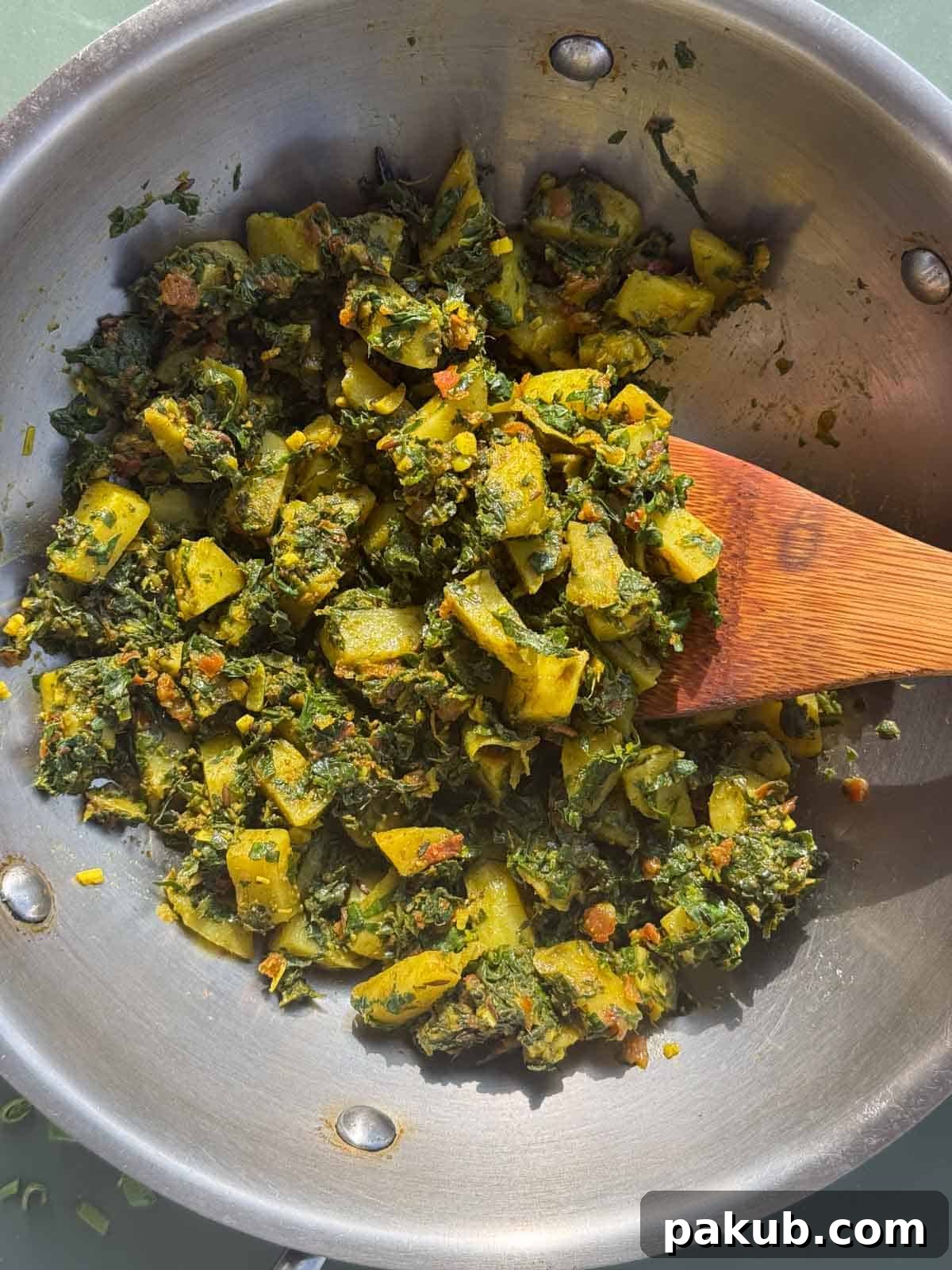
This Methi Aloo is everyday food at its finest – simple to prepare, bursting with authentic flavors, and perfect for embracing the cozy warmth of winter. It’s a dish that truly nourishes both body and soul, bringing comfort and joy with every bite. We sincerely hope you’ll give this timeless recipe a try and make it a regular feature in your home cooking repertoire. If you do, we’d absolutely love to see your delicious creations! Share your home-style meals with us on Instagram @my_foodstory and let’s celebrate the vibrant world of good food together.