Indian Recipes
How to make Ghee at home from milk cream/ butter/ store bought cream
Learn how to make ghee at home – two different ways. Both these methods are how ghee is made traditionally. With so many benefits and a sweet, nutty flavor, it’s something you’ll find in every Indian household
- Serves 2 cups
- Prep 10 minutes
- Cook 25 minutes
- Total 35 minutes
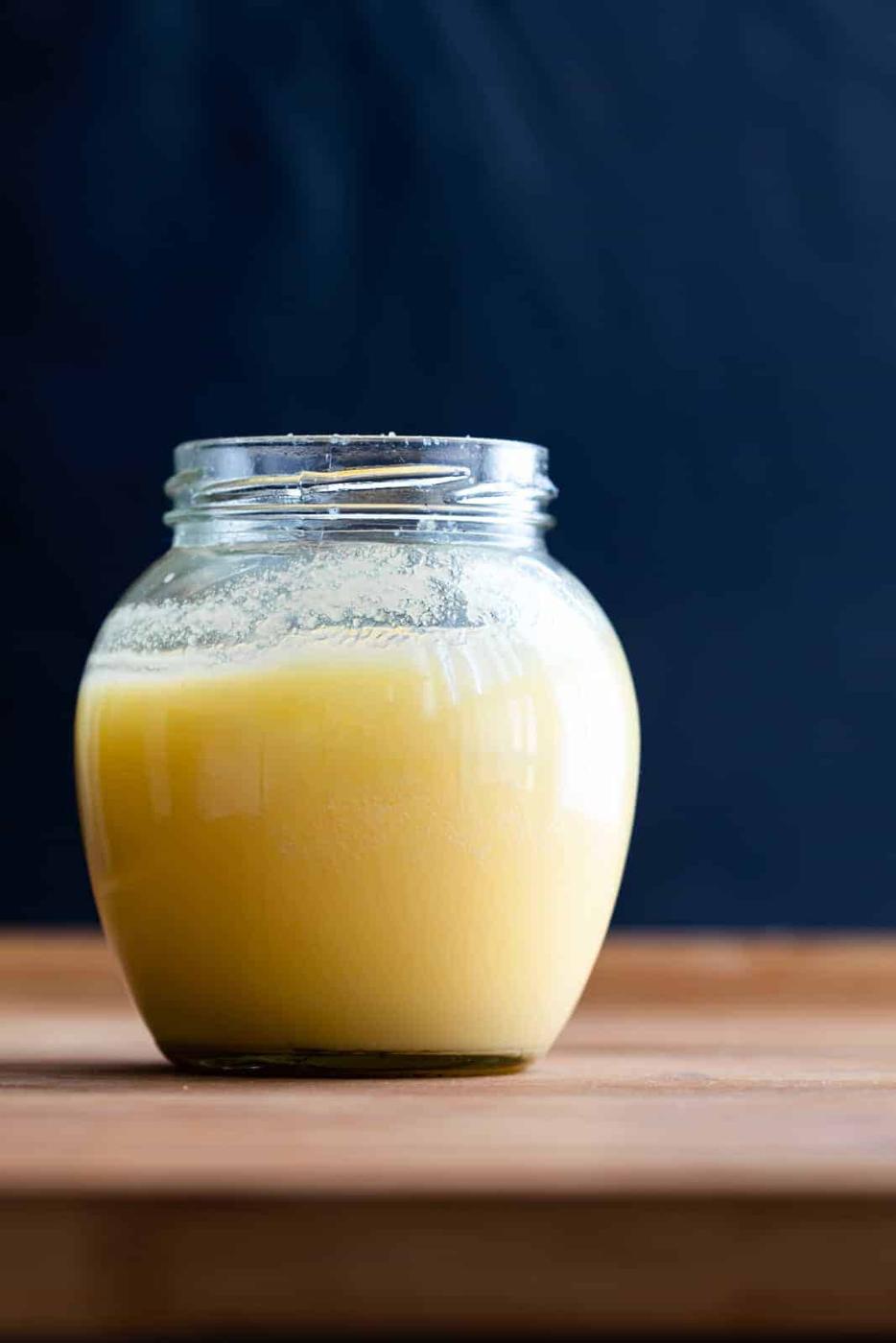
Ghee is one of those things that you’ll find in every Indian kitchen. We are such a big country with so many cuisines that there aren’t many things that are absolutely common across different states and people. But ghee – you’ll always find a jar.
I’ve grown up watching my grandma and mum make it every few weeks. And I figured it was time that I share the wisdom! Because ghee is an amazing powerhouse – the traditional ‘superfood’. And if you’ve never tried making it at home before, its time.
In the video below, I’m sharing the traditional way of making ghee at home. We buy organic cow’s milk every day, and a by product after boiling the milk is cream which is collected for a few weeks in the refrigerator, and is then used to churn butter and make ghee.
If you don’t have cream or don’t want to make the effort, skip the first step of churning homemade butter and start with high-quality organic butter. Then just follow the rest of the recipe as is.
Benefits of Homemade Ghee
Making ghee at home and consuming it has so many benefits. I’m pretty sure I’m only covering about 20% of them here:
- It’s definitely cheaper to make your own, especially if you start with cream collected from milk. Even if you use organic butter, it’s still cheaper than buying store bought ghee.
- It is incredibly easy to make, and it’s hard to burn a batch of ghee. If you take it a little too far, it gets a deep brown color that smells like toffee and can still be used for cooking.
- Ghee is a shelf stable fat, and has a long life – this also means that bacteria doesn’t grow easily in it.
- It has a high smoke point which makes it perfect for cooking, stir frying and deep frying. In fact, Indians have been using ghee to deep fry for generations now.
- It’s a nutrient dense cooking fat with Vitamin A and K2.
- Ghee is perfect for people with a slight dairy sensitivity, and those who are following a paleo or whole30 diet, because while cooking it you remove the milk solids and you are left with the residual fat only.
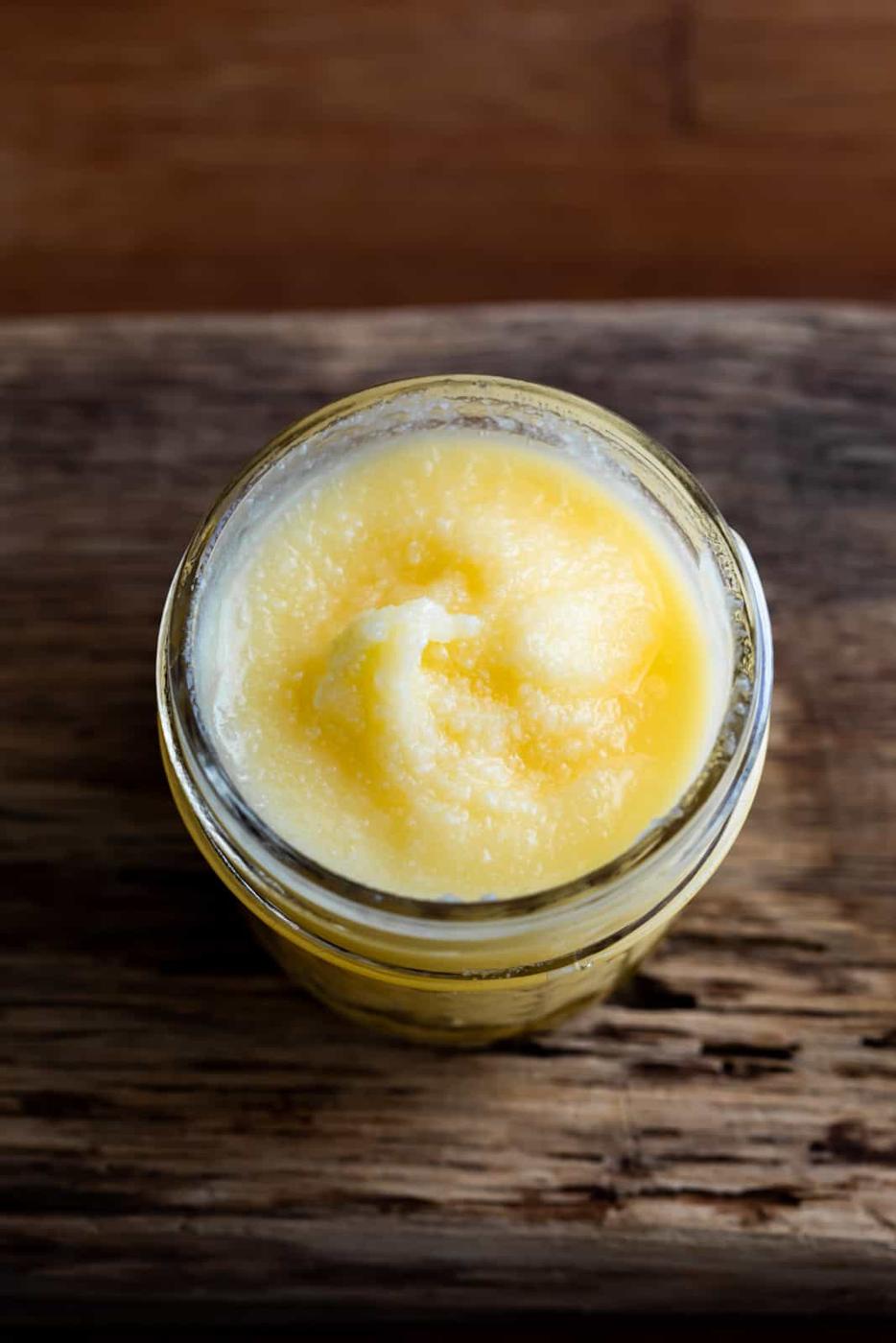
How To Use Ghee
There is no hard and fast rule for how to use ghee. But here are a few different ways:
- Use it for all your regular cooking. Indian food has been made in ghee for hundreds of years and there’s a good reason for it. Its a healthy fat that aids digestion, and also acts as a mild laxative. It’s literally the most important ingredient when you make dal.
- For deep frying: Because of its high smoke point, it is the perfect medium for deep frying. Plus the flavour – nobody will resist those ghee fried french fries!
- It is used extensively when you want to make a tadka or tempering for dals.
- Add it to anything you eat for flavour without cooking it. We love adding a teaspoon of ghee to hot, steamed rice or warm sambhar as a topping.
- People are also adding it to coffee these days.
- It is also a fantastic homemade moisturiser. Just rub a little bit between your palms and apply it to your skin.
Frequently Asked Questions
Ghee Tastes Great In These Dishes
- On top of Soft Rotis
- Generous dollops on Naan
- Tempering of Dhaba Dal Tadka
Recipes Using Ghee
The recipe
How to make Ghee at home
Making ghee at home from butter and/or heavy cream is incredibly easy and I’m showing you how. Ghee is a wonderful fat that’s written about in ayurveda, is paleo friendly and whole30.
- Serves 2 cups
- Prep 10 minutes
- Cook 25 minutes
- Total 35 minutes
Ingredients
- 1 litre Heavy Cream / Malai / Cream from Milk (chilled (OR 454 grams Butter))
Method
Making Ghee from Cream:
- 1
Make sure the cream is cold when you start to make ghee. Place the cream in a large bowl and churn it with a hand blender. After a few minutes, you’ll see the cream start to separate into butter and liquid. At this stage, keep churning for 2-3 more minutes till all the cream has separated.
- 2
Place a sieve over another bowl and cover the sieve with a cheesecloth. Drain the butter in the cheesecloth and collect the remaining liquid or buttermilk in the bowl. Buttermilk can be drunk as is, or can be used for baking later.
- 3
Collect the edges of the cheesecloth and squeeze out any extra liquid from the butter. Now pour half a cup of ice cold liquid over the butter, so as to almost wash the butter. This helps get rid of any sediments. Once again, squeeze any extra liquid from the butter. At this stage, you can either store the butter in the fridge or use it to make ghee.
- 4
To make ghee, place the butter in a saucepan over the stove and warm it up. Once the butter melts completely, let it simmer. As the butter simmers, it’ll start foaming and splutter.
- 5
Continue cooking the ghee on low heat for 20-25 minutes, stirring occasionally to make sure the milk solids don’t burn at the bottom. As it cooks, it’ll start to change colour from a bright yellow to slightly greenish and then to a light golden brown.
- 6
Once the ghee becomes clear, stops foaming and the milk solids at the bottom turn brown, your ghee is ready! Let it cool for a few minutes before straining it on a cheesecloth. Store it in an airtight jar.
Making Ghee from Butter:
- 7
Take cold butter and cut it into cubes to help it melt evenly. Place the butter in a saucepan and heat it. Once it melts, reduce the heat and let it simmer.
- 8
As it simmers, the butter will start foaming. Use a spoon to skim off the top foam. Repeat this every few minutes.
- 9
After about 20-25 minutes of cooking, ghee will start to look clear and will become a golden brown, with the milk solids settling at the bottom. It’ll also give out a sweet, nutty aroma. At this point your ghee is ready. Let it cool for a few minutes before straining it with a cheesecloth. Store it in an airtight jar.
Notes
Storing Ghee: Ghee is very shelf stable and can be stored at room temperature for 3-4 months. Or in the fridge for up to a year. Ghee will automatically solidify slightly at room temperature or can solidify completely if you stay in a cool climate. Using ghee: Use ghee like any other cooking fat for stir-frying, sauteing and even deep frying. It also tastes great if spread on toast or drizzled on soups, stews, dals, rice etc. Nutritional info about Ghee: The nutritional info below is for 2 CUPS of ghee. The typical serving size is about 1 teaspoon.
Nutrition
- Calories 1725 kcal
- Carbohydrates 14 g
- Protein 10 g
- Fat 185 g
- Saturated Fat 115 g
- Cholesterol 685 mg
- Sodium 190 mg
- Potassium 375 mg
- Sugar 1 g
- Vitamin A 7350 IU
- Vitamin C 3 mg
- Calcium 325 mg
- Iron 1 mg
Common questions
Is ghee actually healthier than butter?
The fat content and nutritional value is very similar for both ghee and butter. However, the process of making ghee removes lactose, which makes it better for people with dietary restrictions.