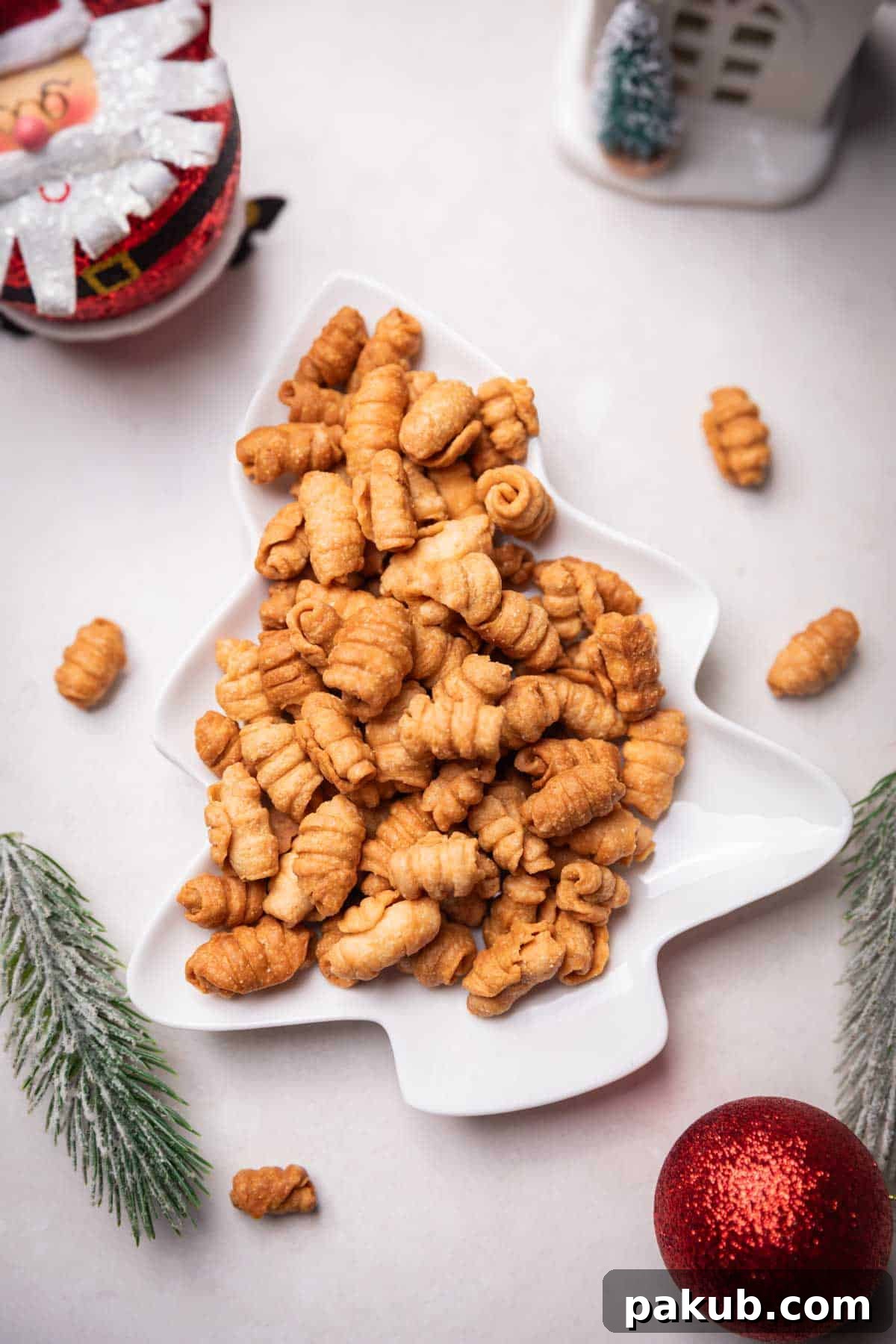
Eggless Kulkul (Christmas Kuswar): A Crispy Mangalorean Festive Delight
Step into the heartwarming traditions of Mangalorean Christmas with Kulkuls, a beloved deep-fried pastry. While traditionally made with eggs, our specially crafted eggless version promises the same irresistible crunch and delicate flakiness, ensuring everyone can enjoy this authentic festive snack.
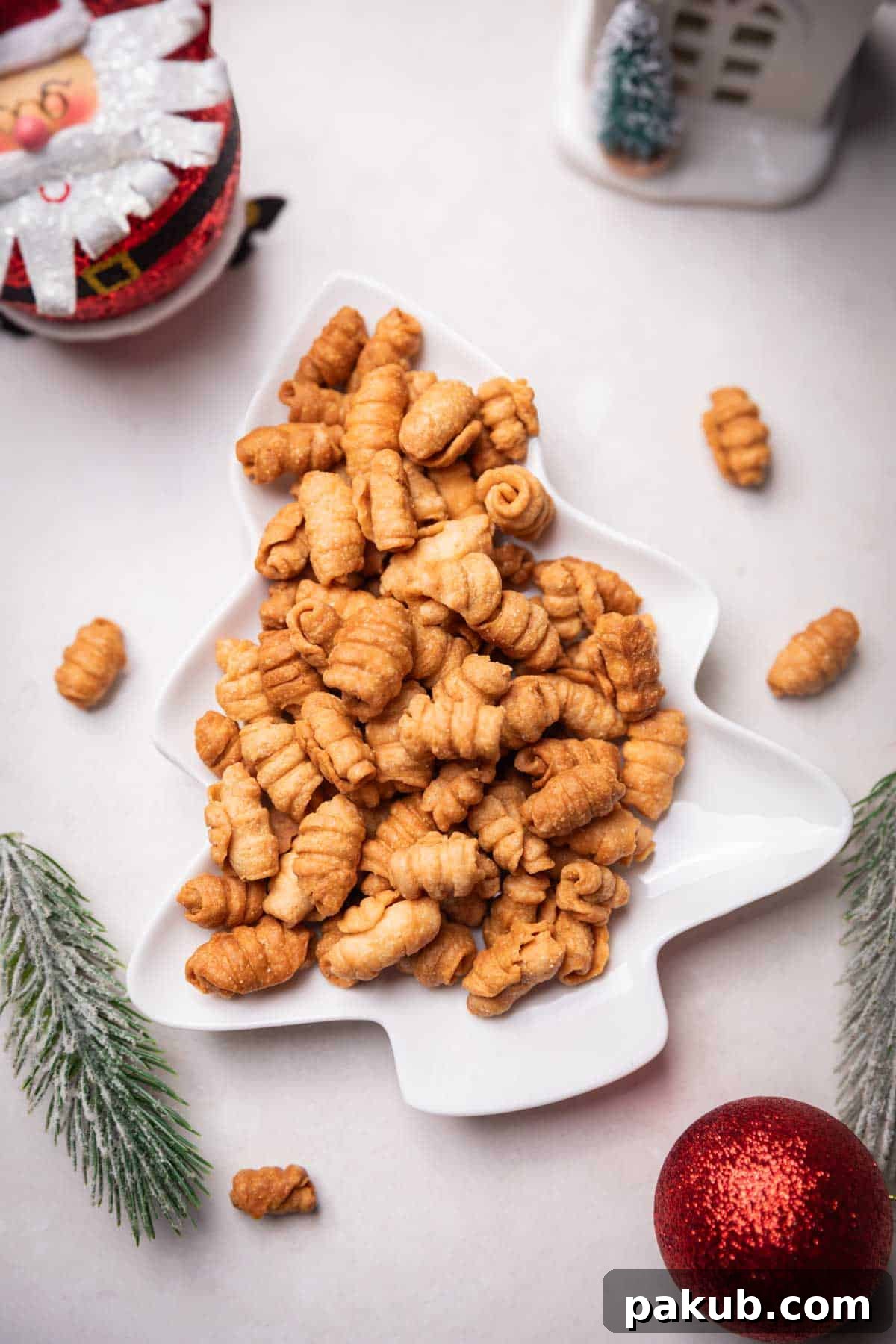
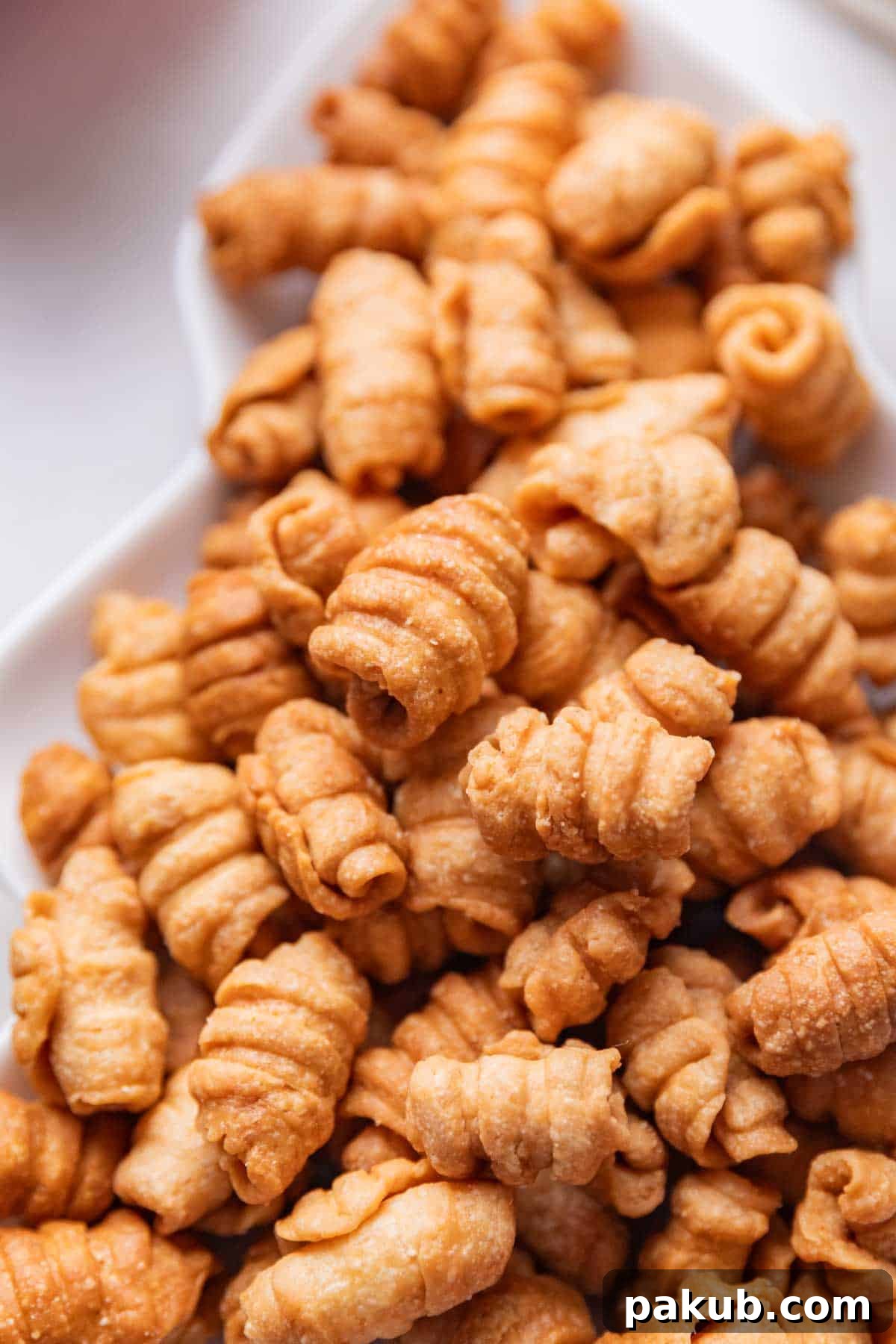
As Christmas approaches, the air fills with the aroma of festive baking. While classics like Plum Cakes and creamy Garlic Mashed Potatoes grace many tables, why not introduce a new, exciting element to your Christmas menu this year? We’re talking about Kulkuls, affectionately known as Kuswar or Kidiyo in local parlance. These deep-fried, bite-sized pastries are renowned for their delightful contrast – incredibly crunchy on the outside, yet wonderfully flaky and soft within. They are an essential part of the Mangalorean Christmas “Kuswar” platter, a collection of sweet and savory treats shared with family and friends.
Many shy away from making Kulkuls, believing the shaping process to be overly complicated. However, we’re here to demystify it! This guide breaks down the shaping into simple, manageable steps. With a little practice and patience, you’ll be able to create perfectly curled Kulkuls just like the experts. Indeed, making Kulkuls is a true labor of love, a process that brings families together in the festive spirit. But we promise, the immensely satisfying and utterly addictive results are well worth every bit of effort. Prepare to be showered with compliments as these golden beauties disappear from the plate in no time!
Table of Contents: Dive into Kulkul
- Kulkul Ingredients: A Detailed Overview
- Step-by-Step Guide to Making Eggless Kulkuls
- Expert Tips for Perfect Kulkuls
- Frequently Asked Questions
- Serving Suggestions & Storage
- Kulkul (Christmas Kuswar) Recipe Card
Kulkul Ingredients: A Detailed Overview
One of the beautiful aspects of Kulkul is that it relies on readily available pantry staples. The magic begins with a simple yet crucial step: soaking sooji (semolina) in melted butter. This process, lasting about 5 minutes, allows the sooji to plump up slightly, contributing significantly to the final texture and flavor of the Kulkuls. This initial step ensures that the sooji cooks evenly and doesn’t feel raw after frying, giving you that perfect, tender-crisp bite.
Once the sooji is ready, it’s combined with all-purpose flour (maida), finely powdered sugar, and a pinch of salt. These dry ingredients form the base of our pastry. The binder is coconut milk, which is added gradually, little by little, until a stiff but pliable dough forms. This gradual addition is key to achieving the right dough consistency, which is vital for both shaping and frying. The subtle richness of coconut milk not only brings an authentic Mangalorean flavor but also contributes to the delightful flakiness.
Finally, the prepared dough is transformed into the signature Kulkul shapes. These delicate curls are then deep-fried in coconut oil until they achieve a beautiful golden-brown hue and a supremely crispy texture. The choice of coconut oil for frying further enhances the traditional flavor profile, making each bite an authentic experience. This simple list of ingredients, combined with careful preparation, yields a festive treat that’s impossible to resist.
Step-by-Step Guide to Making Eggless Kulkuls
Creating these delightful Mangalorean Kulkuls is a rewarding process. Follow these detailed steps to ensure your festive batch turns out perfectly golden and crispy:
- Prepare the Sooji Mixture: In a mixing bowl, combine ⅛ cup sooji (semolina) with 1 tablespoon of melted (but not hot) butter. Stir well to ensure the sooji is evenly coated. Let this mixture sit for at least 5 minutes. This crucial step allows the sooji to absorb the butter, expand slightly, and soften, which is essential for achieving the right texture and preventing a raw taste in the final Kulkuls.
- Combine Dry Ingredients: To the soaked sooji and butter mixture, add ¾ cup all-purpose flour (maida), 3 tablespoons of powdered sugar, and ½ a pinch of salt. Mix these ingredients thoroughly using your hands or a spoon until everything is well incorporated. Ensure there are no lumps in the powdered sugar.
- Form the Dough: Begin adding 2 tablespoons of coconut milk to the mixture, a little at a time. Knead the mixture continuously. The goal is to form a stiff, firm dough. It’s important to add the milk gradually, as too much liquid will result in a sticky dough that is hard to shape, while too little will make it crumbly. Once the dough is formed, scoop out small portions, roughly ½ teaspoon each, and roll them into smooth dough balls. Immediately cover these dough balls with a damp cloth to prevent them from drying out while you work on shaping.
- Prepare for Frying: Heat ½ litre of coconut oil for deep frying in a heavy-bottomed kadai or deep pan over medium-low heat. The oil should be moderately hot, not smoking. Test the temperature by dropping a tiny piece of dough; it should sizzle gently and slowly rise to the surface.
- Shape and Fry: Take one dough ball at a time. Using a clean fork (or a traditional Kulkul comb if you have one), gently flatten the dough ball on the back of the fork tines. Carefully roll the flattened dough from one end to the other, creating the distinctive curled Kulkul shape. Repeat this process to make approximately 20 Kulkuls. As you shape them, carefully drop them into the preheated oil, making sure not to overcrowd the kadai. Fry the Kulkuls on very low heat, stirring occasionally to ensure even cooking and a consistent golden-brown color. Frying on low heat is vital for the Kulkuls to cook through completely from the inside, preventing them from being raw in the center while the outside burns. Once they are light golden and crispy, remove them from the oil using a slotted spoon and place them on a plate lined with paper towels to drain any excess oil.
Allow the Kulkuls to cool completely before serving or storing. They will become even crispier as they cool.
Expert Tips for Perfect Kulkuls
- Sooji Selection and Soaking: I personally prefer Bombay suji (fine semolina) for this recipe, as it yields a finer texture. However, feel free to use whatever type of sooji you have on hand, be it thick or thin. The crucial step is allowing the sooji to soak in melted butter for at least 5 minutes. This hydration process is paramount; it ensures the sooji swells and softens, which is essential for achieving delicious, non-gritty Kulkuls and developing a richer flavor. Skipping this step can result in a raw or coarse texture in the final product.
- Adjusting Sweetness: The amount of powdered sugar specified in this recipe creates Kulkuls that are mildly sweet, catering to a balanced palate. However, sweetness is a matter of personal preference. Feel free to adjust the quantity of sugar to suit your taste. If you prefer a sweeter treat, you can add an extra tablespoon or two. Remember to taste a tiny bit of the dough (before adding coconut milk, if you prefer) to gauge the sweetness.
- Sifting Flour for Smoothness: For the lightest and most uniform Kulkul texture, it’s highly recommended to sift your all-purpose flour (maida) before incorporating it into the dough mixture. Sifting removes any lumps, aerates the flour, and ensures an incredibly smooth and consistent dough, which in turn leads to uniformly textured and perfectly crispy Kulkuls.
- The Role of Sooji in Crispiness: Beyond preventing a raw taste, the addition of sooji (semolina) is a secret weapon for achieving that signature crispiness in Kulkuls. It adds a subtle grittiness that transforms into a delicate crunch upon frying, distinguishing Kulkuls from other pastries. Don’t skip it if you want that authentic texture!
- Dough Consistency is Key: The dough for Kulkuls should be quite stiff but still pliable enough to shape without crumbling. If your dough feels too sticky, add a tiny bit more flour. If it’s too dry and crumbly, add a few drops of coconut milk. Achieving the right consistency will make shaping much easier and ensure the Kulkuls hold their form during frying.
- Maintaining Oil Temperature: This is arguably the most critical tip for perfectly fried Kulkuls. The oil should be heated to a medium-low temperature and maintained there throughout the frying process. If the oil is too hot, the Kulkuls will brown quickly on the outside but remain raw inside. If it’s too cold, they will absorb excessive oil and become greasy. Fry in small batches to prevent the oil temperature from dropping significantly.
- Cooling for Maximum Crispness: Once fried, transfer the Kulkuls to a wire rack or a plate lined with paper towels. While draining excess oil, allowing them to cool completely is important. They will continue to crisp up as they cool down, achieving their optimal texture.
Frequently Asked Questions About Kulkuls
Can I make Kulkul with whole wheat flour?
While technically possible to substitute whole wheat flour (atta) for maida (all-purpose flour), I strongly advise against it for Kulkuls. The distinct texture of Kulkul—its signature crispiness and flakiness—is largely dependent on the gluten structure and lightness of all-purpose flour. Whole wheat flour will result in a denser, tougher Kulkul with a different flavor profile that deviates significantly from the authentic Mangalorean delicacy. For the best results and traditional taste, stick to maida.
How long do Kulkuls last?
One of the great advantages of Kulkuls is their excellent shelf life. If stored correctly in an airtight container at room temperature, Kulkuls can easily remain fresh and crispy for up to a few weeks. This makes them an ideal make-ahead Christmas treat or a gift. Ensure they are completely cooled before storing to prevent moisture accumulation, which can make them soggy.
Can I replace coconut milk with regular milk?
Absolutely! Many traditional recipes, including some versions of Christmas Kuswar, indeed use regular dairy milk instead of coconut milk. Using regular milk will still yield delicious Kulkuls with a slightly different, perhaps milder, flavor profile. My mother-in-law, whose recipe this is inspired by, traditionally uses coconut milk, and I personally adore the subtle, unique flavor it imparts. It adds an authentic coastal essence that is truly delightful. Feel free to experiment based on your preference or what you have available.
Can Kulkuls be baked instead of deep-fried?
While you could technically bake Kulkuls, the texture would be significantly different. Deep-frying is crucial for achieving the characteristic golden-brown crisp exterior and flaky interior that Kulkuls are known for. Baking would likely result in a drier, biscuit-like texture rather than the tender-crisp pastry. For an authentic Kulkul experience, deep-frying is highly recommended.
My Kulkuls are turning out too hard, what went wrong?
If your Kulkuls are too hard, it could be due to a few factors. The dough might have been too stiff or over-kneaded, developing too much gluten. Ensure your dough is stiff but still pliable. Another common reason is frying at too high a temperature; quick frying can harden the exterior while leaving the inside dense. Always fry on low heat to allow them to cook evenly and remain tender inside.
Serving Suggestions & Storage for Kulkuls
Once your Kulkuls are cooled and crisp, they are ready to be enjoyed! Serve them as is, allowing their subtle sweetness and rich texture to shine. For an added touch of elegance and sweetness, you can lightly dust them with powdered sugar just before serving. They pair wonderfully with a warm cup of Chai or coffee, making for a truly fun and delicious Christmas snack or an anytime treat.
I highly recommend making a generous batch of this Kulkul recipe, as these little delights are incredibly addictive and tend to disappear remarkably quickly! For storage, ensure the Kulkuls are completely cool and then transfer them to an airtight container. Stored at room temperature, they will maintain their delicious crispiness for up to several weeks, allowing you to enjoy the festive spirit long after Christmas is over.
If you savored this recipe and wish to explore more culinary treasures from the region, do check out other Mangalorean delicacies in my Coast to Coast to series. And, as always, if you try this recipe, please don’t hesitate to leave me a comment below! I love hearing about your cooking adventures and seeing your creations. Feel free to send pictures of your beautifully made Kulkuls over on my Instagram @myfoodstory. Connecting with you all and sharing our passion for food is truly the best part!
Kulkul (Christmas Kuswar)
Richa
Crunchy on the outside, soft and flaky on the inside, Kulkuls are a delicious Christmas snack that can be eaten as is or with a cup of tea!
10 mins
20 mins
30 mins
4 portions
Ingredients
- ¾ cup maida (all-purpose flour)
- ⅛ cup sooji (semolina)
- 1 tablespoon butter, melted
- 3 tablespoons sugar powder
- ½ pinch of salt
- 2 tablespoons coconut milk
- ½ litre coconut oil for deep frying
Instructions
- Soak sooji in melted butter for 5 minutes.
⅛ cup sooji, 1 tablespoon butter
- Add the rest of the ingredients, except for coconut milk, and combine them well.
¾ cup maida, 3 tablespoons sugar powder, ½ pinch of salt
- Add coconut milk little by little to make a hard dough. Scoop out about ½ a teaspoon full of dough & form it into a dough ball. Keep it covered with a cloth to avoid the dough getting dry.
2 tablespoons coconut milk
- Heat coconut oil for deep frying in a kadai till it’s just medium hot.
½ litre coconut oil for deep frying
- Make about 20 Kulkul shapes from the dough balls (using a fork or comb), add them to the kadai & deep fry them on low heat till they are light golden. Keep stirring so that the Kulkuls get evenly fried. It’s important to fry them on very low heat to ensure they are cooked thoroughly from the inside.
Notes
- Kulkuls must be cooked on low heat so that they get fried uniformly from inside & out, achieving perfect crispiness without being raw.
- Always allow Kulkuls to cool completely before storing in an airtight container to maintain their crisp texture for weeks.
Nutrition
Carbohydrates: 27g,
Protein: 3g,
Fat: 4g,
Saturated Fat: 2g,
Polyunsaturated Fat: 0.2g,
Monounsaturated Fat: 1g,
Trans Fat: 0.1g,
Cholesterol: 8mg,
Sodium: 34mg,
Potassium: 36mg,
Fiber: 1g,
Sugar: 0.1g,
Vitamin A: 87IU,
Calcium: 5mg,
Iron: 1mg
Like this recipe? We’d love to hear from you! Rate and comment below to share your experience with this delicious Kulkul recipe.