
The Ultimate Veg Gobi 65 Biryani: A Crispy, Spicy, and Irresistibly Flavorful Fusion
Prepare to elevate your vegetarian dining experience with our sensational **Veg Gobi 65 Biryani** – a truly unique and incredibly enjoyable dish that seamlessly blends the crispy, spicy allure of Gobi 65 with the aromatic richness of a traditional biryani. If you’re a fan of Gobi 65 as a standalone starter, imagine that incredible texture and bold flavor woven into every layer of a perfectly cooked biryani. This recipe isn’t just a meal; it’s an adventure for your taste buds, promising a delightful crunch with every forkful that sets it apart from any other vegetable biryani you’ve tried.
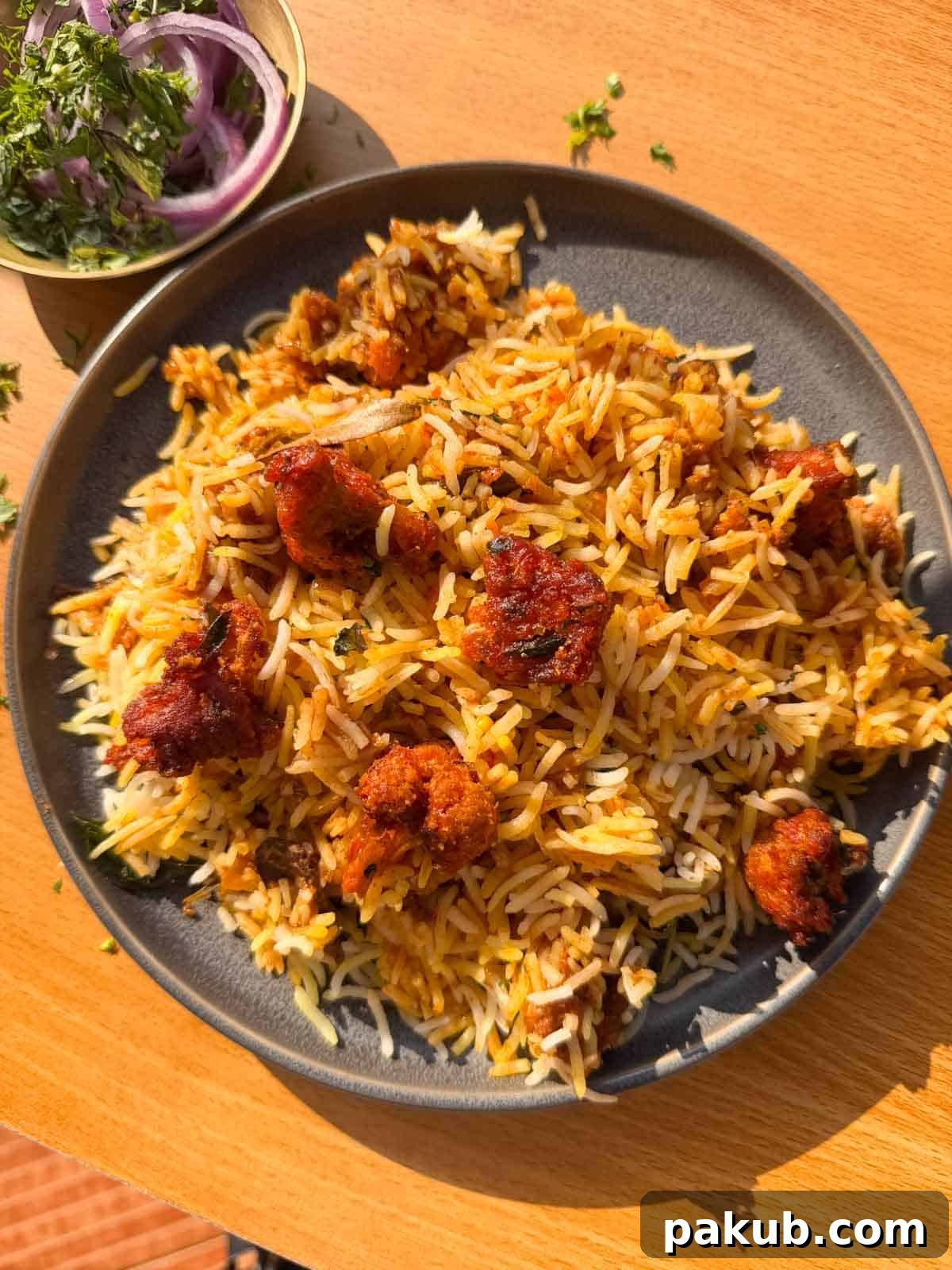
For those familiar with crafting Gobi 65, you already understand the magic of those perfectly deep-fried, spiced cauliflower florets. Now, envision these golden nuggets carefully layered within a magnificent biryani, where they meet fragrant long-grain basmati rice, a deeply spiced, luscious gravy, delicate saffron-infused milk, and golden-brown birista (fried onions). The initial thought might be, “Will the cauliflower retain its crispiness through the dum cooking process?” And the answer, to our utter delight, is a resounding yes! The Gobi 65 maintains its appealing crisp exterior, absorbing just enough of the savory biryani gravy to create a texture contrast that is simply unparalleled in the world of vegetarian biryanis.
While this recipe may appear to involve numerous steps – from frying the Gobi 65 to meticulously layering the biryani – we assure you that most of these techniques are likely familiar if you’ve ever prepared any veg biryani or even a basic Gobi 65. The initial preparation is surprisingly quick, often taking less than 15 minutes, and you can have this exquisite dish ready to serve in under an hour of active cooking. It has quickly become a beloved staple in our household, a dish so popular that even the pickiest eaters among us eagerly request it by name. Convincing children to willingly devour cauliflower is a victory in itself, and this Gobi 65 Biryani consistently delivers that triumph!
Table of Contents: Gobi 65 Biryani Essentials
- Key Ingredients for Gobi 65 Biryani
- Expert Tips for a Perfect Gobi 65 Biryani
- Frequently Asked Questions
- Storage and Reheating Advice
- Delightful Serving Suggestions
- The Fascinating History of ’65’
- Watch the Gobi 65 Biryani Recipe Video
Essential Ingredients for Crafting the Perfect Gobi 65 Biryani
Creating an exceptional Gobi 65 Biryani starts with selecting high-quality ingredients. Each component plays a vital role in building the layers of flavor and texture that make this dish so memorable.
- Cauliflower Florets: The star of our biryani! We blanch them briefly in hot, salted water to ensure they are tender on the inside yet firm enough to hold their shape. This critical step prepares them for the rich marinade and subsequent deep-frying, guaranteeing a perfect bite.
- Gobi 65 Marinade: This vibrant blend infuses the cauliflower with its signature flavor. It combines creamy curds (yogurt) for tenderness, aromatic ginger-garlic paste, a beautiful red Kashmiri chili powder for color and mild heat, earthy coriander and cumin, bright turmeric, fragrant curry leaves, a touch of sugar for balance, and a mix of rice flour and cornflour to create that irresistibly crispy coating when fried.
- Basmati Rice: The foundation of any great biryani. We highly recommend using aged, extra-long-grain basmati rice. Its superior quality ensures that each grain cooks up fluffy, separate, and beautifully elongated, holding its structure and fragrance through the dum cooking process.
- Cooking Oil: A neutral-flavored oil, such as sunflower oil, is ideal. It’s used generously for both achieving the perfect crispiness of the Gobi 65 and for preparing the flavorful biryani gravy, allowing the spices to shine without imparting an overpowering taste.
- Aromatics for the Gravy: Aromatic ingredients are key to building a robust flavor base. Finely sliced onions caramelize beautifully, while fresh ginger-garlic paste and pungent green chilies provide depth and a kick. Cumin seeds and fennel seeds are tempered in oil, releasing their warm, sweet, and anise-like notes.
- Spice Powders: A carefully selected blend of ground spices creates the complex, layered taste profile. Kashmiri chili powder for color and gentle heat, coriander powder for citrusy warmth, cumin powder for earthy undertones, turmeric for golden hue, fragrant cardamom powder, a wholesome garam masala blend, and dried fenugreek leaves (kasuri methi) for a distinctive, slightly bitter aroma.
- Tomato Puree & Curd: These two form the backbone of the biryani gravy. Tangy tomato puree adds a pleasant acidity that cuts through the richness, while smooth, whisked curd (yogurt) contributes a creamy texture and a subtle sourness, enriching the overall mouthfeel of the gravy.
- Whole Spices: Bay leaf, cinnamon sticks (dalchini), cloves, green cardamom pods, and the unique stone flower (pathar ke phool) are essential. These whole spices release their potent fragrances slowly during cooking, infusing the rice and gravy with an authentic, deep biryani aroma.
- For Layering: The final touches that bring the biryani together. Golden-fried onions (birista) add sweetness and crunch, fresh mint and coriander leaves impart a vibrant freshness, saffron strands soaked in warm milk contribute a beautiful golden hue and an exotic fragrance, and a tablespoon of rich ghee provides a final touch of richness and aroma.
- Lemon Wedge: A simple yet effective addition during rice cooking. Adding a lemon wedge or a squeeze of lemon juice helps keep the basmati rice grains distinct and beautifully white, preventing them from sticking together.
Expert Tips for Crafting Your Best Gobi 65 Biryani
Achieving the perfect balance of crispiness, flavor, and texture in this unique biryani requires attention to a few key details. Follow these expert tips to ensure your Gobi 65 Biryani is a resounding success every time.
- Always blanch the cauliflower before marinating: This step is non-negotiable. Submerge the cauliflower florets in hot, salted water for precisely 60 seconds – no longer. Blanching ensures the cauliflower is partially cooked and tender on the inside, preventing it from being raw after frying, while simultaneously ensuring it remains firm enough to crisp up beautifully without becoming mushy.
- Fry the Gobi 65 on high heat: For that signature crispy, crunchy exterior that holds up through the dum cooking, the oil must be adequately hot. If the oil temperature is too low, the batter will absorb excess oil, resulting in soggy, greasy florets rather than perfectly crisp ones. Maintain a high heat for quick, effective frying.
- Avoid overcooking the Gobi 65 in the gravy: Once the fried Gobi 65 is added to the biryani gravy, it only needs about one minute of gentle simmering. This brief moment is just enough for the florets to get coated with the rich sauce. Any longer, and the delicate fried batter may start to peel off, and the cauliflower can become soft and mushy, losing its desirable texture.
- Reserve a portion of the fried Gobi for the top layer: This is a crucial tip for both presentation and texture. By setting aside about one-third of the freshly fried Gobi 65, you can layer it on top of the biryani just before the dum process. This ensures that when the biryani is finally opened, you’re greeted with beautiful, crispy pieces on the very top, adding a wonderful textural contrast to the softer, gravy-infused cauliflower within the layers.

Frequently Asked Questions About Gobi 65 Biryani
Gobi 65 is a celebrated South Indian appetizer featuring bite-sized cauliflower florets. These florets are first marinated in a flavorful mixture of spiced yogurt and flour, often including ginger-garlic paste, chili powder, and curry leaves. They are then deep-fried to achieve a wonderfully crispy exterior and a tender interior, making them a popular snack or starter in Indian cuisine.
While you technically can air fry the Gobi 65 to reduce oil, the resulting texture will not be identical to deep-frying. Deep-frying is crucial for achieving that signature, super crispy, and robust coating that is resilient enough to hold up through the dum cooking process of the biryani. If you opt for air frying, ensure you brush the marinated florets generously with oil and cook them at 200°C (400°F) for approximately 10–12 minutes, flipping them halfway through, to get as close to the desired crispiness as possible.
For the best results and the authentic texture of Gobi 65 Biryani, we strongly advise against using frozen cauliflower. Frozen florets contain a significantly higher moisture content, which they release upon thawing and cooking. This excess water will prevent them from crisping up properly during frying and can lead to a soggy, undesirable texture in the finished dish. Fresh cauliflower is essential for achieving that delightful crunch.
Dum cooking is a traditional Indian cooking method where food is slow-cooked in a sealed pot, allowing it to cook in its own steam and juices. The pot is sealed with dough or a tight-fitting lid, trapping the flavors and aromas inside. For Gobi 65 Biryani, dum cooking is vital because it gently infuses the rice with the rich flavors of the gravy and spices while allowing the Gobi 65 to absorb moisture without losing all its crispness, creating a tender yet textured component. This slow cooking also ensures the basmati rice grains become perfectly fluffy and separate.
Adjusting the spice level is easy. For a spicier biryani, you can increase the amount of green chilies in the gravy or add a hotter red chili powder (like Byadgi or regular chili powder) in addition to or instead of Kashmiri chili powder in both the Gobi 65 marinade and the biryani gravy. To make it milder, reduce the green chilies and stick to Kashmiri chili powder, which primarily provides color rather than intense heat. Always taste the marinade and gravy before layering to adjust to your preference.
Storage and Reheating Advice for Gobi 65 Biryani
To enjoy your delicious Gobi 65 Biryani leftovers, follow these storage and reheating tips to maintain its flavor and quality.
- In the fridge: Any leftover Gobi 65 Biryani can be safely stored in an airtight container in the refrigerator for up to 2 days. It’s important to note that the crispy texture of the cauliflower will naturally soften as it sits and absorbs more moisture from the gravy. However, many find that the flavors actually deepen and meld beautifully overnight, making the biryani even more delicious the next day.
- Freezing: We do not recommend freezing this particular biryani. The fried Gobi 65 will completely lose its desired texture once thawed, becoming mushy and unpleasant. Furthermore, basmati rice can also turn mushy and lose its delicate grain structure after being frozen and reheated, compromising the overall quality of the dish.
- Reheating tip: For the best reheating experience, gently warm the biryani on the stovetop. Transfer the leftovers to a heavy-bottomed pan, add a splash of water to create steam and prevent sticking, then cover with a lid and reheat on low heat. This method helps to loosen the rice grains and warm the biryani evenly while preserving as much of the texture as possible. Avoid using the microwave if you can, as it tends to dry out the rice and can make the cauliflower rubbery or less appealing.
Delightful Serving Ideas for Your Gobi 65 Biryani
This Gobi 65 Biryani is incredibly flavorful and satisfying on its own, truly a complete meal. However, if you wish to complement it with a side or two, these pairings from our blog enhance the dining experience beautifully:
- Onion Raita: The quintessential biryani accompaniment. The refreshing coolness of spiced yogurt, combined with the crisp bite of raw onions and a hint of mint, provides a perfect contrast to the rich and spicy biryani, cleansing the palate with every spoonful.
- Boondi Raita: For those who appreciate an extra textural dimension in their side dish, boondi raita is an excellent choice. The tiny, crispy fried gram flour balls (boondi) add a delightful crunch that plays well against the spiced cauliflower and fluffy rice, all suspended in cool, creamy curd.
- Smoked Baingan Salad: If you’re hosting guests and aiming to impress with an elevated spread, this smoky, creamy eggplant salad is a sophisticated addition. Its unique flavor profile and smooth texture offer a luxurious counterpoint to the biryani, taking the entire meal up a notch.
- Cucumber Raita: A classic for a reason. Light, incredibly refreshing, and requiring minimal effort, cucumber raita is perfect when you want a simple, cooling side that allows the vibrant flavors of the Gobi 65 Biryani to remain the star of the show.
The Fascinating History Behind the ’65’ in Gobi 65
Have you ever wondered about the intriguing number ’65’ appended to dishes like Gobi 65 or Chicken 65? The story dates back to 1965, the year a legendary dish called Chicken 65 was first created at the iconic Buhari Hotel on Mount Road in Chennai, India. Its founder, A.M. Buhari, is credited with this culinary invention that quickly captured the hearts (and taste buds) of many.
The most widely accepted explanation for the ’65’ is simply that it refers to the year the dish was introduced. However, over time, various myths and theories have emerged, adding to the dish’s mystique. Some popular tales suggest it was the 65th item on the hotel’s menu, a dish made with exactly 65 chilies, or even that the chicken used was precisely 65 days old. While these stories are charming, the hotel’s subsequent culinary innovations lend credibility to the year-of-invention theory. Buhari Hotel later introduced other numbered dishes like Chicken 78, Chicken 82, and Chicken 90, each named after the year of its inception, solidifying the idea that ’65’ was indeed a timestamp rather than a measurement of ingredients.
The vegetarian adaptation, Gobi 65, arrived much later, as the demand for vegetarian versions of popular non-vegetarian dishes grew. Innovators skillfully swapped the chicken for cauliflower, retaining the essential spiced batter and the deep-frying technique that made the original Chicken 65 so irresistibly addictive. This clever adaptation ensured that the vibrant flavors and appealing crispiness could be enjoyed by a wider audience, leading to Gobi 65 becoming a beloved dish in its own right, carrying forward a delicious legacy.

Who would have thought that a cauliflower biryani would become such a cherished recipe in our home? Yet, here we are, enjoying this unique and flavorful creation regularly. If your family falls in love with this Veg Gobi 65 Biryani as much as ours has, please share your experience! Head over to Instagram and tag me @my_foodstory; those messages truly brighten my week and inspire me to keep sharing delicious recipes.
Watch the Gobi 65 Biryani Recipe Video

Gobi 65 Biryani Recipe
Richa
15 minutes
45 minutes
60 minutes
6
persons
Print Recipe
Ingredients
- 4 cups cauliflower or gobhi florets (approx. 320 gms)
- 4 cups boiling hot water
- ½ teaspoon salt
Gobi 65 Marinade
- 3 tablespoons curds (yogurt)
- 2 teaspoons ginger garlic paste
- ¼ teaspoon turmeric powder
- 1 ½ tablespoons Kashmiri chilli powder
- 1 teaspoon coriander powder
- ½ teaspoon cumin powder
- 1 ¼ teaspoons salt
- 1 teaspoon sugar
- 2 sprigs curry leaves, finely chopped
- 3 ⅔ tablespoons rice flour
- 4 ⅔ tablespoons cornflour
- 1-2 tablespoons water
Biryani Rice
- 1 ½ cups basmati rice, 270gms, soaked for 30 minutes
- 6-7 cups water
- 1 ½ tablespoons salt
- 1 bay leaf
- 1 inch cinnamon (dalchini)
- 4 cloves
- 2 green cardamoms
- 1 piece stone flower (pathar ke phool)
- ½ lemon juice & wedge
Biryani Gravy
- 3 tablespoons sunflower or any neutral-flavored cooking oil, + 3 tablespoons for deep frying gobhi
- 1 bay leaf
- 1 inch cinnamon
- 4 cloves whole
- 2 green cardamoms
- ¾ teaspoon cumin seeds
- ¾ teaspoon fennel seeds
- 1 ¼ cups finely chopped onions
- 1 ¾ teaspoons ginger garlic paste
- 2 green chillies, finely chopped
- 2 ½ teaspoons Kashmiri chilli powder
- 2 ½ teaspoons coriander powder
- ⅝ teaspoon cumin powder (½ + ⅛ tsp)
- ⅜ teaspoon turmeric powder (¼ + ⅛ tsp)
- ⅛ teaspoon cardamom powder
- ⅝ teaspoon garam masala powder (½ + ⅛ tsp)
- 1 teaspoon salt
- 2 sprigs curry leaf
- ¾ cup + 3 tablespoons tomato puree
- ¼ cup + 1 tablespoon curds, whisked
- 1 ½ cups water
- ⅛ teaspoon roasted & crushed kasuri methi (dried fenugreek leaves)
For Layering the Biryani
- ¼ cup birista, golden fried onions
- 1 ½ tablespoons finely chopped mint leaves
- 1 ½ tablespoons finely chopped coriander leaves
- A pinch of saffron soaked in 2 tablespoons of warm milk
- 1 tablespoon ghee
Instructions
Preparing the Gobi 65
-
Begin by blanching the cauliflower florets. Dip them into boiling hot water with ½ teaspoon of salt and keep them covered for a maximum of 60 seconds. Immediately drain the cauliflower and allow it to cool completely. Once cooled, add all the ingredients listed under the “Gobi 65 Marinade” section. Toss everything thoroughly to ensure the florets are well coated. Let it rest and marinate for 20-30 minutes, allowing the cauliflower to absorb all the wonderful flavors of the spices.
-
Heat oil in a deep kadai or pan until it reaches a hot temperature suitable for deep-frying. Carefully add the marinated Gobi florets in batches, ensuring not to overcrowd the pan. Fry on high heat for 3-4 minutes, stirring often to ensure even cooking and to achieve a beautifully crisp, golden exterior. Once fried, remove the Gobi 65 and set it aside on a plate lined with paper towels to drain excess oil.
Crafting the Biryani Gravy
-
In a large pot or kadai, add 3 tablespoons of the same oil used for deep-frying (this adds extra flavor). Introduce the whole spices: bay leaf, cinnamon stick, cloves, green cardamoms, cumin seeds, and fennel seeds. Sauté for a few seconds until they begin to sizzle and release their fragrant aromas. Add the finely chopped onions and sauté on low heat for 5-6 minutes until they turn a golden brown.
-
Next, stir in the ginger-garlic paste and finely chopped green chilies, sautéing for a few seconds until the raw aroma dissipates. Incorporate the dry spice powders: coriander, cumin, Kashmiri chili, turmeric, cardamom, and garam masala, along with salt. Sauté briefly to toast the spices. Add the tomato puree and 1 cup of water, then cook on low heat for 7-8 minutes, stirring occasionally, until the oil begins to separate from the masala, indicating it’s well-cooked.
-
Stir in the whisked curds and another 1 cup of water. Continue to cook on low for 6-7 minutes until the oil once again separates from the gravy, showing its richness. Now, add about two-thirds of the fried Gobi 65 to the gravy and gently mix. Cook for just one minute, ensuring the cauliflower is coated with the flavorful sauce. It is crucial not to cook it for longer than a minute at this stage, as the Gobi’s crispy coating can start to peel off and the florets may turn mushy.
Layering the Biryani for Dum Cooking
-
To the prepared biryani gravy, add 3 tablespoons of birista (golden fried onions) and 2 teaspoons each of finely chopped mint and coriander leaves. Gently mix these into the gravy, creating a flavorful base for the rice layers.
-
In a separate large pot, bring 6-7 cups of water to a rolling boil over high heat. Add salt, the whole spices for the rice (bay leaf, cinnamon, cloves, green cardamoms, stone flower), and the ½ lemon juice and wedge. Drain the pre-soaked basmati rice and add it to the boiling water. Cook on high heat for approximately 5 minutes, or until the rice is about 70% cooked (it should still have a slight bite but not be raw). Using a slotted spoon, carefully remove the partially cooked rice and spread it evenly in a layer over the biryani gravy in the pot.
-
On top of the rice layer, sprinkle 1 tablespoon of birista and 2 teaspoons each of fresh mint and coriander leaves. Gently rub the saffron strands in the warm milk to fully extract their flavor and vibrant color, then drizzle this saffron milk evenly over the rice. Finally, arrange the remaining one-third of the fried Gobi 65 on the very top layer. Drizzle with 1 tablespoon of ghee for added richness.
-
To initiate the dum cooking process, heat a tawa (griddle) on your stovetop. Once hot, place the biryani pot on top of the tawa, cover the pot tightly with a lid (you can seal it with dough if you prefer a traditional dum), and steam for 15 minutes on low heat. After 15 minutes, turn off the heat but leave the biryani pot undisturbed on the tawa for at least half an hour before serving. This resting period is crucial for the flavors to fully meld and for the rice to become perfectly fluffy.
Video Tutorial
Important Notes for Success
- Blanching the Gobi (cauliflower) before marinating is absolutely essential. This step ensures that the florets are not raw on the inside after frying, providing a tender interior while allowing the exterior to achieve optimal crispiness.
- For the most authentic flavor and superior texture, always opt for aged, extra-long-grain basmati rice. Its ability to cook into separate, fluffy grains is paramount for a traditional biryani.
- Adding lemon juice or a lemon wedge while cooking the biryani rice serves a dual purpose: it helps keep the individual rice grains beautifully white and prevents them from sticking together.
- Before serving, allow the biryani to rest, undisturbed, for at least half an hour after the dum cooking. When you’re ready to serve, gently fluff the rice using a fork or a silicone spatula. This technique helps the delicate rice grains to firm up slightly and separates them, preventing breakage and ensuring a perfect presentation.
Nutrition Information (per serving, approximate)
Calories:
430
kcal
,
Carbohydrates:
63
g
,
Protein:
10
g
,
Fat:
16
g
,
Saturated Fat:
5
g
,
Polyunsaturated Fat:
1
g
,
Monounsaturated Fat:
7
g
,
Cholesterol:
22
mg
,
Sodium:
3065
mg
,
Potassium:
565
mg
,
Fiber:
6
g
,
Sugar:
6
g
,
Vitamin A:
1107
IU
,
Vitamin C:
55
mg
,
Calcium:
185
mg
,
Iron:
3
mg
Enjoyed this recipe? Share your thoughts below!
This article was thoughtfully researched and written by Harita Odedra.