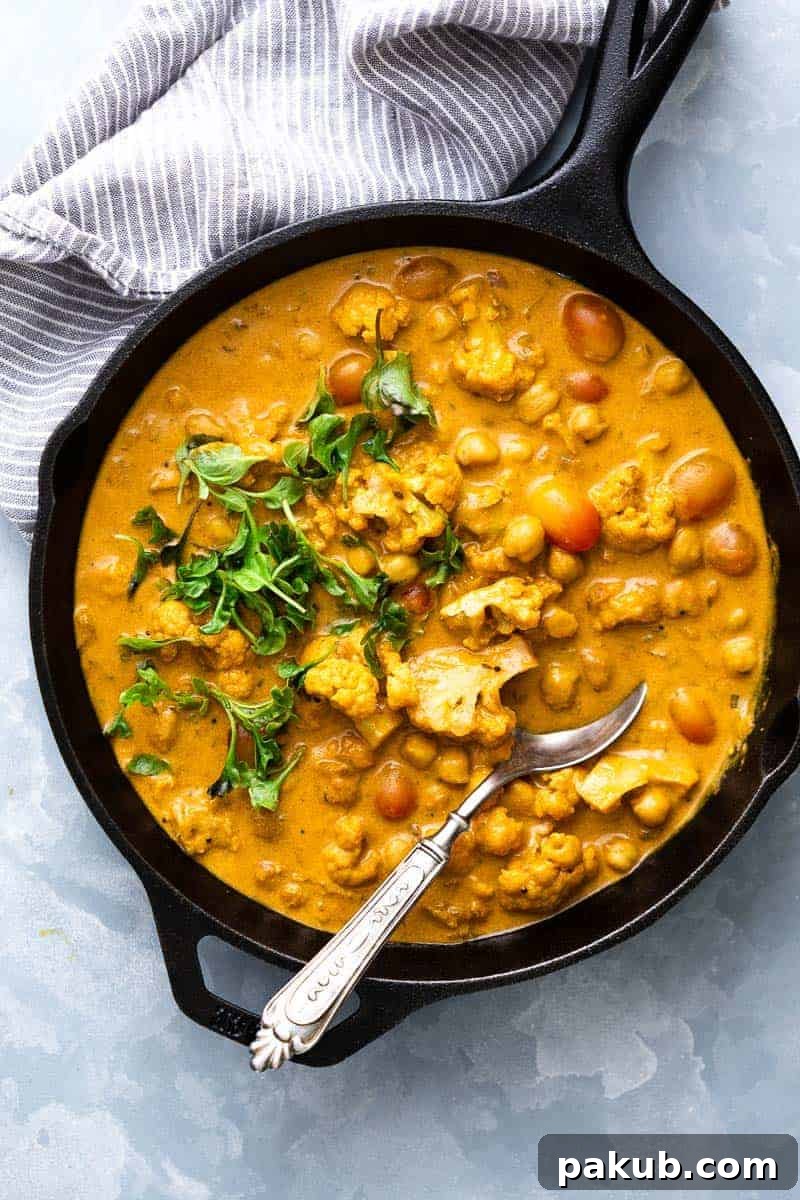
Easy One-Pot Cauliflower Chickpea Coconut Curry: Your New Favorite Weeknight Meal
Imagine a dinner that’s both incredibly satisfying and delightfully simple to prepare. This classic one-pot cauliflower chickpea coconut curry delivers just that! It features tender cauliflower florets and soft, protein-rich chickpeas swimming in an unbelievably creamy, aromatic, and super addictive coconut sauce. What makes this recipe a true winner is not just its vibrant flavors but also how effortlessly it comes together – all in a single pot, guaranteeing minimal cleanup. Perfectly vegan and gluten-free, this versatile curry also welcomes additions like chicken or shrimp if you prefer a meaty twist, making it a fantastic choice for any palate.
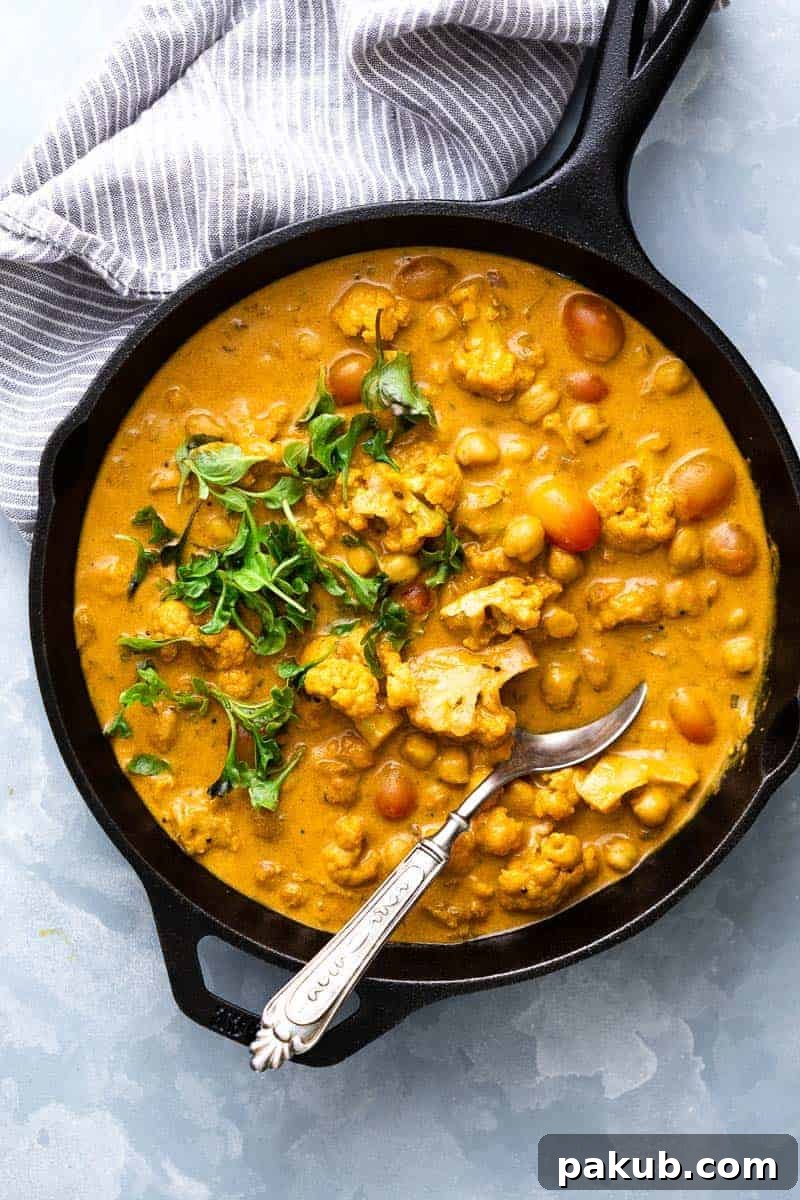
Discover the Magic of This Flavorful Cauliflower Chickpea Coconut Curry
This cauliflower chickpea coconut curry is a testament to the fact that profound flavor doesn’t require a long list of obscure ingredients or complicated techniques. It’s a remarkably easy-to-make dish that bursts with a depth of taste, proving that simplicity can be incredibly delicious. The inspiration for this culinary journey began when I encountered a similar recipe by my wonderful blogger friend, Asha, from Food Fashion Party, known for her fantastic cookbook Masala and Meatballs. Her ingenious approach immediately captivated me, and I knew I had to put my own spin on it.
While purists might note that pre-blended curry powder isn’t a traditional staple in many regional Indian kitchens, where spices are often toasted and ground individually, I’ve found it to be an invaluable ingredient. My personal culinary explorations led me to discover the sheer convenience and consistent deliciousness that a good quality curry powder offers. It delivers that distinctive, comforting “Indian taste” I crave without the need to meticulously balance multiple spices. Ever since I picked some up out of curiosity, it has become a secret weapon in my pantry, elevating everything from scrambled eggs to homemade hummus. Its inclusion in this cauliflower chickpea coconut curry seamlessly weaves together the creamy richness of coconut milk with the earthy undertones of the vegetables, creating a harmonious and utterly satisfying meal that I simply adore.
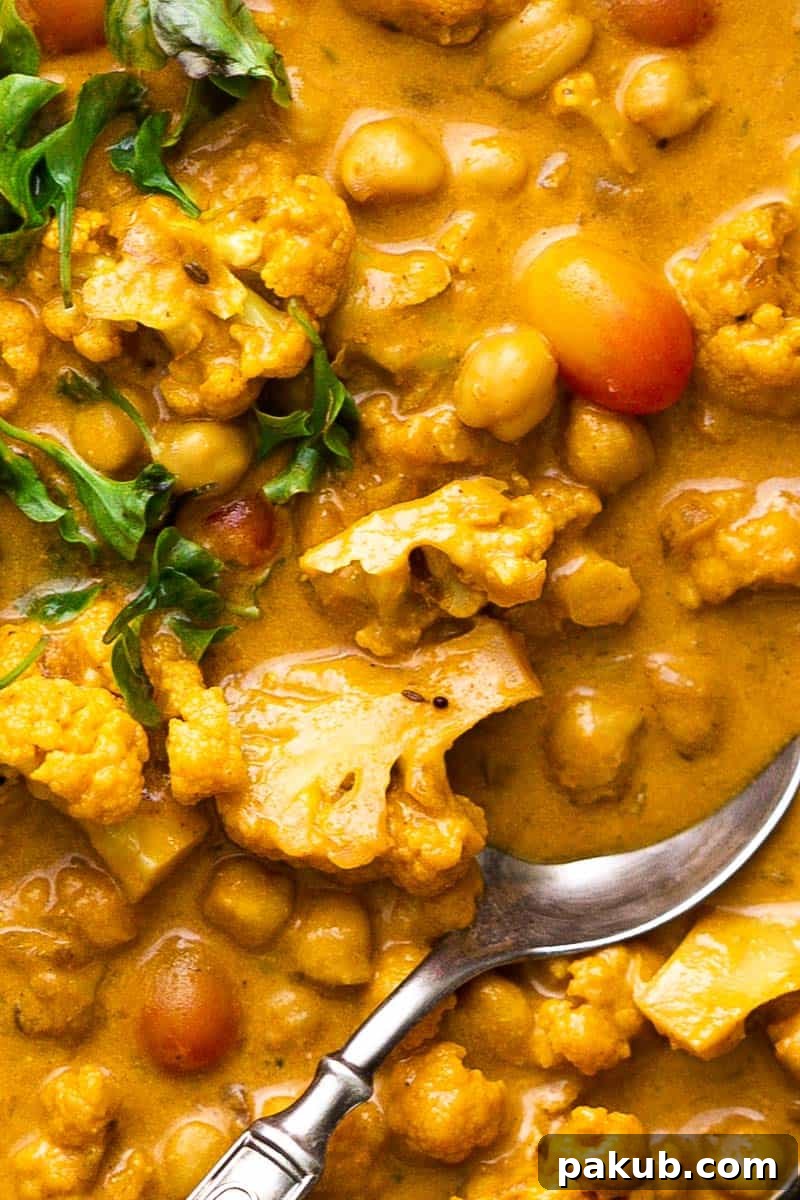
Table of Contents: Your Guide to a Perfect Cauliflower Chickpea Coconut Curry
- Richa’s Top Tips for the Best Cauliflower Chickpea Coconut Curry
- Frequently Asked Questions (FAQs)
- More Delicious Coconut Recipes to Explore
Richa’s Top Tips for Crafting the Ultimate Cauliflower Chickpea Coconut Curry
- Boost the Protein Content: To transform this flavorful curry into an even more substantial meal, consider adding a protein of your choice. This recipe is incredibly adaptable! You can experiment with firm paneer cubes, sautéed tofu, tender chicken breast (cut into 1-inch pieces), or succulent shrimp. These additions not only add nutritional value but also introduce delightful textural variations.
- Mastering Cooking Times for Add-Ins: When you introduce other ingredients, it’s crucial to adjust your cooking timeline to ensure everything is perfectly cooked.
- For heartier vegetables like potatoes or sweet potatoes, dice them into 1-inch pieces and add them alongside the cauliflower. They will typically require 15-20 minutes of simmering to become tender.
- If adding chicken (cut into small pieces), incorporate it after the aromatic base has been sautéed (before adding cauliflower and chickpeas). It will generally need about 20 minutes to cook through in the simmering sauce.
- When using quick-cooking proteins like shrimp or prawns (around 500g / 1 lb), add them only during the final 7-8 minutes of cooking. Shrimp cooks very rapidly and can become rubbery if overcooked. Ensure your vegetables are nearly tender before introducing the shrimp.
- Paneer or Tofu can be gently stirred in during the last 5-10 minutes of simmering to allow them to absorb the curry’s rich flavors without compromising their texture.
- Achieving Perfect Cauliflower Texture: The goal is cauliflower that is fork-tender yet retains a slight bite and its structural integrity. Keep an eye on it during the simmering process. Overcooking will result in mushy florets, which diminishes the dish’s appeal.
- The Art of Tempering Spices: Do not rush the initial step of blooming the cumin seeds, garlic, and ginger in hot oil. This process, often referred to as “tempering” or “tadka” in Indian cuisine, awakens their flavors and aromas, creating the foundational essence of your curry. A properly bloomed spice base makes all the difference.
- Adjusting Consistency to Your Liking: If you prefer a thicker curry, simply allow it to simmer uncovered for an extra 5-10 minutes towards the end, letting some of the liquid evaporate. For a thinner consistency, you can easily stir in a little extra water or coconut milk until it reaches your desired texture.
- The Brightening Power of Citrus and Herbs: A squeeze of fresh lime juice just before serving can magically brighten all the flavors in the curry. And a generous sprinkle of freshly chopped coriander (cilantro) is essential; its fresh, herbaceous notes provide a beautiful contrast to the rich, creamy sauce.
Frequently Asked Questions (FAQs) About This Delightful Coconut Curry
No curry powder? No problem! You can easily create a fantastic substitute. Simply combine 1 tablespoon of coriander powder, 1 teaspoon of cumin powder, and 1 teaspoon of garam masala powder. This trio of spices will infuse your curry with a rich, authentic, and wonderfully aromatic flavor profile.
This coconut curry base is incredibly versatile for various vegetables. Besides cauliflower, consider adding green beans, sliced bell peppers, spinach (add at the very end), diced carrots, or even chunks of sweet potato or regular potato for a heartier meal. Mushrooms also work wonderfully, adding an umami depth. Feel free to use what’s fresh and available!
Absolutely! This curry is an excellent candidate for freezer meals, making your meal prep routine much easier. Once you’ve cooked the curry, allow it to cool completely to room temperature. Then, transfer it into airtight, freezer-safe containers or heavy-duty freezer bags. It will maintain its quality and delicious flavor in the freezer for up to one month. To serve, simply thaw it overnight in the refrigerator and gently reheat on the stovetop or in the microwave.
Yes, this cauliflower chickpea coconut curry is perfect for preparing in advance! Many find that the flavors actually deepen and become even more harmonious after a day or two, making it taste even better. You have two main options: either cook the entire curry completely and simply reheat it when you’re ready to eat, or prepare a large batch of the flavorful sauce and then add the cauliflower and chickpeas closer to serving time to ensure they are perfectly tender and not overcooked.
For the richest, creamiest, and most authentic flavor in your curry, it is highly recommended to use full-fat canned coconut milk. Light coconut milk contains more water and will result in a much thinner and less satisfying sauce. Always check the ingredients list to ensure you’re getting pure coconut extract and water, avoiding brands with excessive additives.
The recipe calls for 1 teaspoon of red chili powder, which typically provides a mild to medium level of heat. If you prefer a milder curry, feel free to reduce the chili powder to ½ teaspoon or even omit it entirely. For those who enjoy more heat, you can increase the amount of red chili powder, add a pinch of cayenne pepper, or include a finely chopped green chili (like a serrano or Thai chili) when sautéing the initial aromatics (garlic, ginger, onion).
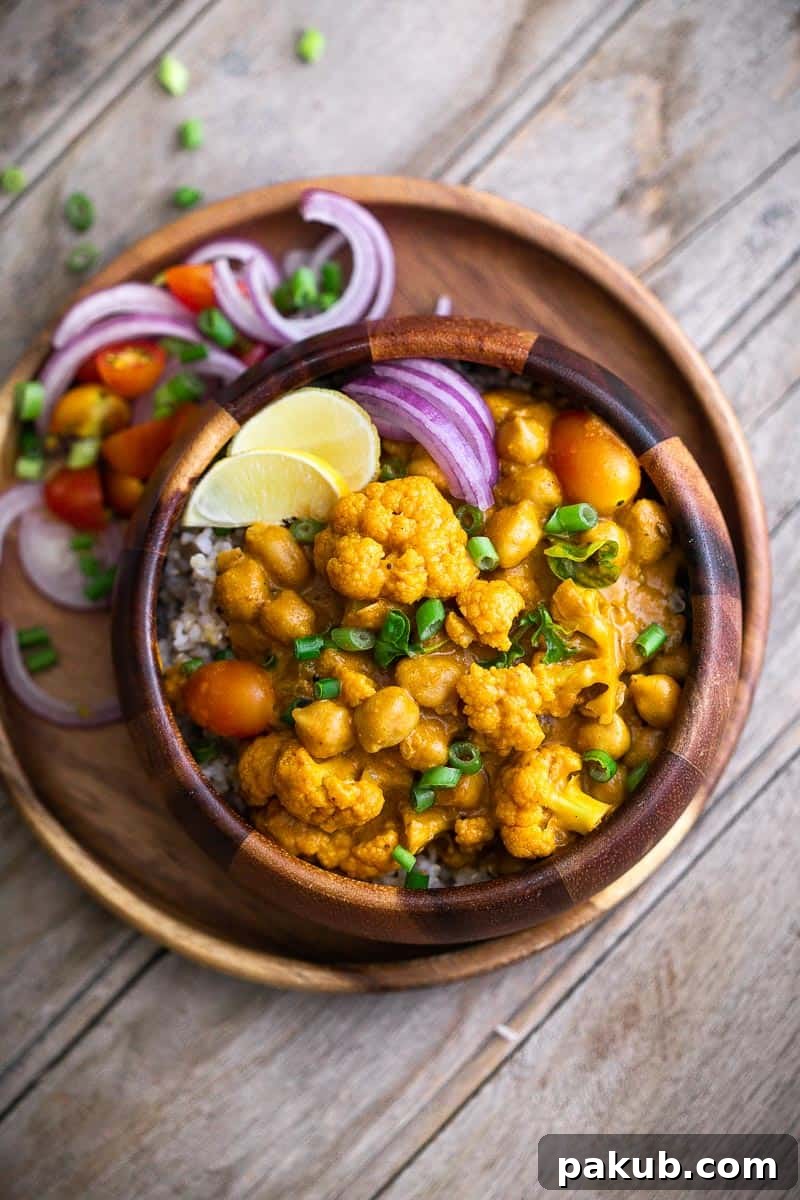
No matter what additions or adjustments you make, this quick and easy cauliflower chickpea coconut curry is destined to become a staple in your meal rotation. It’s bursting with punchy, full-bodied flavors and comes together in a mere 30-35 minutes from start to finish. This makes it an ideal solution for a busy weeknight dinner or a comforting weekend meal. I personally love to serve this vibrant curry with a side of fluffy steamed basmati rice, a crisp garden salad, and crunchy papadums for a complete dining experience. However, its rich sauce also pairs beautifully with warm, pillowy naan bread, soft rotis, or flaky parathas – perfect for scooping up every last delicious drop.
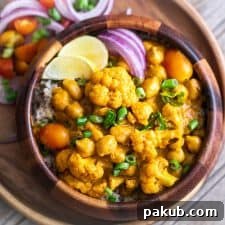
Cauliflower Chickpea Coconut Curry
Rate Recipe
Print Recipe
Ingredients
- 2 tablespoons Vegetable Oil
- 1 teaspoon Cumin Seeds
- 1 teaspoon Garlic, minced
- 2 teaspoons Ginger, grated
- 1 Onion, finely chopped
- 1/2 cup Tomato Puree
- 3/4 teaspoon Turmeric Powder
- 3 tablespoons Curry Powder
- 1 teaspoon Red Chilli Powder, or chili flakes or paprika powder (adjust to taste)
- 1 teaspoon Salt (or to taste)
- 3 cups Cauliflower Florets, cut into 2-inch pieces (approx. 1 medium-sized head of cauliflower)
- 1 1/2 cups Chickpeas, cooked (drained and rinsed if canned)
- 8-10 Cherry Tomatoes, optional (halved for best flavor release)
- 3/4 cup Water
- 2 cups Thick Coconut Milk, approx. 1 standard 13.5 oz can (full-fat recommended for creaminess)
- Fresh Coriander (Cilantro), chopped, for garnish (optional but highly recommended)
Instructions
-
In a large, heavy-bottomed pot or Dutch oven, heat the vegetable oil over medium heat. Once the oil is shimmering, add the cumin seeds. Allow them to splutter for about 15-30 seconds until they release their fragrant aroma. Immediately add the minced garlic, grated ginger, and finely chopped onion. Sauté, stirring frequently, for 3-4 minutes until the onions soften and begin to turn a light golden brown. This step is crucial for building a rich flavor base.
-
Stir in the tomato puree, turmeric powder, curry powder, red chili powder (or chosen alternative), and salt. Continue to cook for another 3-4 minutes, stirring constantly, until the tomato puree reduces slightly, and the mixture transforms into a thick, aromatic paste. Ensure the spices are well-cooked to unleash their full flavor potential.
-
Add the cauliflower florets, cooked chickpeas, cherry tomatoes (if you’re using them), water, and thick coconut milk to the pot. Stir gently to combine all the ingredients. Bring the mixture to a gentle simmer over medium heat. Once simmering, reduce the heat to medium-low, cover the pot, and let it cook for 15-20 minutes. The curry is ready when the cauliflower is fork-tender but still holds its shape. Stir occasionally to prevent any sticking to the bottom of the pot.
-
Taste the curry and adjust the salt or any other seasonings to your preference. Remove the pot from the heat. If desired, garnish generously with freshly chopped coriander (cilantro). Serve this vibrant and comforting curry hot with your chosen accompaniments.
Recipe Notes for Variations and Achieving Best Results
- Alternative to Tomato Puree: For a slightly less smooth texture and a brighter, fresher tomato flavor, you can substitute the tomato puree with 2 finely chopped fresh tomatoes. Be aware that this might alter the curry’s overall consistency slightly.
- Adding Chicken or Lamb: If you wish to include meat, replace the chickpeas with 500g (1 lb) of boneless chicken or lamb, cut into 1-inch pieces. Add the meat after sautéing the spices (in step 2) and cook for about 5-7 minutes until lightly browned. Then proceed with adding the cauliflower and other liquids, simmering until the meat is cooked through and tender (around 15-20 minutes total for chicken, potentially longer for lamb).
- Incorporating Shrimp/Prawns: For a delightful seafood variation, use 500g (1 lb) of prawns or shrimp. Cook the cauliflower and other vegetables in the sauce for about 10 minutes first. Then, add the shrimp and cook for only an additional 7-8 minutes, or just until they turn pink and opaque. Shrimp cooks very quickly and can become tough if overcooked.
- Curry Powder Recommendation: I’ve had great success with Bolst’s curry powder in this recipe, and it’s generally available in most large supermarkets or international grocery stores. However, feel free to use your preferred brand of mild or medium curry powder; the key is to use a blend you enjoy.
- Make it Your Own: Don’t be afraid to customize! Add a squeeze of lime juice at the end for extra zing, a dollop of yogurt for creaminess (if not strictly vegan), or a sprinkle of roasted cashews for crunch.
- Serving Suggestion Expansion: Beyond rice and Indian breads, this curry is excellent with quinoa, couscous, or even simply enjoyed on its own as a hearty stew.
Nutrition Information (per serving)
Carbohydrates: 30g,
Protein: 9g,
Fat: 31g,
Saturated Fat: 25g,
Sodium: 523mg,
Potassium: 860mg,
Fiber: 10g,
Sugar: 10g,
Vitamin A: 434IU,
Vitamin C: 43mg,
Calcium: 86mg,
Iron: 5mg
More Delicious Coconut Recipes to Explore
If the rich, creamy goodness of coconut in this curry has captivated your taste buds, you’ll be delighted to discover its incredible versatility in a myriad of other dishes. Coconut milk and shredded coconut are prized ingredients across many global cuisines, lending a unique sweetness, depth, and luscious texture. Here’s a selection of additional recipes where coconut truly takes center stage, offering a diverse range of flavors and experiences:
- Fragrant Coconut Rice Stir Fry: A wonderfully aromatic and flavorful side dish that can easily be a light meal on its own, perfect for complementing any curry.
- Authentic Goan Prawn Curry with Coconut: Dive into the vibrant, tangy, and spicy coastal flavors of India with this exquisite prawn curry, made rich and creamy with coconut milk.
- Creamy Kerala Mutton Stew (Ishtu) with Coconut: Experience a milder yet incredibly flavorful and comforting stew from South India, traditionally served with appams or bread.
- Speedy Instant Pot Thai Chicken Curry: Enjoy your favorite vibrant Thai curry flavors on the table faster than ever with this convenient and delicious Instant Pot version.
- Hearty Spicy Thai Curry Pumpkin Noodle Soup: A soul-warming and comforting soup, ideal for cooler weather, blending the sweetness of pumpkin with the bold spice of Thai curry and noodles.
- Decadent Stovetop Coconut Caramel Custard: A rich, creamy, and delightful dessert that showcases coconut in a completely different, yet equally irresistible, sweet light.