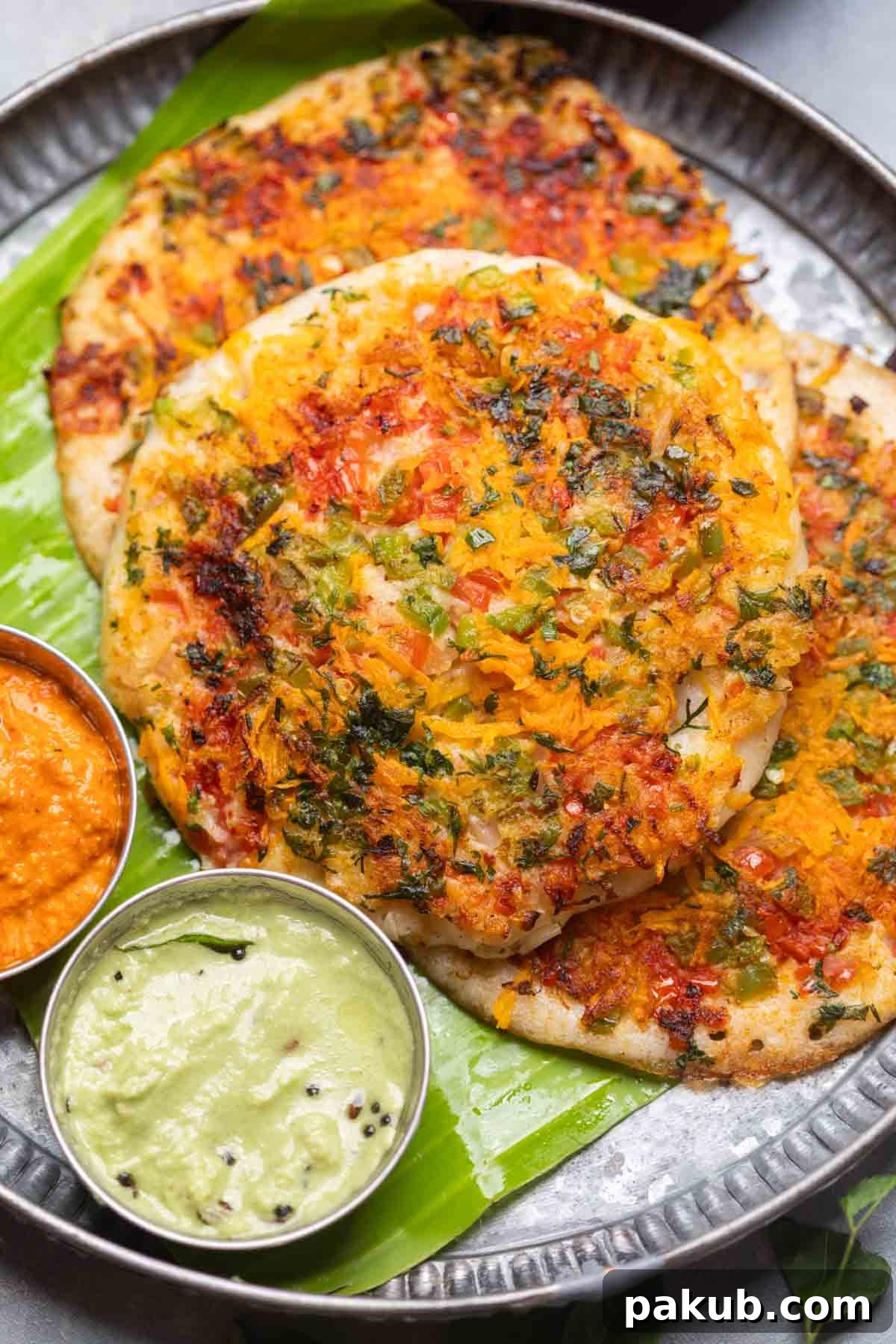
Uttapam, a beloved savory South Indian pancake, is the comforting and thick cousin of the famous dosa. It’s renowned for its soft, fluffy center, delightfully crispy edges, and generous toppings of fresh, colorful vegetables. Perfect for a hearty breakfast, a satisfying brunch, or a light, wholesome dinner.
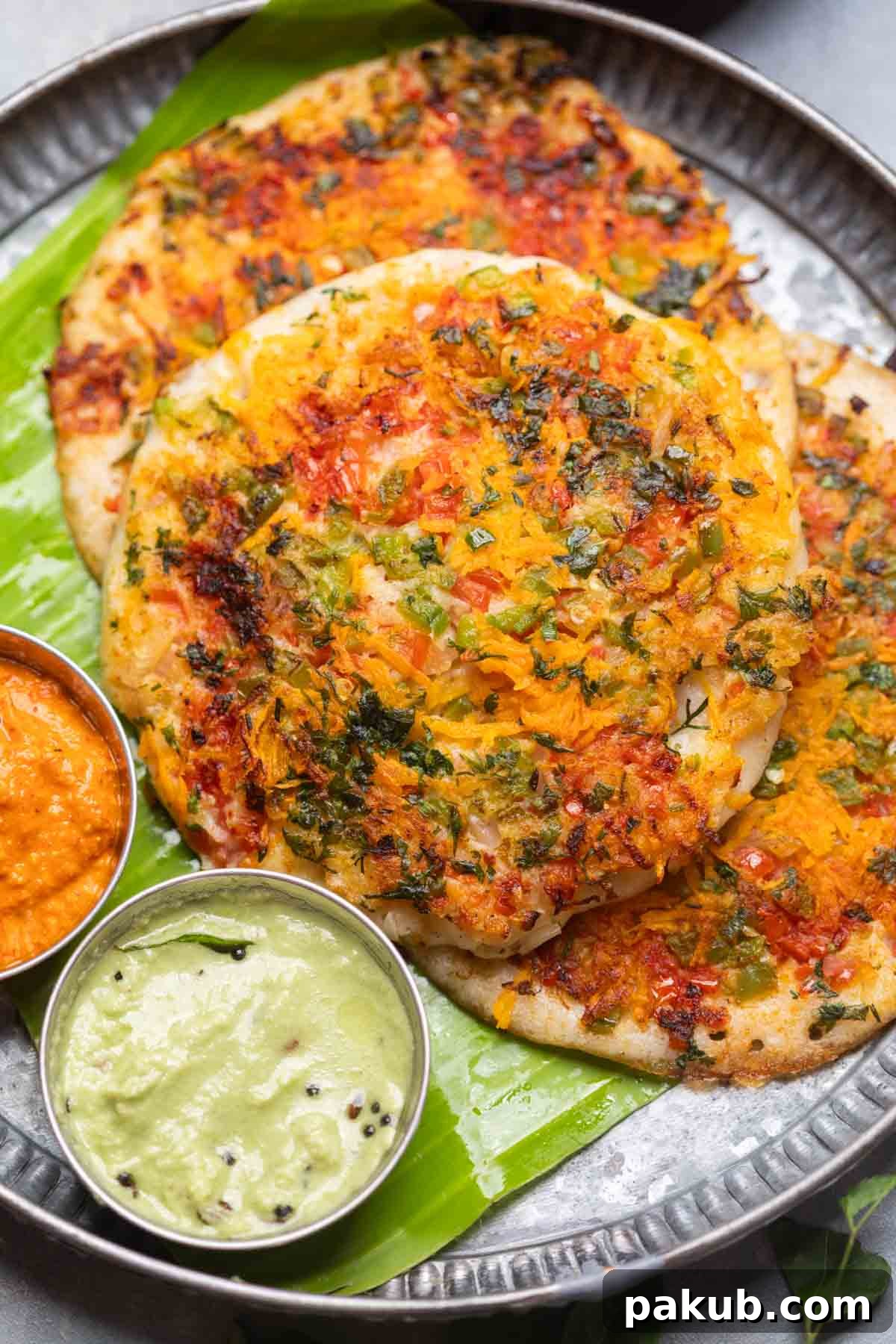
The Ultimate Guide to Fluffy and Crispy Uttapam: A South Indian Delight
Uttapam holds a special place on my list of go-to breakfasts, and for incredibly good reasons! There’s simply nothing quite like its fluffy texture, especially when it’s dunked into a bowl of steaming hot sambar. The delightful crunch from the finely chopped onions, juicy tomatoes, and spicy chillies adds an irresistible contrast, making every bite a true comfort food experience. This versatile dish truly embodies the heart of South Indian cuisine, offering a wholesome and flavorful start to any day.
I’ve often raved about my Idli Dosa Batter recipe, proclaiming it my ultimate culinary secret, and this Uttapam recipe is a prime example of why! Beyond the beloved classics like idli and dosa, this versatile batter opens up a world of culinary possibilities. I’m thrilled to share a whole new series exploring these incredible applications, and we’re kicking it off with this fantastic Uttapam recipe. Get ready to transform a simple batter into a diverse array of South Indian delicacies!
Jump to Section: Uttapam Recipe
- What is Uttapam?
- The Magic of Uttapam Batter
- Ingredients for Uttapam
- How to Make Uttapam
- Expert Tips for Perfect Uttapam
- Frequently Asked Questions
- What’s the Best Pan for Uttapam?
- Serving Ideas
- Storage Tips
- More Recipes With Idli Dosa Batter
- Watch Uttapam Recipe Video
What is Uttapam? A Culinary Journey into South Indian Flavors
Uttapam, also spelled as Uthappam, is a traditional South Indian breakfast dish often described as a savory pancake or crepe. Unlike its thinner, crispier cousin, the dosa, Uttapam is characteristically thick, soft, and spongy, serving as a perfect canvas for a colorful medley of vegetables. It’s made from a fermented batter of rice and lentils (urad dal), similar to idli and dosa, but the preparation method creates a distinct texture and flavor profile.
The beauty of Uttapam lies in its versatility and its ability to incorporate a variety of toppings directly into the batter or sprinkled on top during cooking. This makes it not just delicious but also incredibly nutritious. Originating from the southern states of India, Uttapam has become a beloved staple, cherished for its comforting appeal and customizable nature. It’s a dish that effortlessly brings together a symphony of textures and tastes – from the tangy undertones of the fermented batter to the sweet notes of carrots and the spicy kick of green chilies. It’s a complete meal in itself, offering both satiety and a burst of authentic Indian flavors.
The Magic of Uttapam Batter: Why Fermentation Matters
The heart and soul of a perfect Uttapam lies in its fermented batter. This same foundational batter is used for making idli and dosa, but the magic happens during the fermentation process. Soaking and grinding rice and urad dal, often with a touch of fenugreek seeds, creates a nutrient-rich base. The subsequent fermentation, typically overnight in a warm environment, is crucial for several reasons:
- Flavor Development: Fermentation imparts a slight tanginess to the batter, which is essential for Uttapam’s authentic taste.
- Texture Enhancement: The process produces carbon dioxide, creating tiny air pockets within the batter. This is what gives Uttapam its characteristic soft, spongy, and fluffy texture.
- Improved Digestibility: Fermented foods are often easier to digest as the fermentation breaks down complex carbohydrates and proteins.
- Increased Nutritional Value: Fermentation can enhance the bioavailability of nutrients, making them more easily absorbed by the body.
While high-quality store-bought idli dosa batter is a convenient option, nothing quite compares to the depth of flavor and ideal texture achieved with a freshly made, well-fermented homemade batter. It’s the secret weapon for truly exceptional Uttapams.
Ingredients for Uttapam
Crafting a delicious Uttapam starts with selecting the right ingredients. Here’s a detailed look at what you’ll need and why each component is important:
- Idli Dosa Batter: This is the cornerstone of your Uttapam. I highly recommend using my easy homemade batter for the best results, as its fermentation and consistency are key. However, good quality store-bought batter works perfectly well in a pinch. Ensure it’s at room temperature before use.
- Salt: Essential for seasoning the batter and enhancing all the other flavors. Remember to add it just before cooking the Uttapam, not to the whole batch if storing.
- Sugar: A small pinch of sugar is a game-changer! It not only balances the flavors but also contributes to achieving those coveted extra crispy edges on your Uttapam, giving it a beautiful golden-brown hue.
- Onion (for seasoning the pan): Cut into half horizontally and dipped in oil, this is a traditional trick for seasoning the tawa (griddle) and preventing the Uttapam from sticking. It leaves a subtle flavor while creating a naturally non-stick surface.
- Fresh Vegetables: This is where you can truly customize your Uttapam! I typically use finely chopped onions, juicy tomatoes, vibrant green capsicum (bell pepper), zesty green chillies, and aromatic ginger, along with finely grated carrots. Other fantastic additions include grated beetroot, sweet corn, finely chopped cilantro, or even finely shredded cabbage. Choose your favorites!
- Idli Podi (Gunpowder): This flavorful spice blend, often referred to as ‘gunpowder,’ provides an incredible boost of savory, spicy, and tangy notes. Sprinkling it generously over the Uttapam while it cooks elevates the taste profile significantly.
- Cooking Oil or Ghee: Used for cooking the Uttapam on the griddle, contributing to its crispiness and flavor. Ghee (clarified butter) offers a richer, more traditional aroma and taste.
- Butter: A small amount of butter drizzled on top adds richness and helps the vegetables roast perfectly, giving them a slightly caramelized finish.
How to Make Uttapam: Step-by-Step Guide
Follow these simple steps to create perfectly fluffy and crispy Uttapams in your kitchen:
Recipe Details
Uttapam | Uthappam
By: Richa
Uttapam (savory South Indian pancakes) is like the comforting cousin of dosa – it’s thick, soft, and loaded with heaps of veggies. Crispy edges, fluffy center, it’s perfect for breakfast, brunch, or a light dinner.
Cook: 5 mins
Total: 10 mins
Servings: 3 uttapams
Ingredients
For Homemade Idli Dosa Batter (Yields approx. 1.75 litres or 6-7 cups)
- 1 ½ cups idli rice or parboiled rice
- ½ cup skinned urad dal
- ¼ cup poha (flattened rice)
- ¼ cup cooked rice
- 1 teaspoon methi seeds (fenugreek seeds)
- 1 ½ cups water (for grinding)
- 4-5 ice cubes (for grinding)
For Uttapam (per serving, adjusted for 3 uttapams)
- 1 cup idli dosa batter
- ¼ teaspoon salt
- ⅛ teaspoon sugar
- 1 onion, cut into half horizontally (for seasoning pan)
- 3 tablespoons finely chopped onions, divided (for topping)
- 3 tablespoons finely chopped tomatoes, divided (for topping)
- 3 tablespoons finely chopped green capsicum, divided (for topping)
- 3 tablespoons grated carrots, divided (for topping)
- ¾ teaspoon finely chopped green chillies, divided (for topping)
- ¾ teaspoon finely chopped ginger, divided (for topping)
- 1 ½ teaspoons idli podi, divided (for topping)
- 2 teaspoons cooking oil or ghee (for cooking)
- 1 ½ teaspoons butter, divided (for cooking)
Instructions
Day 1 – Morning: Soaking the Grains
- Wash thoroughly and soak the idli rice, urad dal, poha, and methi seeds in ample water. Ensure there’s at least an inch of water covering the grains and dal. Allow them to soak for approximately 8 hours.
Day 1 – Evening: Grinding and Fermenting the Batter
- After soaking, drain the excess water from the bowl.
- Combine the soaked idli rice-urad dal mix with the cooked rice in a mixer grinder. Add about 1 ½ cups of water and 4-5 ice cubes. Grind until the mixture is almost smooth, adding more water if needed. The batter should be thick enough to coat the back of a spoon and pour in a ribbon-like consistency from a ladle. When rubbed between your fingers, it should feel ever so slightly gritty.
- Pour the ground batter into a large bowl, ensuring there’s plenty of room for it to rise during fermentation. Mix the batter thoroughly with clean hands. This tactile mixing is a vital step as it introduces beneficial microbes and aids in the fermentation process – do not skip it!
- Cover the bowl and place it in a warm, dry spot away from direct sunlight for fermentation. The fermentation time can vary from 12 to 24 hours, depending on your local humidity and temperature. Warmer conditions typically lead to faster fermentation.
Day 2 – Morning or Afternoon: Checking the Fermented Batter
- Once properly fermented, the batter should have increased its volume by about 1.5 times, forming a slight dome with a bubbly, wrinkled layer on top. You should notice a pleasant, slightly sour aroma, indicating successful fermentation. If it smells excessively sour, it might have over-fermented. The texture should be visibly frothy with numerous air bubbles. This entire process should yield approximately 1.75 litres (6-7 cups) of rich, fermented batter.
Prepping the Batter for Cooking
- In a separate bowl, take 1 cup of the fermented idli dosa batter. Add ¼ teaspoon of salt and ⅛ teaspoon of sugar, then mix well until thoroughly combined. This is the portion you will use for making Uttapams.
Prepping the Tawa (Griddle) or Pan
- Heat a non-stick pan or a well-seasoned cast iron dosa tawa over medium heat. To check if it’s hot enough, sprinkle a few drops of water; they should sizzle and evaporate quickly. Once hot, pierce half an onion with a fork, dip it in a little oil, and rub it generously over the entire surface of the tawa. This crucial step prevents the Uttapam from sticking.
Making the Uttapam
- Reduce the heat to low. Pour one ladle of the prepared batter into the center of the tawa. Unlike dosa, avoid spreading it too thinly; you want a thick, fluffy pancake with a diameter of about 2.5-3 inches. The batter will naturally spread slightly.
- Evenly sprinkle 1 tablespoon each of the finely chopped onions, tomatoes, capsicum, and grated carrots over the batter. Follow with ¼ teaspoon each of green chillies and ginger, then finish with a sprinkle of ½ teaspoon of idli podi.
Roasting the Uttapam to Perfection
- Drizzle 1 teaspoon of ghee around the edges of the Uttapam and place ½-1 teaspoon of butter directly on top of the vegetable toppings. Let it roast on low heat for 1-2 minutes, or until the base turns a beautiful golden brown and becomes crispy.
- Carefully flip the Uttapam over using a flat spatula. Continue roasting on low heat for another 1-2 minutes, gently pressing down on it to ensure the vegetables cook through and get nicely roasted. The Uttapam should be golden and cooked well on both sides.
- Serve immediately. Repeat these steps for the remaining batter and toppings.
Nutrition (per serving, approximate)
Calories: 595 kcal
Carbohydrates: 115g
Protein: 17g
Fat: 7g
Saturated Fat: 4g
Polyunsaturated Fat: 0.4g
Monounsaturated Fat: 2g
Trans Fat: 0.1g
Cholesterol: 14mg
Sodium: 247mg
Potassium: 309mg
Fiber: 10g
Sugar: 4g
Vitamin A: 2729 IU
Vitamin C: 16mg
Calcium: 77mg
Iron: 4mg
Expert Tips for Perfect Uttapam: Richa’s Secrets to Success
Achieving the perfect Uttapam involves a few key techniques. Here are my top tips to ensure your Uttapams are consistently fluffy, crispy, and flavorful:
- Use a Well-Fermented Batter: The cornerstone of a great Uttapam is a properly fermented batter. It should be light, airy, and slightly tangy. For grinding your batter, always use cold water or ice cubes to prevent the batter from heating up, which can hinder proper fermentation. Let it ferment in a warm spot, such as near a window, inside an oven with just the light on, or wrapped in a towel, until it doubles in volume and becomes bubbly.
- Maintain Low Heat: Cook your Uttapam on low to medium-low heat. This allows the base to roast slowly and evenly, developing a beautiful golden-brown crispness, while ensuring the thicker center cooks through without burning. Patience is key here.
- Do Not Spread Too Thin: This is arguably the most crucial step differentiating Uttapam from dosa. Pour a ladle of batter and let it spread naturally or gently nudge it to form a thick, roughly 2.5-3 inch diameter circle. The batter itself should already be of a thick, pourable consistency, not watery.
- Roast on Both Sides: For well-cooked vegetables and a uniformly cooked Uttapam, it’s important to flip and roast on both sides. Pressing gently on the Uttapam after flipping helps the vegetables make good contact with the hot surface and become tender and slightly caramelized.
- Serve Hot and Fresh: Uttapam is best enjoyed immediately after cooking, when its edges are crisp and its center is wonderfully soft and fluffy.
- Choose the Right Tawa (Griddle): Both non-stick dosa tawas and well-seasoned cast iron tawas work wonderfully. Personally, I prefer the superior crispness and traditional flavor that an iron tawa imparts, though I understand it requires a bit more maintenance. If you use an iron tawa, ensure it’s perfectly seasoned to prevent sticking. For best results and longevity, dedicate your tawa primarily for dosas and uttapams.
- Check Pan Temperature: Before pouring the batter, always confirm your pan is hot enough. Sprinkle a few drops of water; if they sizzle and evaporate quickly, your tawa is ready. Too cool, and it might stick; too hot, and it might burn before cooking through.
- Onion for Seasoning: Never skip the step of rubbing the tawa with an oil-dipped onion half before making each Uttapam. This creates a natural non-stick layer and imparts a subtle aroma, ensuring a perfect release every time.
Frequently Asked Questions About Uttapam
What vegetables can I add to my Uttapam?
The beauty of Uttapam is its versatility! You can truly mix and match any vegetables to suit your taste. My personal favorites include finely chopped onion, tomato, capsicum (bell pepper), grated carrot, and corn. Other delicious options are grated beetroot, finely chopped green beans, cilantro, or even a sprinkle of grated paneer for extra richness.
Why is my Uttapam sticking to the pan?
This is a common issue that usually stems from a few factors:
- Insufficient Heat: The pan wasn’t hot enough when you started cooking. Always check by sprinkling water – it should sizzle and evaporate quickly.
- Unseasoned Pan: If you’re using a new or inadequately seasoned cast iron pan, sticking is likely. Cast iron requires regular seasoning.
- Batter Consistency: If the batter is too thin or too thick, it can affect its release from the pan. The ideal consistency is thick, but pourable.
Troubleshooting Tip: Always rub your pan with half an onion dipped in oil before cooking each Uttapam. This traditional method helps create a natural non-stick surface and is highly effective.
Can I use store-bought idli dosa batter?
Absolutely, you can use store-bought idli dosa batter for convenience! While I enthusiastically recommend making my homemade idli dosa batter for superior taste and texture, store-bought varieties are a great alternative. Just ensure the batter comes to room temperature before use, and always taste it to adjust salt levels if needed. For crispier Uttapams, you can try adding a pinch of sugar and a few tablespoons of fine semolina (rava or sooji) to the batter before cooking.
What is the difference between dosa and Uttapam?
While both dosa and Uttapam originate from the same fermented rice and lentil batter, their preparation and resulting textures are distinctly different.
- Dosa: Dosa is characterized by its thin, delicate, and incredibly crispy texture. It’s made by spreading the batter very thinly in concentric circles over a hot griddle, often resulting in a large, delicate crepe that is then folded or stuffed with a savory potato masala.
- Uttapam: In contrast, Uttapam is a thick, soft, and fluffy pancake. It’s made by pouring the batter into a smaller, thicker circle (typically around 3 inches in diameter) without spreading it extensively. Uttapam is then generously topped with various vegetables and roasted on both sides, allowing the toppings to cook and soften into the pancake.
Essentially, it’s the same batter, but entirely different culinary experiences – one thin and crisp, the other thick and loaded!
Why do I add salt only to the portion of batter I’m using?
Adding salt to the entire batch of batter before storage can significantly accelerate the fermentation process. If you’re planning to store leftover batter for a few days, adding salt too early can cause it to become excessively sour and unusable by the next day. To maintain optimal freshness and flavor, always salt only the portion of batter you intend to cook immediately. This ensures your stored batter remains perfectly fermented for longer.
What’s the Best Pan for Uttapam? Choosing Your Griddle
The type of pan you use can significantly impact the texture and cooking experience of your Uttapam. Both non-stick and well-seasoned cast iron griddles (tawas) are popular choices, each with its own advantages:
Cast Iron Tawa
- Heat Retention: Excellent at retaining high, even heat, which is crucial for developing that desirable crisp, perfectly golden-brown base on your Uttapam.
- Natural Non-Stick: Once properly seasoned, cast iron develops a natural non-stick surface that improves with use.
- Durability: Incredibly durable, a well-cared-for cast iron tawa can last for generations.
- Maintenance: Requires a bit more attention, including proper seasoning and cleaning. But don’t worry, I have a detailed guide on how to clean and season cast iron pans to help you!
- Weight & Heat-up Time: Heavier and takes a bit longer to heat up, but provides very consistent cooking once hot.
Best for: Regular Uttapam/dosa makers, those who appreciate a truly crispy texture, and home cooks who don’t mind the occasional upkeep.
Non-Stick Tawa
- Ease of Use: User-friendly and easy to clean, making it ideal for beginners or quick meals.
- Less Oil: Typically requires less oil for cooking, which can be a healthier option.
- Lightweight & Fast Heating: Lighter in weight and heats up quickly, offering convenience.
- Texture: Uttapams made on non-stick pans tend to be softer and may not achieve the same intense golden crispness as those from cast iron, though still delicious.
- Durability: The non-stick coating can wear out over time, especially with metal utensils or high heat, requiring replacement.
Best for: Occasional Uttapam/dosa makers, anyone preferring low-maintenance cookware, or those who prefer a softer Uttapam texture.
Serving Ideas: Completing Your Uttapam Meal
Uttapam is a complete and satisfying meal on its own, but it truly shines when paired with traditional South Indian accompaniments. Here are some classic and delightful serving ideas:
- Coconut Chutney and Sambar: This is the quintessential pairing. The tangy, spicy, and aromatic sambar perfectly complements the Uttapam, while a cooling, fresh coconut chutney adds a refreshing contrast.
- Gunpowder (Idli Podi) with Ghee: For a quick, intensely flavorful bite, serve Uttapam with extra Idli Podi mixed with a generous drizzle of ghee. This “gunpowder” adds a spicy, savory kick that many adore, even if you’ve already topped your Uttapam with it.
- Tomato Chutney or Mint Chutney: Explore other chutney variations like a sweet and spicy tomato chutney or a refreshing mint (pudina) chutney for different flavor profiles.
- Avocado Chutney: For a modern twist, a creamy avocado chutney can add richness and a unique flavor dimension.
- Pickles: A side of traditional Indian pickle, such as mango or lime pickle, can introduce a sharp, tangy, and spicy element.
- Yogurt or Raita: A simple bowl of plain yogurt or a cooling cucumber raita can balance the spices and add a creamy texture, especially on a warm day.
Storage Tips: Keeping Your Uttapam Batter Fresh
Proper storage ensures you can enjoy delicious Uttapams for days without the hassle of making fresh batter. Remember, cooked Uttapams are best enjoyed fresh off the tawa, so these tips primarily apply to the batter:
- Refrigerating Fermented Batter: Unsalted, well-fermented batter can be stored in an airtight container in the refrigerator for up to 3 days. Do not add salt to the entire batch if you plan to store it, as salt accelerates fermentation and can make the batter too sour quickly.
- Freezing Excess Batter: For longer storage, you can freeze excess batter in small, single-use portions. It will keep well in the freezer for up to a month. Make sure to use freezer-safe containers or bags, leaving some headspace for expansion.
- Bringing Batter to Room Temperature: Before you plan to cook, always remember to bring the refrigerated or frozen batter to room temperature. Cold batter can affect the consistency and cooking process, potentially leading to hard or chewy Uttapams. This usually takes about 30-60 minutes for refrigerated batter, or several hours for frozen batter to thaw and warm up.
- Reviving Stored Batter: If your refrigerated batter becomes slightly thick, you can add a tablespoon or two of water to achieve the desired pourable consistency before adding salt and sugar.
More Recipes With Idli Dosa Batter: Unlocking Culinary Creativity
The beauty of a perfectly fermented Idli Dosa batter extends far beyond just Uttapam. This versatile base is a cornerstone of South Indian cuisine, allowing you to whip up a delightful array of dishes. Here are some more fantastic recipes you can make using the same batter:
- Dhokla (though traditionally made with a slightly different lentil ratio, a thin version can be adapted)
- Idli (the fluffy, steamed rice cakes, a classic!)
- Dosa (the crisp, thin crepes with endless variations)
- Appe / Paniyaram (small, spherical, savory dumplings cooked in a special pan)
- Mysore Masala Dosa (a spicier, richer version of dosa with a red chutney spread)
- Dosa Waffle (a fun, modern twist – cook dosa batter in a waffle maker!)
- Schezwan Idli Fry (leftover idlis stir-fried with Schezwan sauce and veggies for a fusion snack)
This batter truly is a culinary superpower in the Indian kitchen, offering endless opportunities for delicious and wholesome meals.
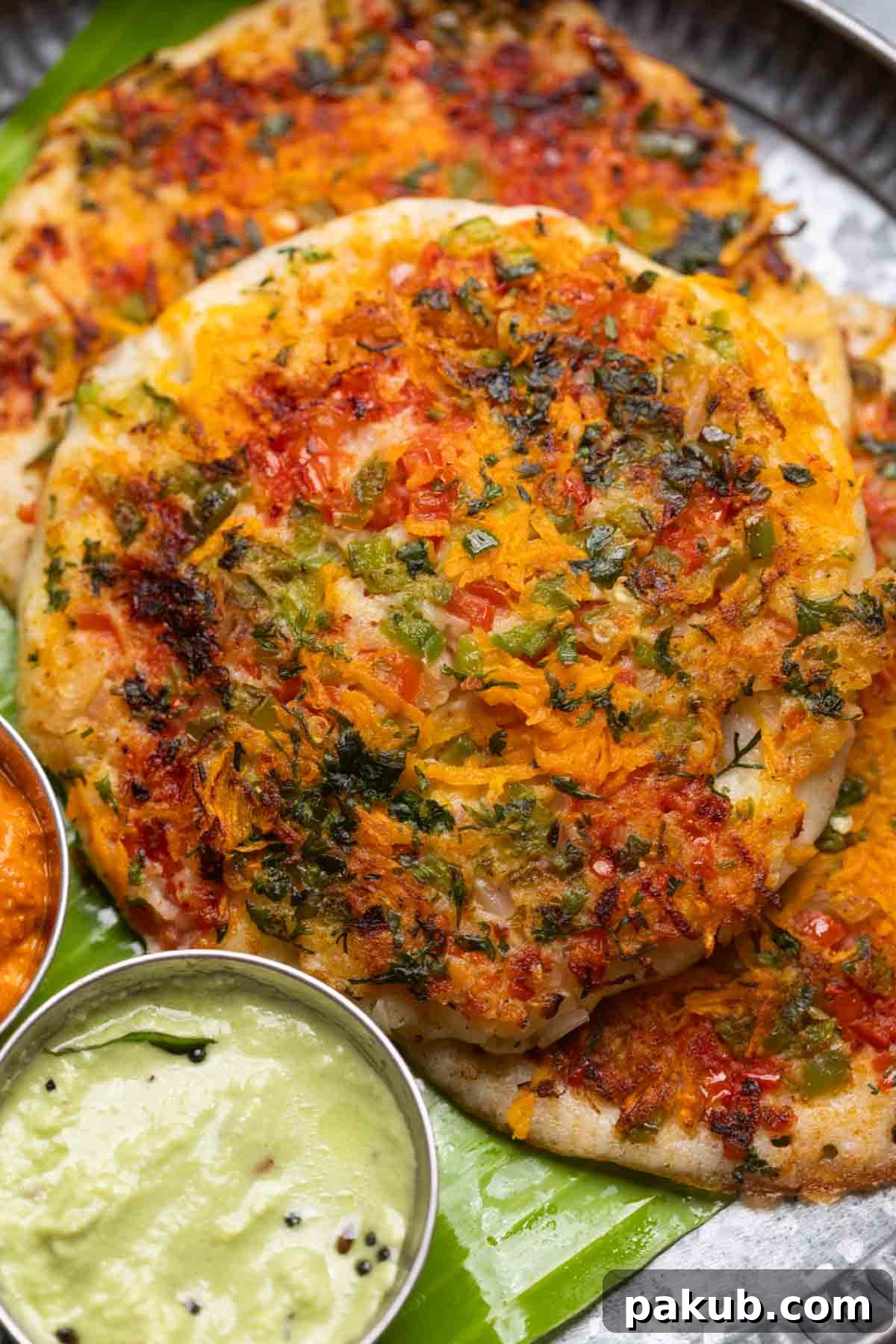
This Uttapam recipe is designed to be foolproof, ensuring you achieve that perfect balance of crispiness and fluffiness every single time! Whether you savor it fresh off the tawa for a delightful meal at home or pack it for your kiddo’s tiffin, this is one recipe you’ll undoubtedly find yourself returning to again and again. Its simplicity, adaptability, and comforting flavors make it an instant family favorite.
If you loved this recipe and found these tips helpful, make sure to stay tuned for more exciting culinary creations as part of my Idli Dosa Batter series! Don’t forget to share your delicious recreations with me over on Instagram – tag me @my_foodstory. I can’t wait to see your Uttapam masterpieces!
Watch Uttapam Recipe Video
This article was researched and written by Navya Khetarpal.