Mastering Soft Rotis at Home: Your Ultimate Guide to Perfect Indian Flatbread
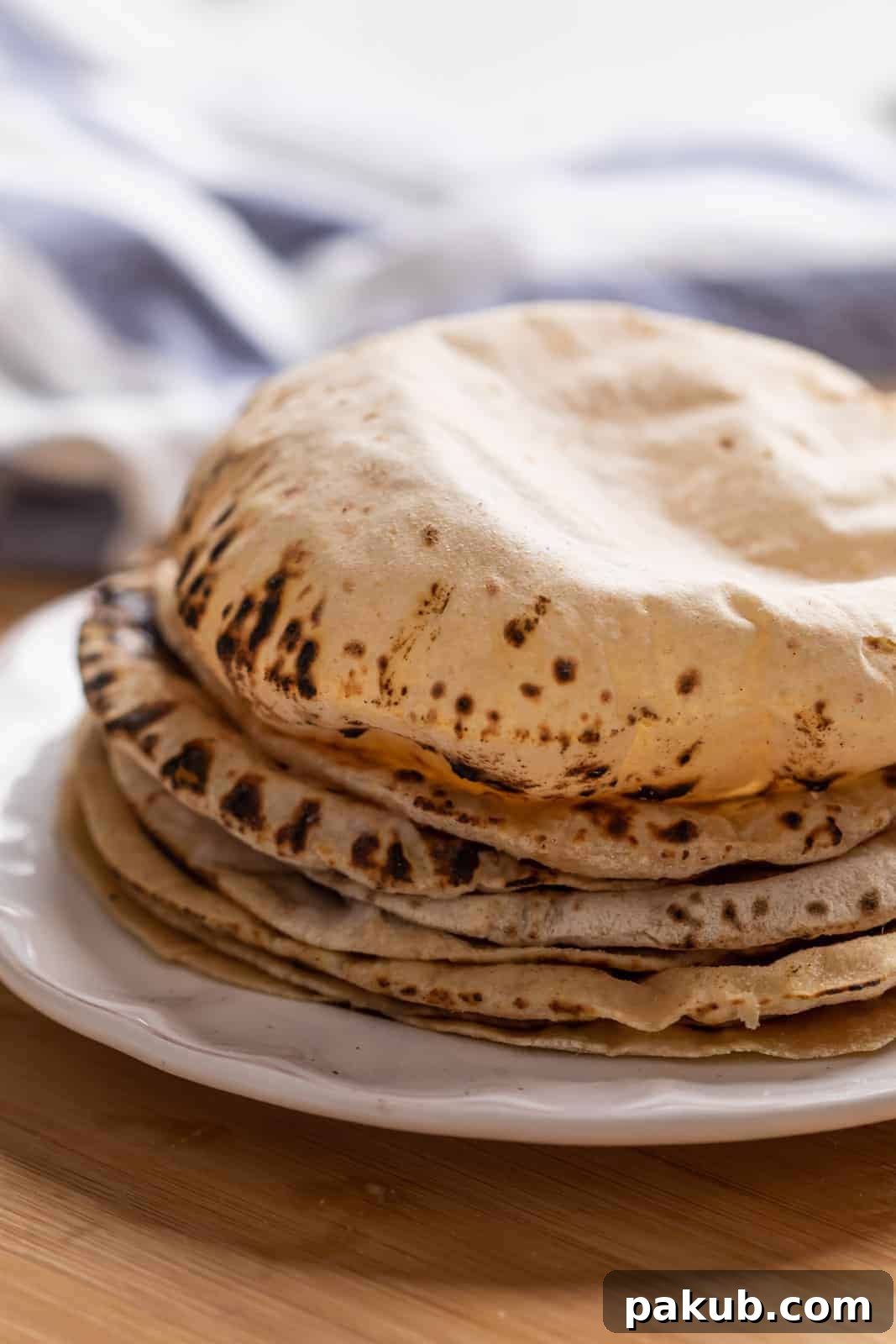
I’ve grown up eating soft rotis every single day, and I’m thrilled to share my comprehensive guide to making them flawlessly in your own kitchen. Also known as chapatis, phulkas, or rotli, these simple yet profound two-ingredient Indian flatbreads are truly magical – they are remarkably fast to prepare, incredibly easy to master with a little practice, and immensely satisfying. They form the versatile backbone of countless delicious meals across Indian households.
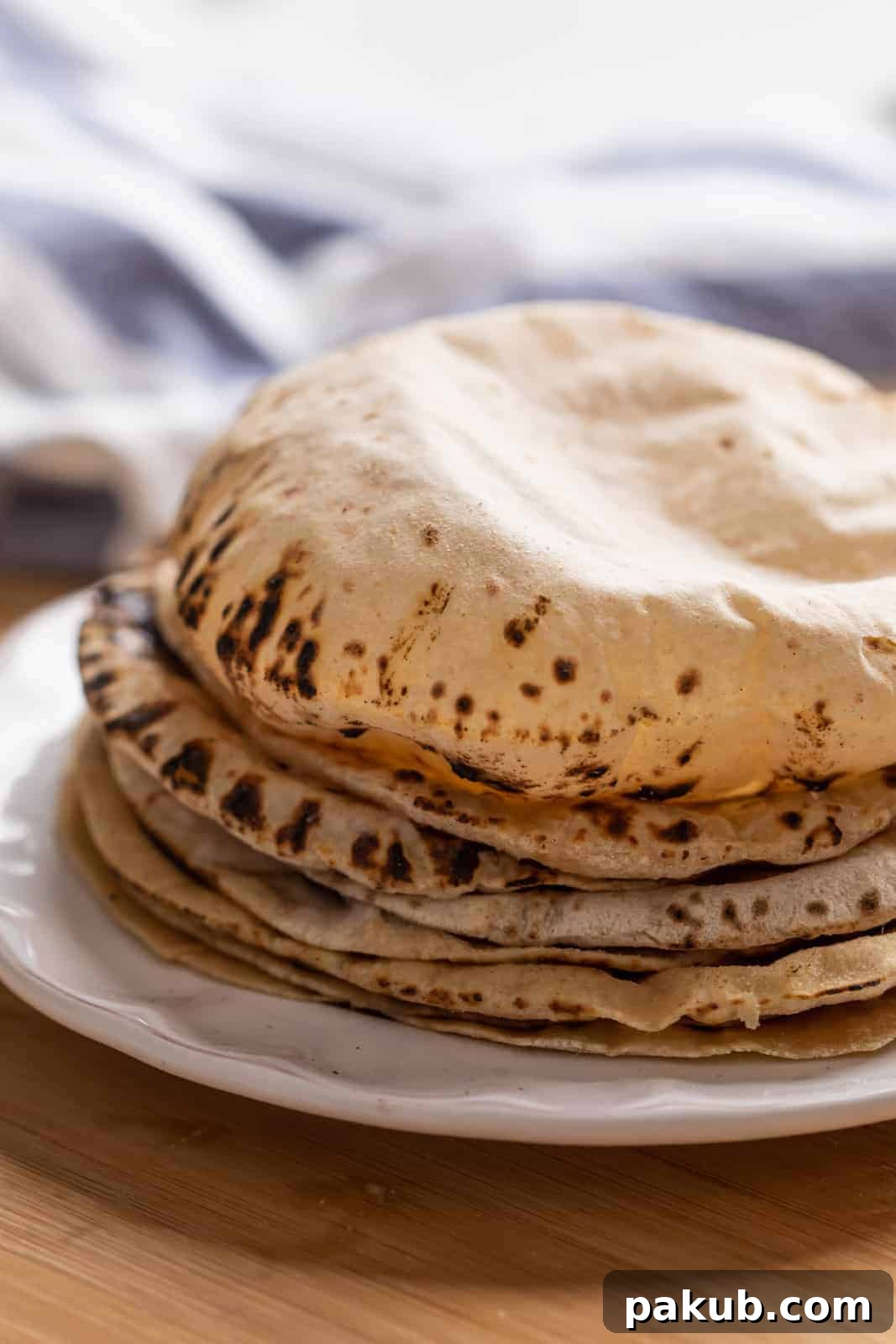
Indeed, I genuinely believe that rotis possess a special kind of culinary enchantment. Their charm lies not only in their delicious taste but also in their incredible simplicity. They require just one core ingredient: wholemeal wheat flour, universally known as ‘atta’. Water, of course, is also essential, but it hardly counts as a complex addition. What sets rotis apart is their independence from leavening agents like yeast, baking soda, or even yogurt. The secret to their delightful softness, pliable texture, and characteristic puff comes down to consistent technique, a bit of focused practice, and a healthy dose of patience. Having been fortunate enough to enjoy rotis as a daily staple throughout my childhood, I’ve had ample opportunity to learn the intricate nuances of preparing them perfectly. Today, I am eager to share every tip, trick, and technique I’ve gathered over the years to empower you to create wonderfully soft and fluffy rotis right in your own kitchen, transforming your everyday meals into a comforting experience.
Roti Dough Essentials: The Foundation of Softness
The journey to crafting perfect, soft rotis begins and largely depends on the dough. It is the cornerstone of this beloved Indian staple, and achieving the correct consistency and pliability is where the true magic of roti making unfolds. While the list of ingredients is minimal, mastering the dough requires attention to detail and a touch of intuition.
Key Ingredients for Your Roti Dough
At its core, roti dough is elegantly simple, primarily composed of two fundamental components: wholemeal wheat flour, famously known as ‘atta’, and water. These two form the base of every traditional roti. Some home cooks, including myself on occasion, might opt to incorporate a tiny pinch of salt to subtly enhance the flavor profile or a teaspoon of oil to contribute to extra softness and pliability. However, it’s worth noting that perfectly delicious rotis can be achieved without these additions, allowing the authentic, wholesome flavor of the atta to truly shine through. The general proportion of flour to water is a critical starting point, and detailed estimates are provided within the comprehensive recipe card below. It is important to remember that different brands and types of atta can vary in their water absorption capacity, so always be prepared to adjust the water quantity slightly to achieve the ideal dough consistency—neither too sticky nor too dry.
The Art of Kneading the Perfect Dough
Kneading is arguably the single most vital step in the entire roti preparation process. The ultimate goal is to achieve a dough that is not merely smooth, but also exquisitely soft and remarkably pliable. When you gently press down on the dough, it should offer minimal resistance, allowing your fingers to leave a clear and distinct indentation. Striking this delicate balance is crucial: the dough must not be sticky to the touch, which indicates excessive water, nor should it be dry and crumbly, which would render it challenging to roll. Once your flour and water have been roughly combined into a shaggy mass, the real work of kneading begins. Employ a rhythmic motion, alternating between using the heel of your palms to push and stretch the dough away from you, and your fingers to gather it back. Press down firmly with your knuckles, creating indentations, and then repeat this sequence. This continuous, energetic action is essential for developing the gluten strands within the flour, which in turn are responsible for the roti’s elasticity and its ability to beautifully puff up when cooked. Aim for a consistent kneading period of approximately 5-7 minutes until the dough transforms into a silky, uniform, and resilient ball. This dedicated kneading ensures your rotis will be tender, light, and a joy to eat.
The Crucial Role of Water in Roti Dough Hydration
Water, in the context of roti dough, is far more than just a binding agent; it is the absolute secret weapon for achieving those coveted, beautifully puffed rotis. The magic happens when the thinly rolled-out roti is placed on a hot griddle (tawa). The water trapped within the dough rapidly heats up and converts into steam. This steam, expanding within the dough, creates pockets of air that cause the roti to inflate dramatically, resulting in a light, airy, and soft interior. This incredible phenomenon is precisely why I advocate for incorporating as much water as the atta can possibly absorb without making the dough overly sticky or unmanageable. As you continue to knead, do not hesitate to add a few extra drops of water at a time, ensuring you knead thoroughly after each small addition. Atta possesses a remarkable capacity to absorb water gradually over time, so persistent and patient kneading with strategic, incremental water incorporation will consistently yield a more hydrated, significantly softer, and more elastic dough. A well-hydrated dough is the key to creating softer, more flexible rotis that are not only easier to roll out evenly but are also far more likely to puff up impressively and consistently when exposed to heat. Don’t be afraid to experiment slightly with the water quantity, within reasonable limits, to truly understand your specific flour and achieve the perfect texture.
Resting the Dough for Enhanced Pliability
While some seasoned roti makers might occasionally opt to skip this step, I have consistently found that allowing the dough to rest significantly enhances the quality and ease of handling for the final roti. Resting the dough, even for a relatively brief period of 15-20 minutes, works wonders. During this crucial time, the gluten strands, which were tightened and developed during the kneading process, begin to relax. This relaxation makes the dough even smoother, more pliable, and considerably easier to roll out thinly and evenly without resistance or tearing. Furthermore, this resting period allows the flour to fully hydrate any remaining dry spots, leading to a more consistent and uniform texture throughout the dough, and ultimately, resulting in noticeably softer rotis. Think of it as giving the dough a moment to ‘catch its breath’ and integrate all its components more completely – a brief pause that pays immense dividends in terms of improved workability and a superior end product. Always remember to cover the dough with a barely damp cloth or a tight-fitting lid during its rest to prevent any surface drying.
Mastering the Rolling Out of Rotis
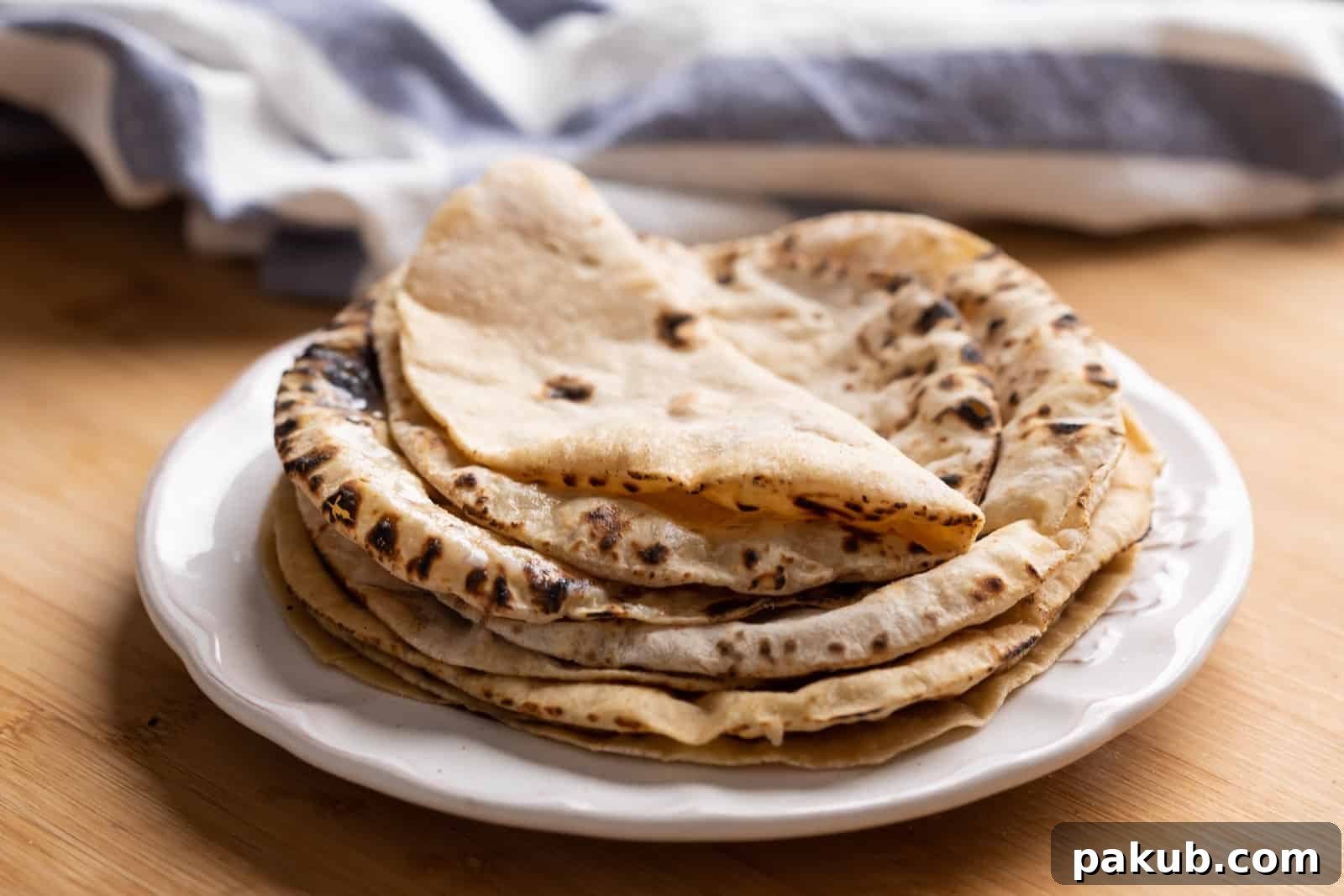
For many aspiring home cooks, rolling rotis can initially feel like the most challenging part of the process, and it’s true that this skill genuinely flourishes and perfects with consistent practice and patience. My most important piece of advice for beginners is simple: do not get hung up on achieving a perfectly circular shape from the very first attempt. As long as your rotis are generally round and, more importantly, consistently thin, you are absolutely on the right track. Begin by taking a small portion of your rested dough, roughly the size of a lime. Roll it between your palms until it forms a smooth, uniform ball, completely free of any cracks. This initial smoothness is critically important for preventing tears and unevenness during the subsequent rolling process. Gently flatten this smooth dough ball and dust it lightly with dry atta on both sides; this dusting is vital to prevent it from sticking to your rolling board or kitchen counter. Now, with a rolling pin (often called a ‘belan’ in India), apply gentle, even pressure as you roll. Move the pin from the center of the dough outwards, continuously rotating the roti with your free hand. Applying too much pressure in one concentrated spot can easily cause the dough to tear, while insufficient pressure will prevent it from flattening out evenly. The ultimate goal is to achieve a uniform thickness throughout the entire roti, ideally around 1.5 to 2 millimeters, and a diameter of approximately 5-5.5 inches. If at any point your roti starts to feel sticky, dust it sparingly with a little more dry flour. Remember, consistency in thickness is far more crucial for an even cook and proper puffing than a geometrically perfect circular shape.
Cooking Soft Rotis: From Hot Tawa to Fluffy Perfection
The cooking process is the final, exciting stage where all your efforts in dough preparation and rolling culminate in a soft, delicious, and often beautifully puffed roti. The temperature of your cooking surface is absolutely paramount: always begin by placing your rolled roti onto a hot tawa or heavy-bottomed skillet. If your tawa isn’t adequately hot, the roti will take too long to cook, inevitably causing it to dry out and become tough and brittle. Conversely, an excessively smoky tawa indicates it’s too hot, which can quickly burn the roti’s surface without thoroughly cooking it through. Aim for a consistent medium-high heat. Place the rolled-out roti gently onto the center of the hot tawa. Within approximately 30-45 seconds, you should observe small bubbles beginning to form across the surface; this is your visual cue to flip it. Cook the second side for a similar duration, until more bubbles appear and you start to see subtle light brown spots. For achieving the traditional, wonderfully puffy rotis (often called ‘phulkas’), the next crucial step involves carefully transferring the partially cooked roti directly to an open flame. Using a pair of tongs, hold it directly over the flame, and within a mere few seconds, it will magically puff up like a balloon as the steam trapped inside rapidly expands. Flip it once more to lightly char the other side for just a few additional seconds, then remove it from the heat. If you don’t have access to an open flame, you can still encourage a beautiful puff by gently pressing down on the edges of the roti on the tawa with a clean cloth or a flat spatula. This action traps the steam, prompting the roti to inflate right there on the skillet. Continue cooking until you observe appealing light brown spots on both sides, ensuring it’s cooked through.
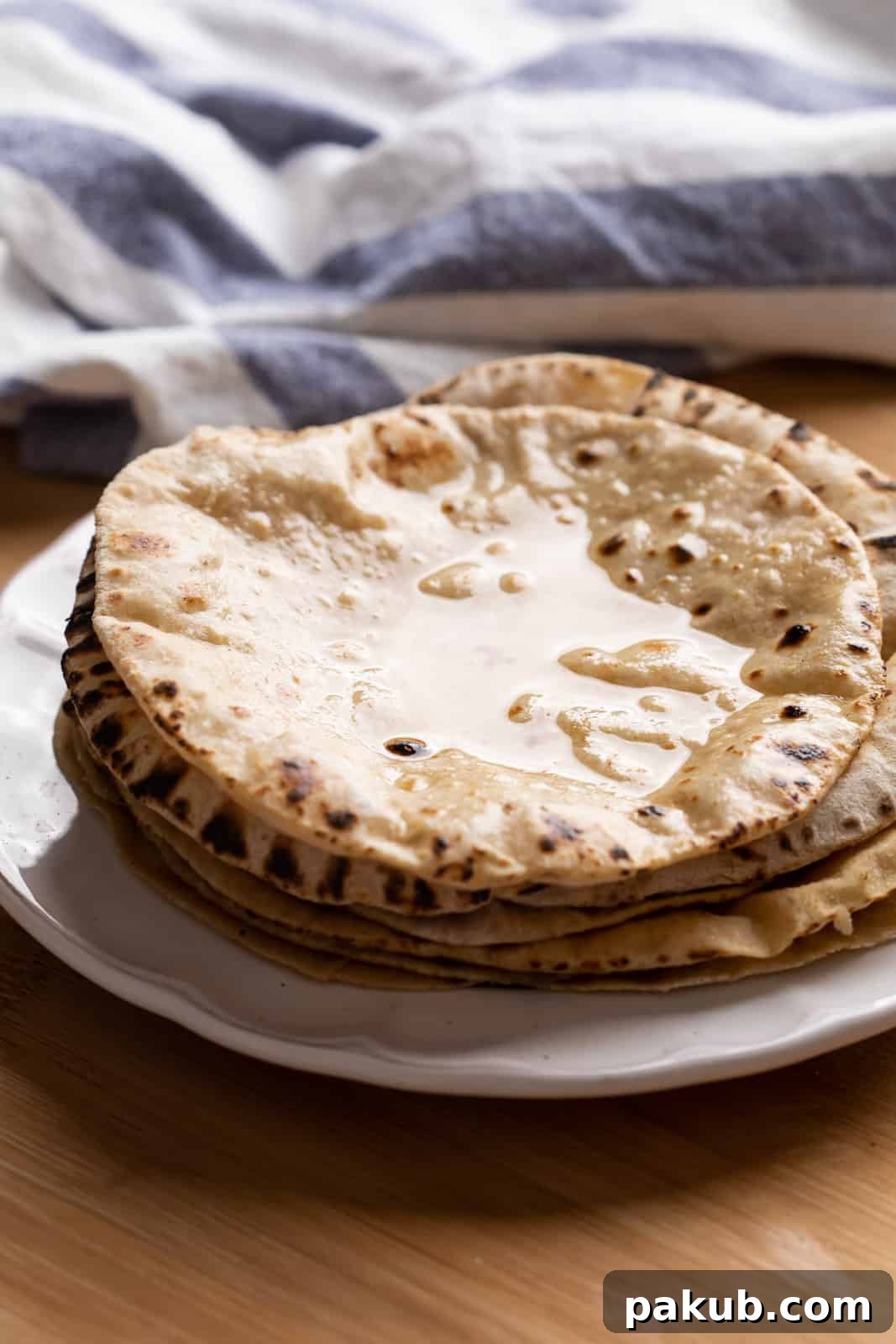
Once cooked, my absolute favorite way to finish off a hot roti is to generously smear it with a dollop of ghee. The immediate warmth of the freshly cooked roti instantly melts the ghee, infusing it with a rich, nutty flavor and ensuring it remains wonderfully soft and pliable. For those who enjoy the process of cooking from scratch, my detailed homemade ghee recipe offers a straightforward guide to creating this essential Indian ingredient at home. If ghee isn’t readily available, a small pat of butter makes a fantastic and delicious alternative, providing similar moisture and flavor. Always stack your freshly made rotis one on top of another in an insulated container or a roti basket; the residual heat shared between them helps them remain warm and incredibly soft, effectively preventing them from drying out until they are ready to be served.
For more specific queries, common troubleshooting tips, and advanced advice, be sure to refer to our extensive Frequently Asked Questions section located further below the recipe card.
But most importantly, remember – mastering the art of making soft rotis at home is a journey that genuinely takes some practice and patience. Don’t be discouraged by initial imperfections; every cook starts somewhere! After just a few dedicated tries, you’ll discover that you’ll be making them like a seasoned pro, effortlessly creating delicious, wholesome flatbreads that will delight your family and friends every single time!
Delicious Pairings: What to Enjoy Rotis With
Rotis are incredibly versatile and serve as the quintessential accompaniment to an expansive array of Indian culinary delights. Their mild, comforting flavor and wonderfully soft texture make them ideal for scooping up rich curries, hearty dals, and vibrant vegetable preparations, enhancing the overall dining experience. Here are some classic and utterly delightful pairings that perfectly complement the homemade roti:
- Dhaba Style Dal Fry: A robust, spicy, and intensely flavorful lentil dish, often found at roadside eateries, that is a beloved staple.
- Veg Jalfrezi: A vibrant and exquisitely spicy medley of stir-fried vegetables, boasting a rich, tangy tomato-based sauce.
- Potato Cabbage Fry: A simple yet profoundly comforting and flavorful dry vegetable preparation, seasoned with aromatic spices.
- Creamy Matar Paneer: A rich, indulgent, and creamy curry featuring tender green peas and succulent cubes of Indian cheese (paneer).
- Bhindi Masala: A wonderfully flavorful and aromatic dish of sautéed okra cooked with a blend of traditional Indian spices.
- Aloo Gobi Masala: A timeless and beloved combination of tender potatoes and cauliflower florets, simmered in a fragrant spiced gravy.
Whether it’s a hearty and nutritious lentil stew, a spicy and tangy vegetable curry, or a rich and creamy paneer dish, soft homemade rotis are the quintessential side that harmoniously brings the entire Indian meal together, making every bite a delight.
Watch Our Video Guide: Making Soft Rotis Made Easy
For many, visual learning is an invaluable tool, and it can significantly enhance your roti-making journey. To provide you with a crystal-clear, step-by-step demonstration of how to expertly knead the dough, roll it out perfectly, and achieve that signature, satisfying puff, we’ve prepared a comprehensive video guide. This video effectively covers all the essential techniques and tips discussed in detail within this article, offering invaluable insights and practical demonstrations for both eager beginners and those looking to refine their existing skills.
This dedicated video segment specifically highlights the “secret to making the softest rotis,” offering you a close-up, guided look at every critical step of the entire process. From the initial precise dough preparation and vigorous kneading to the careful rolling on the board and the final exciting cooking on the tawa and over an open flame, you’ll gain immense confidence by watching each technique performed by an experienced hand. It serves as an excellent, complementary resource to our written instructions, helping to ensure that your homemade rotis turn out wonderfully soft, fluffy, and perfect every single time.
Soft Rotis – How to Make Them at Home: Full Recipe
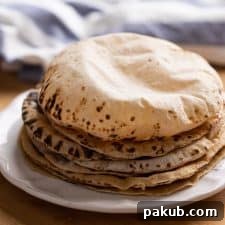
Soft Rotis – Your Go-To Homemade Indian Flatbread Recipe
By: Richa
Crafting irresistibly soft and authentic rotis at home is a deeply rewarding culinary experience that requires just two humble ingredients: atta (wholemeal wheat flour) and water. This detailed, easy-to-follow recipe guides you through every essential stage, from meticulously kneading the perfectly pliable dough to expertly rolling and then swiftly cooking them to perfection. The entire process is designed to be efficient and enjoyable, typically taking approximately 10-15 minutes, including a crucial brief resting period for the dough. Once you truly master the delightful art of making these wholesome flatbreads, the unparalleled convenience and immense joy of having delicious homemade bread will always be within your reach, making every meal more authentic, satisfying, and comforting!
Cook Time: 2 mins
Total Time: 10 mins
Yields: 12 rotis
Rating: 4.92 from 23 votes
Ingredients
- 2 1/2 cups Atta / Wholemeal Wheat Flour, ensure 1/4 cup is set aside for dusting
- 3/4 cup Water, lukewarm (approximate, adjust as needed)
- 1-2 teaspoons Ghee, for smearing on hot rotis (optional, but highly recommended)
Instructions
- Initiate Dough Preparation: Begin by placing the atta (wholemeal wheat flour) into the center of a wide-mouthed mixing bowl or a plate with a high rim. Form a well in the middle of the flour. Pour in approximately 1/4 cup of lukewarm water into this well. Using your fingertips, gently begin to mix the water into the surrounding flour. Gradually add another 1/4 cup of water and continue mixing until the flour starts to coalesce into a rough, shaggy mass. If the dough appears too dry and crumbly, add water in very small increments, about a teaspoon at a time, until it just forms a cohesive ball.
- Master the Kneading Process: Once the dough has loosely come together, either continue kneading in the bowl or transfer it to a clean, flat kitchen counter. Begin kneading vigorously, alternating your technique between using the heel of your palm to press and push the dough away from your body, and your fingers to gather and pull it back. Use your knuckles to press down firmly, creating indentations in the dough. Repeat this precise motion for a continuous period of 5-7 minutes. During this crucial stage, I often find it beneficial to add a few additional drops of water (just 2-3 times) and integrate it fully with thorough kneading after each addition. Continue this process until the dough transforms into a remarkably smooth, soft, and highly pliable ball that readily accepts a slight indentation when pressed gently.
- Allow the Dough to Rest: Once your dough has been perfectly kneaded, cover it with a barely damp, clean kitchen cloth or a tight-fitting lid. Allow the dough to rest at room temperature for a minimum of 15-20 minutes. This resting period is absolutely crucial as it allows the gluten within the dough to relax and the flour to fully hydrate, which will result in a dough that is even more pliable and significantly easier to roll out thinly and evenly.
- Prepare for Rolling & Preheat Tawa: While the dough is resting, place a tawa (a flat griddle) or a heavy-bottomed skillet on your stovetop over a medium-high flame. Allow it to preheat thoroughly until it’s hot but not smoking. Take a small, lime-sized portion of the rested dough and roll it between your palms until it forms a smooth, uniform ball, ensuring there are no visible cracks on its surface.
- Execute the Roti Rolling: Lightly dust your rolling board or a clean kitchen counter, along with the dough ball, using the reserved dry atta flour. Gently press the dough ball down to flatten it slightly. Using your rolling pin (belan), begin rolling from the center of the dough outwards. Continuously rotate the roti with your free hand to help maintain a circular shape and ensure even thickness. Apply gentle, consistent pressure throughout the rolling process. Should the dough begin to stick at any point, dust it lightly with a small amount of additional dry flour. Aim for a final diameter of approximately 5-5.5 inches, ensuring the roti is uniformly thin across its entire surface.
- Cook on Tawa (Method 1: Open Flame Puff): Confirm your tawa is hot but not yet smoking. Carefully place the rolled-out roti onto the center of the hot tawa. Cook for about 30-45 seconds, or until you observe numerous small bubbles forming across the surface of the roti. At this point, flip the roti. Cook the second side for another 30-45 seconds, until more bubbles appear and you begin to see light brown spots forming. Using a pair of tongs, quickly transfer the partially cooked roti directly to an open flame. Within less than 5 seconds, you will witness the roti gloriously puff up like a balloon. Flip it once more to lightly cook the other side (just a few brief seconds), then remove it from the flame. If your roti doesn’t puff, do not be discouraged; it will still be delicious! Simply continue cooking it on the tawa until you achieve light brown spots on both sides.
- Cook on Tawa (Method 2: Skillet Puff, if no open flame): If you do not have an open flame available, place the rolled roti onto a hot tawa. Cook the first side until small bubbles appear, then flip it over. Once the second side also shows bubbles and begins to form light brown spots, take a clean, soft cloth or a paper towel. Gently press down lightly on the edges of the roti, moving it in a rotating motion. The trapped steam within the roti will encourage it to puff up directly on the tawa itself. Continue cooking until you observe pleasing light brown spots on both sides, ensuring the roti is fully cooked through.
- Garnish and Serve Immediately: As soon as each roti is cooked and still piping hot, generously smear a small amount of ghee (or butter, if preferred) over its surface. Stack the rotis one on top of the other in an insulated roti basket or a container lined with a soft cloth. The residual heat from stacking helps them remain wonderfully warm and incredibly soft, preventing them from drying out until they are ready to be served. Serve immediately with your favorite Indian curries, dals, or vegetable dishes.
Video Guide
For a detailed visual guide covering every step of the roti-making process, including precise kneading and rolling techniques, please refer to the video embedded earlier in this article. It’s an invaluable resource for visual learners!
Notes for Success & Storage
- Water Adjustment is Key: The precise amount of water required can vary slightly depending on the specific brand and type of atta flour you are using, as their water absorption rates differ. Always be prepared to adjust the water quantity by adding a tablespoon or two more or less as needed to achieve a consistently soft, pliable dough.
- Storing Uncooked Dough: Freshly prepared roti dough can be conveniently stored in an airtight container in the refrigerator for a period of up to two days. You might observe a slight darkening of the dough’s color over time, which is a perfectly normal oxidation process and does not indicate spoilage. However, always discard the dough if it develops any sour or off-putting smell.
- Liquid Substitutes: While lukewarm water is the traditional choice, the dough can also be kneaded using other liquids such as lukewarm milk, whey, or even a mild vegetable stock. Each substitute can impart a slightly different flavor profile and subtle textural variation to the final roti.
- Multigrain Atta Considerations: Using multigrain atta instead of pure wholemeal wheat flour may result in rotis that are slightly crisper and potentially denser. They might also not achieve the same impressive level of softness or puff as those made with plain, 100% whole wheat atta. For the consistently softest and most authentic results, pure whole wheat flour is highly recommended.
- Freezing Cooked Rotis: Plain rotis (those cooked without any ghee applied) can be efficiently frozen for up to 3 months. To freeze, simply stack them one on top of the other, ensuring a layer of parchment paper is placed between each roti to prevent them from sticking together. I find it most convenient to create stacks of 6-8 rotis, as this size is ideal for defrosting and serving for a single meal. Once you have your stacks, wrap each tightly in aluminum foil, then place them inside a freezer-safe ziplock bag and lay them flat in the freezer. After a few hours, once the rotis are completely frozen solid, you can rearrange them as needed in your freezer. To defrost, transfer the foil-wrapped rotis to the refrigerator overnight, then reheat them gently on a hot tawa until they are warm and soft. Alternatively, for a quicker option, you can remove them from the foil and microwave them for a few minutes until thoroughly heated through.
- Storing Cooked Rotis (Short Term): Cooked rotis, especially those lightly smeared with ghee, retain their softness best when wrapped in a soft kitchen cloth or aluminum foil and stored at room temperature for up to one day. For slightly longer freshness, I prefer storing them in an airtight container on the kitchen counter. These make for a delightful snack throughout the day as well!
Nutrition Information (Approximate, per roti)
- Calories: 89 kcal
- Carbohydrates: 18g
- Protein: 3g
- Fat: 1g
- Saturated Fat: 1g
- Cholesterol: 1mg
- Sodium: 1mg
- Potassium: 91mg
- Fiber: 3g
- Sugar: 1g
- Calcium: 9mg
- Iron: 1mg
Frequently Asked Questions About Making Rotis
What is the difference between rotis and chapatis?
Essentially, “roti” and “chapati” are primarily different regional names used to refer to the exact same versatile Indian flatbread. In many parts of northern India, they are commonly called rotis, while across the southern regions, ‘chapati’ is the more frequently used term. In the vibrant state of Gujarat, these wholesome flatbreads might also be affectionately known as ‘phulkas’ or ‘rotlis’. Regardless of the specific name, they all consistently refer to this simple, unleavened, whole wheat bread that is a staple in Indian cuisine.
Are rotis healthy?
Absolutely! Rotis, meticulously made from wholemeal wheat flour (atta), are an excellent and significant source of dietary fiber, which is crucial for aiding healthy digestion, promoting a feeling of satiety, and contributing to overall gut health. When thoughtfully paired with other traditional Indian dishes like nourishing dal (lentils) and fresh sabzi (vegetable curries), they collectively form a remarkably balanced, wholesome, and highly nutritious meal that stands as a fundamental staple in countless diets.
Why do my rotis become hard?
Several factors can regrettably lead to your rotis becoming hard rather than delightfully soft. The most prevalent reasons include insufficient water incorporated during the dough preparation, which results in a stiff, unyielding, and non-pliable dough. If the dough isn’t adequately soft and well-kneaded from the very beginning, the resulting rotis will naturally turn out tough. Another significant contributing factor is the cooking temperature: if the tawa or skillet isn’t sufficiently hot when the roti is placed on it, it will cook too slowly, causing the moisture to evaporate and the roti to dry out considerably, leading to an undesirable hard and brittle texture.
Why don’t my rotis puff up?
Achieving a perfectly puffed roti is a deeply satisfying skill that, while seemingly simple, often demands a good deal of patience and consistent practice. Common culprits for rotis failing to puff include the dough not being soft or adequately hydrated enough, the tawa not being at the correct high temperature, or the roti being rolled unevenly, creating undesirable thick and thin spots. These inconsistencies prevent the even distribution of steam within the roti, thereby hindering its ability to inflate. However, it’s vital not to get discouraged by initial attempts! Keep diligently practicing your kneading and rolling techniques. This valuable culinary skill, once successfully learned and mastered, will truly stay with you for a lifetime, and before you know it, you’ll be effortlessly making beautifully puffed rotis with impressive ease and consistency.
How to freeze rotis or chapatis?
Freezing rotis is a superb and practical way to enjoy the convenience of homemade flatbreads with minimal effort, especially on busy days. Here’s the optimal method: Cook your rotis as usual, but specifically omit applying ghee if you intend to freeze them. Once they have completely cooled, stack them neatly, ensuring a crucial layer of parchment paper is placed between each roti to prevent them from sticking together. I personally find it most convenient to create stacks of 6-8 rotis, as this size is ideal for defrosting and serving for a single meal. Once you have your prepared stacks, wrap each one tightly in aluminum foil, then carefully place it inside a freezer-safe ziplock bag, and lay it flat in the freezer. After a few hours, once the rotis are thoroughly frozen solid, you can safely rearrange them as needed within your freezer. To defrost, simply transfer the foil-wrapped rotis to the refrigerator overnight. Reheat them gently on a hot tawa until they are warm, soft, and pliable again. Alternatively, for a quicker option, you can remove them from the foil and microwave them for a few minutes until they are heated through.
Can I make rotis with regular all-purpose flour instead of atta?
While it is technically possible to make a type of flatbread with all-purpose flour, the resulting product will not be an authentic roti. All-purpose flour possesses a significantly different gluten structure and water absorption rate compared to traditional wholemeal atta. Flatbreads made with all-purpose flour tend to be less pliable, may not puff up as effectively, and will notably lack the characteristic nutty flavor and the crucial nutritional benefits (especially dietary fiber) inherent in whole wheat. For true soft, authentic, and wholesome rotis, atta (wholemeal wheat flour) is absolutely indispensable and irreplaceable.
What is the ideal thickness for rolling rotis?
The ideal thickness for perfectly rolled rotis is quite thin, typically ranging around 1.5-2 millimeters, which is roughly comparable to the thickness of a thick coin. This specific thinness is crucial as it allows the roti to cook rapidly and facilitates its ability to puff up effectively on the tawa. If a roti is rolled too thickly, it will result in a doughy interior and will require a longer cooking time, often leading to a hard, chewy, or uncooked texture. Conversely, if it is rolled excessively thin, it might easily tear during either the rolling or cooking stages, making it challenging to handle.
How do I store cooked rotis to keep them soft?
To ensure cooked rotis remain wonderfully soft for an extended period, particularly for several hours after preparation, it is best to stack them in an insulated roti basket (or a casserole dish) that has been lined with a clean, soft cotton cloth. Lightly smearing them with ghee or butter before stacking also significantly helps to maintain their moisture content and prevents them from drying out. The cloth effectively absorbs any excess moisture while simultaneously retaining warmth, keeping the rotis hot and incredibly soft. For storage up to a full day, an airtight container kept at room temperature works remarkably well. However, it’s generally advisable to avoid refrigerating cooked rotis unless you specifically intend to freeze them, as refrigeration can often cause them to harden and lose their desirable soft texture.