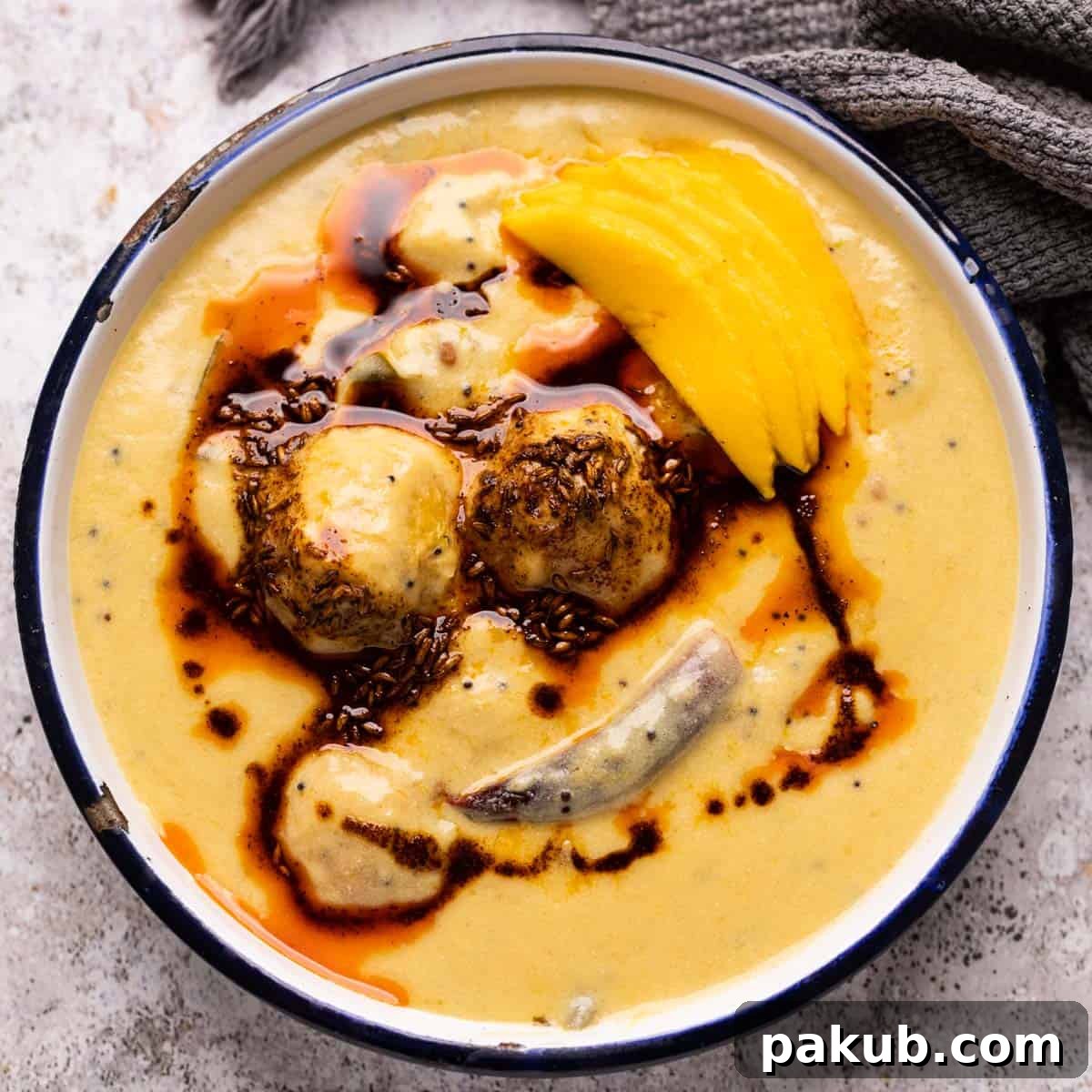
Indulge in the vibrant flavors of summer with this exquisite Mango Kadhi recipe – a unique, seasonal twist on the traditional Indian staple, made with succulent sugar baby mangoes. This delightful dish perfectly balances sweet, spicy, and tangy notes, creating an aromatic experience that truly captures the essence of fresh mangoes. It’s more than just a meal; it’s a celebration of seasonal produce!
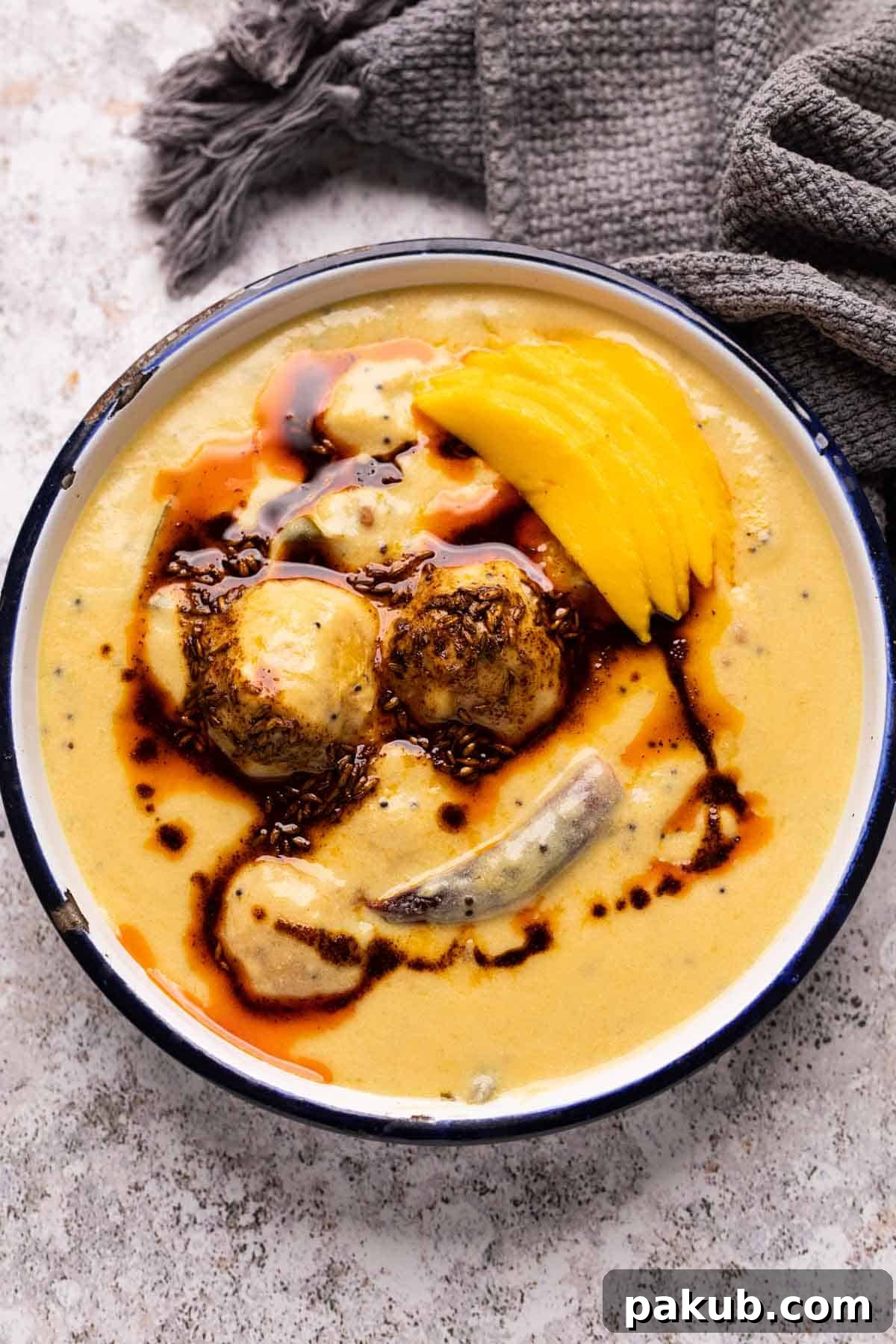
Exquisite Mango Kadhi (Gujarati Fajeto): A Seasonal Indian Delight
Step into the delightful world of Indian cuisine, where traditional recipes are often reimagined with seasonal ingredients to create fresh, exciting flavors. This Mango Kadhi, also known as Gujarati Fajeto, is a perfect embodiment of this culinary philosophy. Originating from the rich culinary traditions of Gujarat, Kadhi is typically a comforting curry made from gram flour (besan) and yogurt, known for its distinct sour and savory profile. However, the addition of luscious, ripe mangoes transforms this humble dish into a spectacular summer sensation. It introduces a delightful sweetness and an unmistakable fragrant mango flavor that elevates the entire experience, making it an irresistible treat during mango season.
Mango Kadhi is more than just a meal; it’s a taste of sunshine in a bowl. It masterfully blends the creamy texture of the yogurt-besan base with the vibrant sweetness and subtle tang of fresh mangoes. The result is a curry that is both deeply comforting and refreshingly light, perfectly suited for the warmer months. Whether you’re a connoisseur of Indian food or simply looking to explore new, exciting flavors, this seasonal rendition of Kadhi promises to be a memorable addition to your recipe repertoire. It’s a versatile dish that can be enjoyed with steamed rice, fluffy rotis, or as part of a grand Indian thali.
- Spicy Mango Curry: A fiery and fragrant curry for those who love a kick.
- Mango Shrikhand: A sweet and creamy Indian dessert, perfect for cooling down.
- Mango Panna Cotta: An elegant fusion dessert combining Italian classic with tropical fruit.
- Thai Prawn Mango Salad: A refreshing and zesty salad with succulent prawns and fresh mangoes.
- Mango Salad Dressing: Add a tropical twist to your greens.
- Mango Spring Rolls: Light and healthy, bursting with fresh flavors.
Table of Contents
- The Essence of Mango Kadhi
- Ingredients for Your Perfect Mango Kadhi
- Frequently Asked Questions About Mango Kadhi
- Mastering the Art of Mango Kadhi: Step-by-Step
- Expert Tips for a Flawless Gujarati Fajeto
- Serving and Storage Suggestions
- Watch the Recipe Video
- Complete Recipe Card: Mango Kadhi
- More Savory Mango Creations
The Essence of Mango Kadhi: A Culinary Journey
Mango Kadhi, or Fajeto as it’s known in Gujarati households, is a beautiful representation of how simple ingredients can create profound flavors. At its heart, kadhi is a savory yogurt-based curry, thickened with gram flour (besan), and seasoned with an aromatic tempering of spices. This combination provides a delightful contrast of textures and tastes, often leaning towards a pleasing sourness that complements rich Indian meals. The genius of Mango Kadhi lies in its seasonal adaptation, where the humble kadhi is infused with the bright, tropical notes of ripe mangoes. This transformation adds a layer of natural sweetness and a captivating aroma, making it a beloved dish during the peak of mango season, typically late spring and summer.
Historically, kadhi recipes evolved as a clever way to utilize yogurt that had become slightly sour, turning it into a delicious and hearty meal rather than letting it go to waste. Much like how ripe bananas call for banana bread, sour curd signals the perfect opportunity to whip up a batch of flavorful kadhi. The addition of mangoes, especially the smaller, intensely sweet varieties, is a testament to India’s culinary ingenuity – an ability to blend contrasting flavors into a harmonious whole. This dish is not just food; it’s an experience that speaks of home, tradition, and the joyful abundance of nature.
Ingredients for Your Perfect Mango Kadhi
Crafting an unforgettable Mango Kadhi begins with selecting the finest ingredients. Each component plays a vital role in achieving that perfect balance of sweet, sour, and spicy flavors:
- Mango Pulp/Pureed Mango: The foundation of our mango flavor. For the best results, use a fresh, sweet, and juicy mango variety. Alphonso, Kesar, or even Totapuri mangoes are excellent choices for their vibrant color and intense flavor. While fresh is always superior, a good quality canned mango pulp can be used in a pinch, though it might alter the freshness of the taste slightly.
- Ripe Sugar Baby Mangoes: These small, round, and incredibly sweet mangoes are the star of this recipe! Their firm, fleshy pulp and intense sweetness are perfect for adding delightful chunks of mango to the kadhi, enhancing both flavor and texture. If sugar baby mangoes are unavailable, any ripe, non-fibrous mango variety cut into generous chunks will make a wonderful substitute. Aim for mangoes that are sweet but still hold their shape when cooked.
- Curd (Yogurt): The creamy, tangy base of the kadhi. Traditionally, slightly sour homemade curd is preferred as its tartness beautifully complements the mango’s sweetness. If your homemade curd isn’t sour enough, letting it sit out at room temperature for a couple of hours can achieve the desired tang. Alternatively, plain Greek yogurt (thinned slightly) can be a good substitute, offering a similar creamy consistency and a hint of sourness.
- Gram Flour (Besan): This gluten-free flour is crucial for thickening and binding the yogurt, giving the kadhi its signature creamy, velvety texture. It acts much like a roux in Western cooking, providing body and preventing the yogurt from curdling. Ensure it’s lump-free when mixed with the yogurt.
- Tempering (Tadka) Spices: This aromatic infusion is what truly defines Indian curries. For Mango Kadhi, we use a classic blend:
- Mustard Seeds: They splutter and release a pungent, nutty aroma.
- Cumin Seeds: Impart an earthy, warm depth of flavor.
- Methi (Fenugreek Seeds): Add a distinctive, slightly bitter, and aromatic note that is essential to Gujarati cuisine.
- Curry Leaves: Provide a fresh, citrusy, and slightly nutty fragrance that is irreplaceable.
- Hing (Asafoetida): A pinch of hing enhances the overall flavor profile and aids digestion.
- Dry Red Chillies: Offer a gentle heat and a beautiful color to the tempering.
- Ginger: While this recipe typically omits garlic, fresh grated ginger provides a warm, subtle spice and aromatic complexity that harmonizes wonderfully with the sweet mangoes and tangy yogurt, bringing all the flavors together seamlessly.
- Green Chillies: For a fresh, vibrant heat that contrasts beautifully with the sweetness. Adjust to your spice preference.
- Jaggery Powder/Sugar: A touch of jaggery (unrefined cane sugar) or regular sugar balances the sourness of the yogurt and enhances the natural sweetness of the mangoes, contributing to the dish’s unique sweet-tangy profile.
- Salt: Essential for seasoning and bringing out all the flavors.
- Oil/Ghee: For cooking the tempering and the kadhi base. Ghee adds a richer, more traditional flavor.
Frequently Asked Questions About Mango Kadhi
1. What is Mango Kadhi, or Gujarati Fajeto?
Mango Kadhi, fondly known as Fajeto in Gujarati cuisine, is a delightful seasonal variation of the traditional Indian Kadhi. It’s a comforting, yogurt-based curry thickened with gram flour (besan), but what sets it apart is the inclusion of sweet mango pulp and luscious mango pieces. Historically, Kadhi was a clever “hack” to utilize homemade yogurt that had soured a little too much to be eaten plain. Just as ripened bananas are a signal for delicious banana bread, sour curd is your cue to create a flavorful Kadhi. The mango version adds a wonderful sweet, tangy, and aromatic dimension, making it a perfect dish to enjoy during the peak of mango season.
2. How is Mango Kadhi traditionally eaten?
Mango Kadhi is incredibly versatile and best enjoyed warm. It pairs wonderfully with a plate of fluffy steamed basmati rice, allowing the subtle flavors of the kadhi to shine. It’s also a cherished component of a traditional Indian thali, alongside soft rotis (Indian flatbread), a spicy pickle, crispy papad, and sometimes a side of fresh Aamras (pureed mango pulp). The combination of textures and flavors on a thali truly highlights the comforting essence of this dish.
3. Can I make Kadhi if I don’t have homemade sour curd?
Absolutely! While sour homemade curd lends an authentic depth of flavor, you can certainly use store-bought plain yogurt or even Greek yogurt as an alternative. To achieve a similar sourness, simply leave your store-bought yogurt out at room temperature for a couple of hours before you begin cooking. This natural fermentation process will develop the desired tanginess, making it perfect for your Mango Kadhi.
4. Which type of mango is best for this recipe?
For this particular recipe, “Sugar Baby” mangoes are highly recommended due to their small size, intense sweetness, and wonderfully fleshy pulp. Their texture and flavor are ideal for the kadhi. However, if sugar baby mangoes are not available, don’t fret! Any ripe, sweet, and non-fibrous mango variety will work beautifully. Just ensure you cut it into large, discernible chunks so that you get delightful bursts of mango flavor and texture with every spoonful. Popular varieties like Alphonso, Kesar, or even Totapuri can be used, with a slight adjustment to the jaggery/sugar content based on the mango’s sweetness.
Mastering the Art of Mango Kadhi: Step-by-Step Instructions
Follow these detailed steps to create a rich, aromatic, and perfectly balanced Mango Kadhi. The accompanying picture collage will guide you through each stage, ensuring a smooth and enjoyable cooking experience.
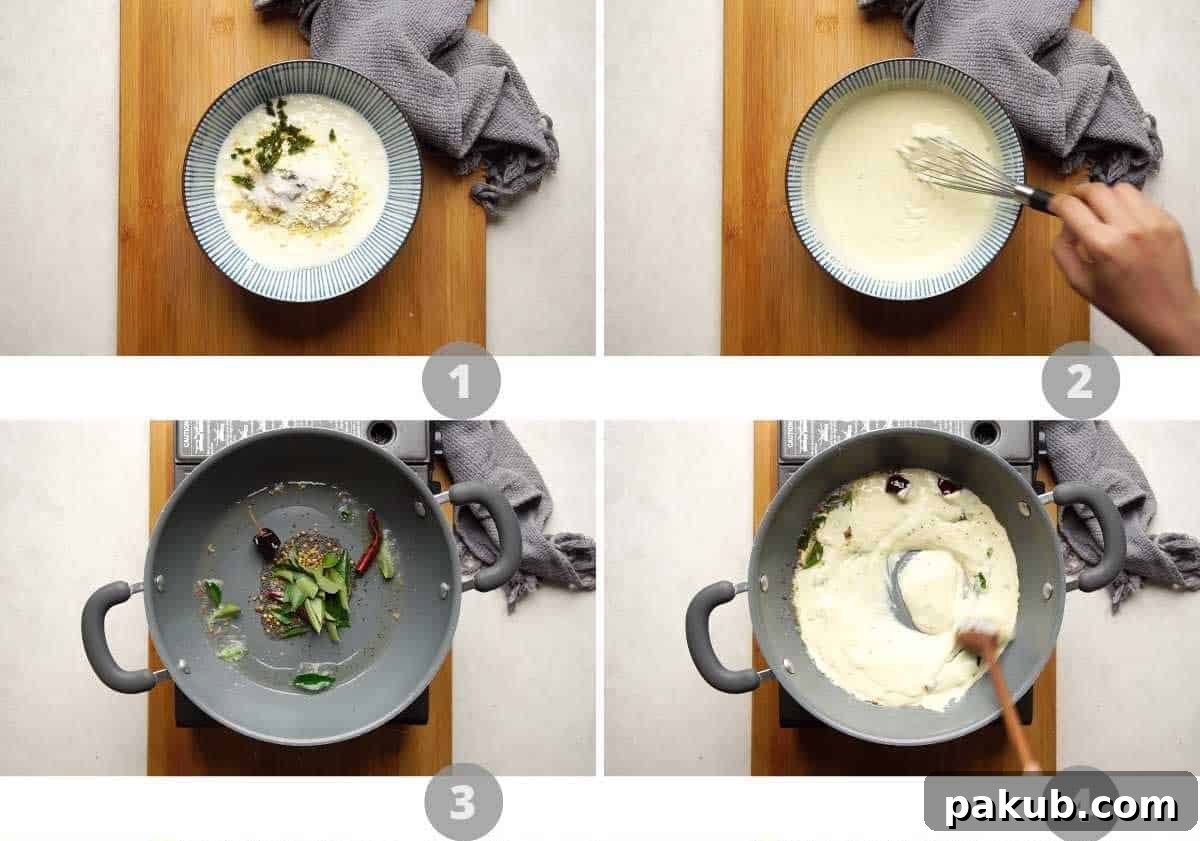
- Prepare the Kadhi Base: In a large mixing bowl, combine the fresh curd (yogurt), gram flour (besan), minced green chillies, and grated ginger. Use a whisk to thoroughly mix these ingredients until the mixture is completely smooth and free of any lumps. This smooth consistency is crucial for preventing the kadhi from splitting or becoming grainy later. Set this well-combined mixture aside.
- Initiate the First Tempering: Heat the oil in a heavy-bottomed pan or kadai over a medium flame. Once the oil is hot, add the mustard seeds. Allow them to splutter vigorously – this indicates they are perfectly toasted and releasing their full aroma. Immediately follow with a pinch of hing, fenugreek seeds, dry red chillies, and fresh curry leaves. Fry these aromatic spices for about a minute, until the curry leaves turn crisp and the air fills with their distinctive fragrance.
- Incorporate the Yogurt Mixture: Reduce the flame to low. Carefully pour the prepared curd and besan mixture into the kadai. Begin stirring continuously with a whisk or ladle. This constant stirring on a low flame is vital at this stage to prevent the yogurt from curdling or splitting as it heats up. Continue stirring until the mixture comes to a gentle boil, indicating it has stabilized and thickened slightly.
- Simmer and Adjust Consistency: Once the curd mixture has reached a boil, reduce the flame even further to a gentle simmer. Add about 1.5 cups of water. Stir well to combine. At this point, you can adjust the consistency of your kadhi; if you prefer it thinner, add a little more water, stirring thoroughly. Allow the kadhi to simmer gently for at least 10 minutes, stirring occasionally to prevent it from sticking to the bottom of the pan and ensuring the gram flour cooks completely, eliminating any raw taste.
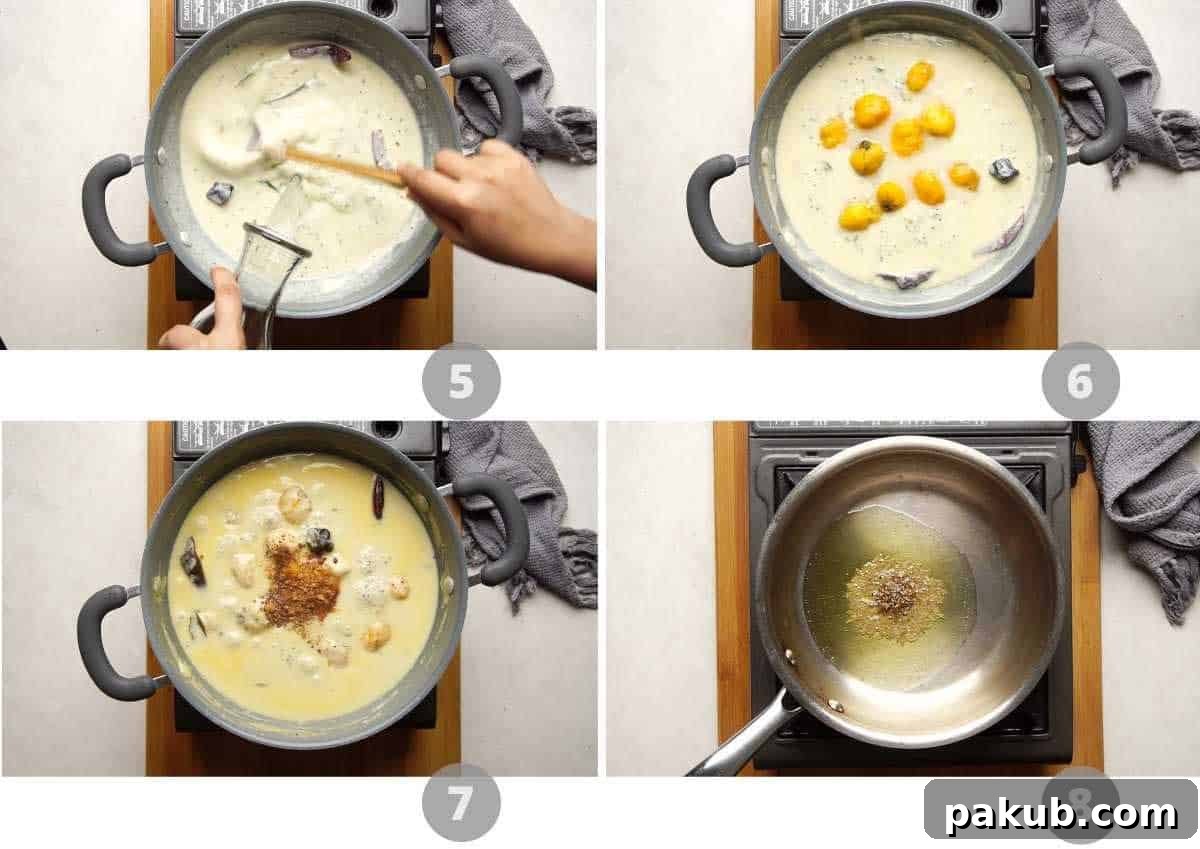
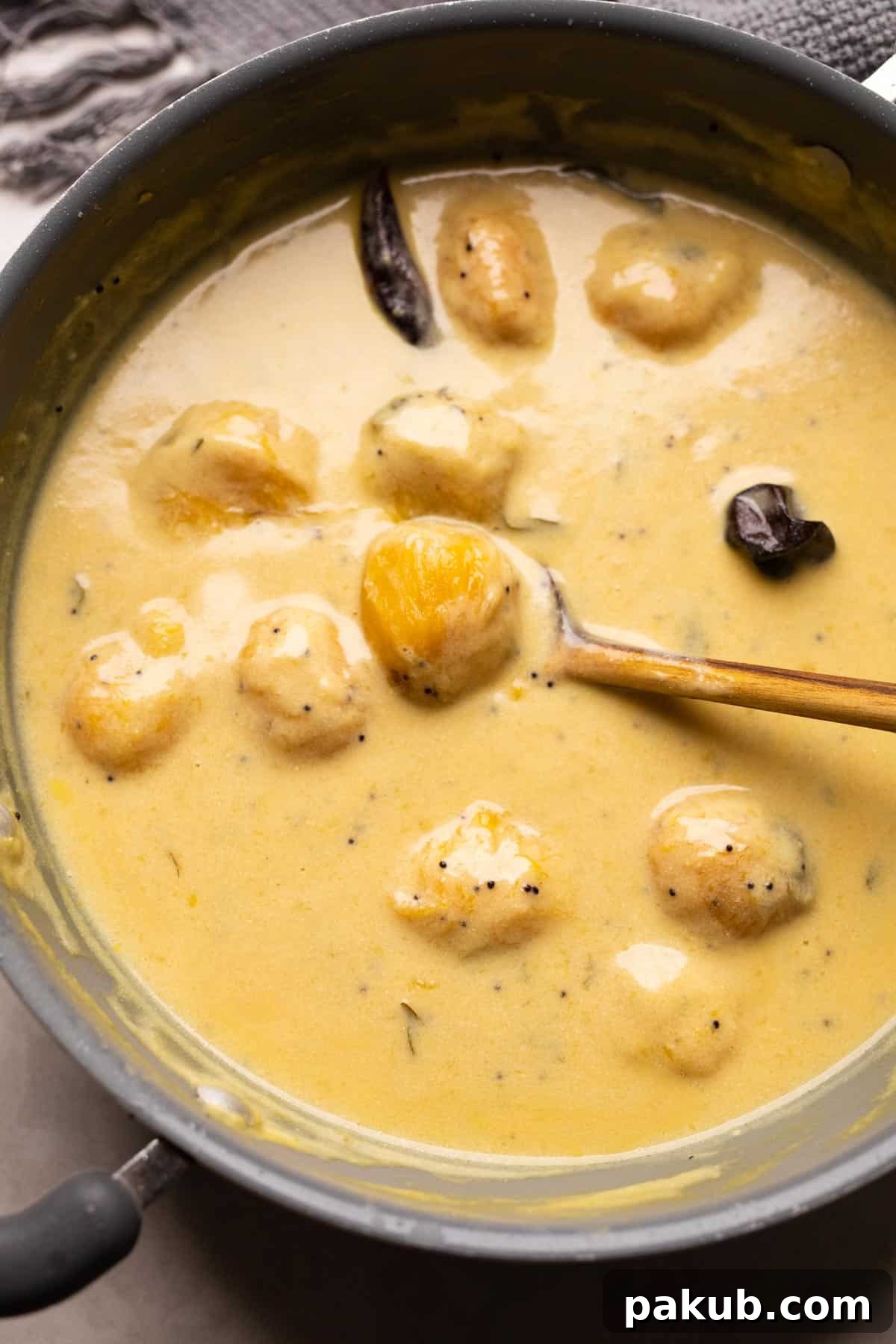
- Add the Mangoes and Flavorings: Introduce the peeled whole sugar baby mangoes (or mango chunks) and the mango puree (if using) into the simmering kadhi. Stir them in gently. Allow the mangoes to cook within the kadhi for another 10-12 minutes. This cooking time allows the mangoes to soften slightly, release their flavors into the curry, and infuse the entire dish with their tropical essence.
- Final Seasoning: Add salt to taste and the jaggery powder. The jaggery is crucial for balancing the sourness of the yogurt and enhancing the sweetness of the mangoes. Taste and adjust the seasoning as needed, adding more water if a thinner consistency is desired. Mix everything well to ensure the salt and jaggery are fully dissolved and integrated. Continue to cook for another 2 minutes, allowing the flavors to meld beautifully.
- Prepare the Final Tempering (Tadka): In a separate small frying pan, heat the ghee over a medium flame. Once the ghee is hot and shimmering, add the cumin seeds and let them splutter. This short tempering adds a final layer of robust flavor and visual appeal to the dish.

- Complete the Tempering and Serve: Turn the flame down to low and add the dry red chillies and red chilli powder to the ghee. Fry for a mere 10-15 seconds; be careful not to burn the spices, as chilli powder can burn quickly. Immediately remove the pan from the flame. Pour this fragrant tempering directly over the simmering Mango Kadhi. Stir gently to incorporate. Serve your exquisite Mango Kadhi hot, perhaps garnished with a few fresh coriander leaves, for a truly satisfying meal!
Expert Tips for a Flawless Gujarati Fajeto
Achieving the perfect consistency and flavor in your Mango Kadhi requires attention to a few key details. Keep these expert tips in mind for a truly successful dish:
- Whisking is Key: Before adding the gram flour (besan) to the curd, ensure they are whisked together extremely well until the mixture is perfectly smooth and completely lump-free. Only then should you consider adding any water. Lumps of besan can lead to an uneven texture and raw taste.
- Mind the Flame: Always lower the flame significantly before introducing the besan-curd mixture to the hot oil and spices. This crucial step prevents the yogurt from shocking and curdling upon contact with high heat.
- Continuous Stirring: Once the yogurt mixture is in the pan, stir continuously without interruption until it comes to its first boil. This constant agitation is your best defense against the kadhi splitting or curdling, ensuring a smooth, creamy result.
- Cook the Besan Thoroughly: After the kadhi has reached a boil, reduce the heat to a low simmer and continue cooking for at least 20 minutes. This extended simmering time is essential for properly cooking the gram flour. If the besan isn’t cooked long enough, the kadhi will have an unpleasant raw, floury taste. Remember to stir occasionally during this period to prevent the kadhi from sticking to the bottom of the pan and burning.
- Adjust Consistency with Water: Kadhi thickens as it simmers and cools. Don’t hesitate to add more hot water gradually while it’s simmering if you prefer a thinner consistency. It’s always easier to thin out a thick kadhi than to thicken a runny one.
- Sourness Matters: The unique tangy flavor of kadhi traditionally comes from slightly sour curd. If you don’t have naturally sour homemade curd, don’t worry! Fresh curd or even plain Greek yogurt can be used. You can achieve a similar tang by letting it sit at room temperature for a couple of hours before starting your recipe. A touch of lemon juice can also be added at the end for an extra zesty kick, if desired.
Serving and Storage Suggestions
Mango Kadhi is a delightful dish that truly shines when served fresh and warm. For a classic meal, pair it with fluffy steamed basmati rice or hot, soft chapatis (rotis). It also complements a full Indian thali beautifully, alongside a dry vegetable curry, some pickle, and papad. The sweet and tangy flavors of the kadhi provide a wonderful contrast to richer, spicier dishes.
Storage: Leftover Mango Kadhi can be stored in an airtight container in the refrigerator for up to 2-3 days. The flavors often deepen overnight, making it even more delicious the next day.
Reheating: When reheating, do so gently on a low flame, stirring occasionally. You might need to add a splash of water or milk to adjust the consistency, as the kadhi can thicken considerably upon cooling. Avoid boiling vigorously, which can cause the yogurt to curdle.
If you’re seeking inspiration for a vibrant and satisfying lunch or dinner this week, look no further! Who says mangoes are exclusively for sweet desserts? If you haven’t yet experienced the magical blend of sweet mangoes in your savory kadhi, now is the perfect moment to try this culinary masterpiece. Prepare to be enchanted – this is a recipe you’ll find yourself returning to time and time again!
Watch the Recipe Video
Mango Kadhi
By:
Richa
Mango Kadhi is a beautiful summertime dish where succulent sugar baby mangoes are simmered in a spiced yogurt-based curry. It’s a beloved Gujarati favorite, fragrant with the irresistible aroma of fresh mangoes.
Cook: 30 mins
Total: 35 mins
Servings: 6 people
Ingredients
Kadhi
- 1 ½ Cups Curd or Yogurt
- 3 Tablespoons Gram Flour (Besan)
- 2 Green Chillies, minced
- ¾ Tablespoon grated Ginger
- 1 Tablespoon Oil
- ½ Teaspoon Hing (Asafoetida)
- 1 Teaspoon Mustard Seeds
- 1 Teaspoon Fenugreek Seeds
- 2 Dried Red Chillies (for the kadhi base)
- 1 Sprig Curry Leaves
- 1.5-2 Cups Water
- 1 Teaspoon Salt
- 1 ½ Teaspoons Jaggery Powder
- 10 Sugar Baby Mangoes, peeled whole or cut into chunks
- ½ cup Mango Puree (optional, for extra mango flavor)
Tempering (for Garnish)
- 2 Teaspoons Ghee
- 1 Teaspoon Cumin Seeds
- ½ Teaspoon Red Chilli Powder
- 2-3 Dry Red Chillies (for garnish)
Instructions
Kadhi Preparation
- Combine curd, besan, green chillies, and ginger in a bowl. Whisk thoroughly until the mixture is completely smooth and free of lumps. Set aside.
- Heat 1 tablespoon oil in a kadai or heavy-bottomed pan over medium flame. Once hot, add mustard seeds and let them splutter. Add hing, fenugreek seeds, dry red chillies (from kadhi ingredients), and curry leaves. Fry for about 1 minute until fragrant.
- Turn the flame to low and carefully pour in the whisked curd mixture. Stir continuously with a whisk or ladle until the mixture comes to a boil. This prevents splitting or curdling.
- Once boiling, reduce the flame to a low simmer. Add 1.5 cups of water and mix well. Adjust consistency by adding more water if desired. Simmer for at least 10 minutes, stirring occasionally, to ensure the besan is fully cooked.
- Add the sugar baby mangoes (or mango chunks) and mango puree (if using). Cook for another 10-12 minutes, allowing the mango flavors to infuse into the kadhi.
- Stir in salt and jaggery powder. Adjust sweetness and salt to taste. Add more water if a thinner consistency is preferred. Mix to combine and cook for 2 more minutes.
Final Tempering (Tadka)
- In a separate small frying pan, heat 2 teaspoons ghee over a medium flame. Once hot, add cumin seeds and let them splutter.
- Turn the flame to low, add the dry red chillies (from tempering ingredients) and red chilli powder. Fry for 10-15 seconds, being careful not to burn them. Immediately remove from heat.
- Pour this aromatic tempering over the prepared Mango Kadhi. Stir gently. Serve hot with rice or roti.
Notes
- Whisk the gram flour (besan) and curd together really well to ensure there are no lumps. Add water only once the besan is whisked.
- Lower the flame before adding the besan-curd mixture to prevent curdling.
- Stir continuously until the kadhi comes to a first boil. This prevents it from splitting.
- Once it has boiled, simmer for at least 20 minutes to cook the besan thoroughly; otherwise, it will taste raw. Stir occasionally to prevent sticking and burning.
- Add more water while it simmers to adjust the desired consistency.
- Sour curd gives kadhi its unique flavor. If you don’t have some, fresh curd also works. You can let fresh curd sit out for a couple of hours to develop more tanginess.
Nutrition Information (per serving, approximate)
Carbohydrates: 63g
Protein: 6g
Fat: 8g
Saturated Fat: 3g
Polyunsaturated Fat: 1g
Monounsaturated Fat: 3g
Trans Fat: 0.01g
Cholesterol: 12mg
Sodium: 479mg
Potassium: 771mg
Fiber: 7g
Sugar: 55g
Vitamin A: 4181 IU
Vitamin C: 142mg
Calcium: 127mg
Iron: 1mg
More Quick & Easy Savory Mango Creations
If you’ve enjoyed the versatility of mangoes in this savory Kadhi, you’ll love exploring these other delicious savory mango recipes that perfectly showcase the fruit’s unique ability to enhance a variety of dishes:
- Mango Rice: A simple yet flavorful rice dish infused with the subtle sweetness of mangoes.
- Grilled Chicken Mango Salad: A refreshing and protein-packed salad, ideal for a light summer meal.
- Mango Bell Pepper Rice Rolls: Light and healthy rice paper rolls, vibrant with fresh mango and crunchy bell peppers.
- Mangalorean Ripe Mango Curry: A rich and tangy South Indian curry, bursting with the flavors of ripe mangoes and coconut.