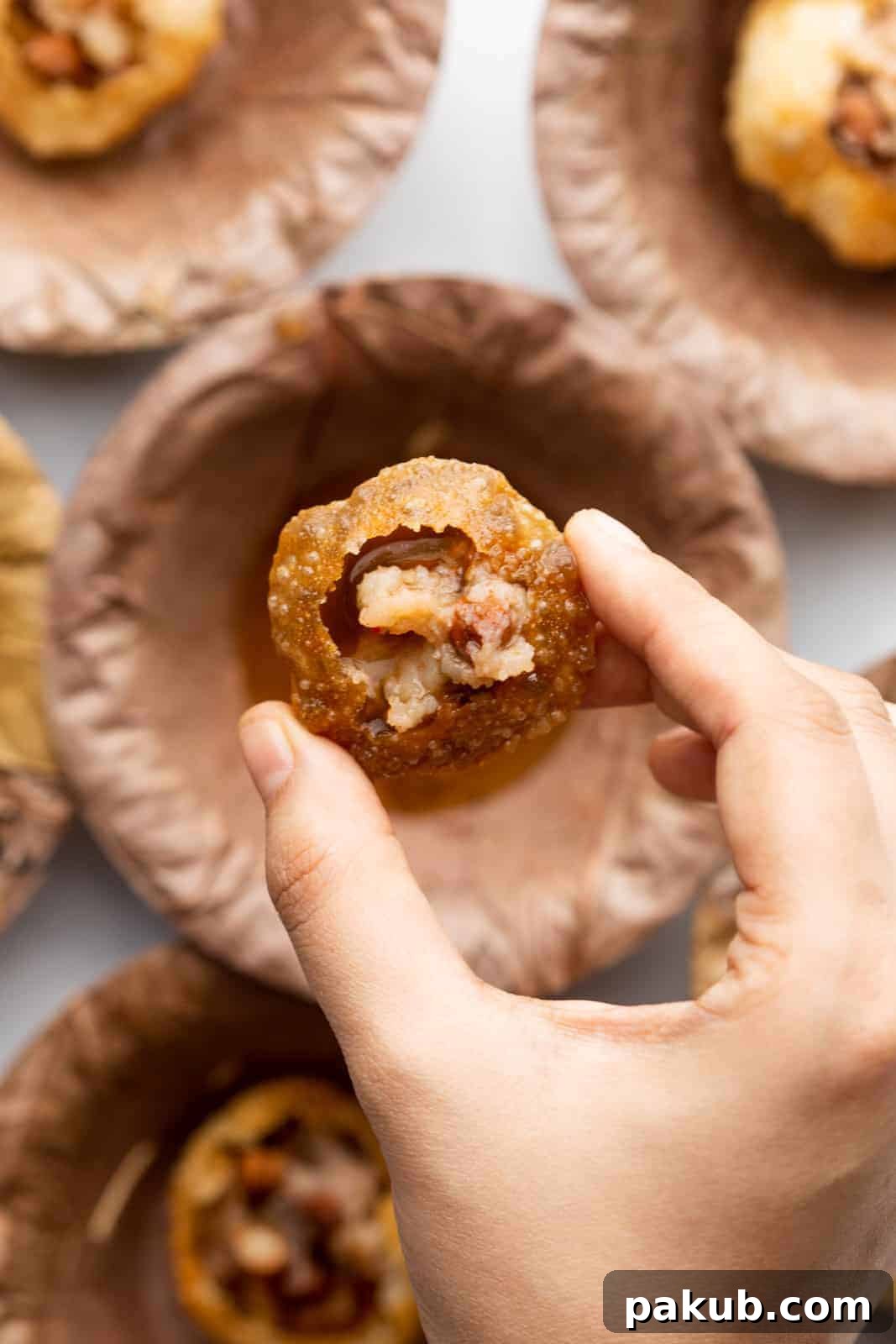
Discover how to make the quintessential Indian street food, Pani Puri, effortlessly at home. This detailed, step-by-step recipe covers everything from crafting perfectly crispy puris to preparing the chatpata filling and the iconic tangy jaljeera pani, guaranteeing an authentic street-style flavor experience!
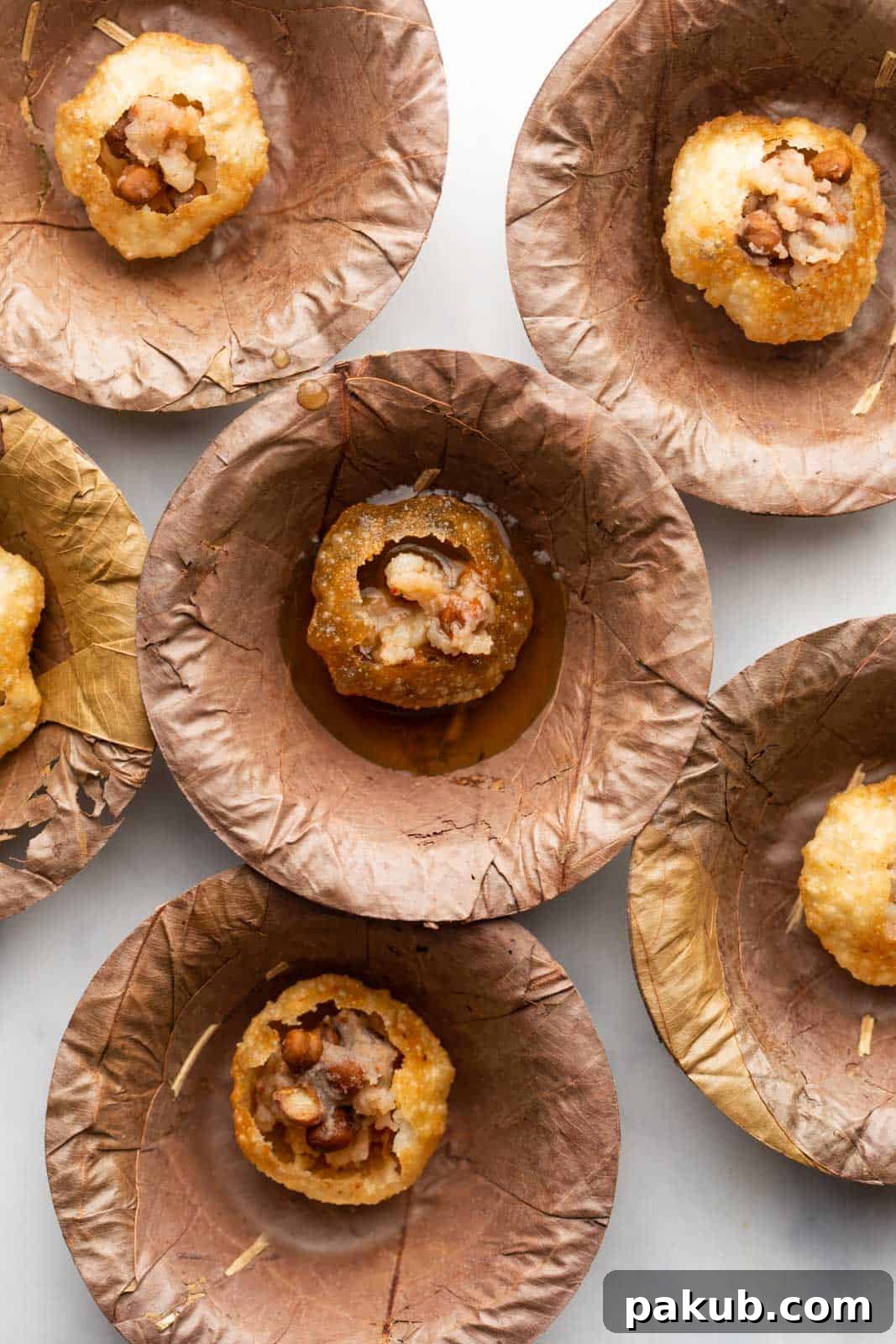
Mastering Homemade Pani Puri: Your Guide to India’s Favorite Street Snack
There’s an undeniable magic to Pani Puri, that explosion of flavors and textures that defines Indian street food. For many, the idea of replicating that authentic street-side taste at home seems daunting. But what if I told you it’s not just possible, but surprisingly easy and incredibly rewarding? Having spent countless hours perfecting my own homemade Pani Puri recipe, I’m thrilled to share a method that will empower you to create this beloved snack right in your kitchen, impressing family and friends alike.
Whether you call it Golgappa in North India, Puchka in Bengal, or Gupchup in parts of Odisha and Bihar, this iconic dish transcends regional boundaries, captivating palates with its unique blend of crispy shells, spicy potato and chickpea filling, and refreshing tangy water. My recipe focuses on achieving that perfect balance: puris that are wonderfully crunchy, a filling bursting with savory and spicy notes, and a pani so flavorful, it’s truly “to die for.”
The secret to nailing truly exceptional, street-style Pani Puri lies in mastering three fundamental elements: the delicate, crispy puris, the robust and flavorful filling, and the invigorating, spiced water (pani). Let’s dive deep into each component to unlock the full potential of this culinary delight.
Table of Contents
- The Heart of the Matter: The Aloo Filling
- Crafting the Perfect Crunch: Crispy Pani Puris
- The Soul of Pani Puri: The Tangy Pani (Jaljeera Water)
- Elevating the Experience: Garnishes and Accompaniments
- The Art of Serving Homemade Pani Puri
- Watch the Pani Puri Recipe Video
- Easy Homemade Pani Puri Recipe Card
- More Delicious Chaat Recipes
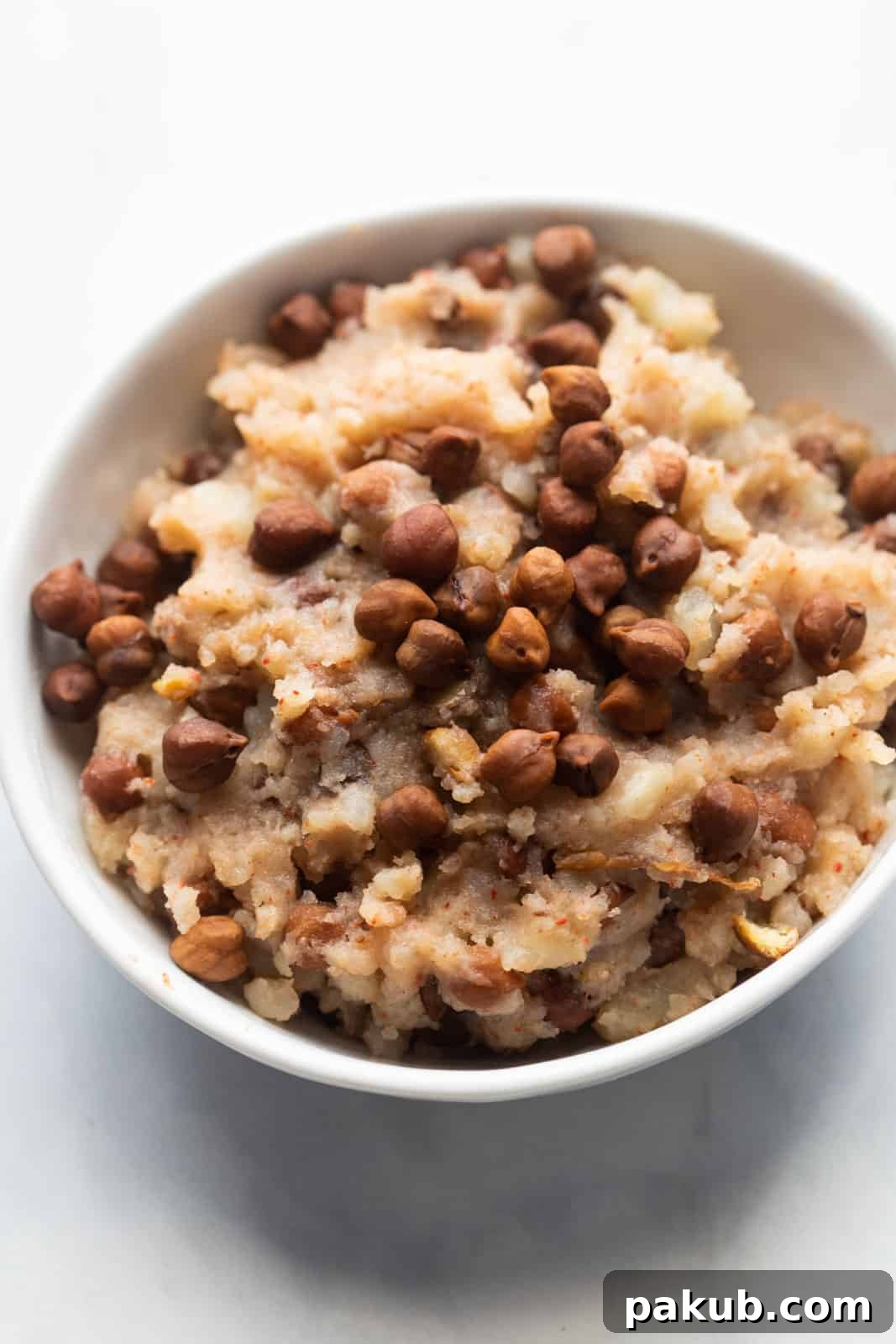
The Heart of the Matter: The Aloo Filling
For that irresistible street-style Pani Puri, the filling isn’t just an afterthought – it’s crucial. My recipe delivers a truly lip-smacking experience with a simple yet incredibly potent 5-ingredient filling. The foundation is a comforting mix of perfectly boiled and mashed potatoes combined with either hearty kala chana (black gram) or tender kabuli chana (chickpeas). This provides a satisfying texture and base for the vibrant flavors.
The “chatpata” or tangy-spicy kick comes from a trio of essential Indian spices: aromatic black salt (kala namak), earthy cumin powder (jeera powder), and fiery red chilli powder. The magic lies in getting these measurements just right to ensure a beautifully balanced filling that complements the crispiness of the puri and the tang of the pani. While these five ingredients form the core, don’t hesitate to personalize it with finely chopped onions, a sprinkle of fresh coriander, or even a touch of chaat masala for an extra layer of complexity. This simple yet profound mixture is what makes each bite truly memorable.
Crafting the Perfect Crunch: Crispy Pani Puris
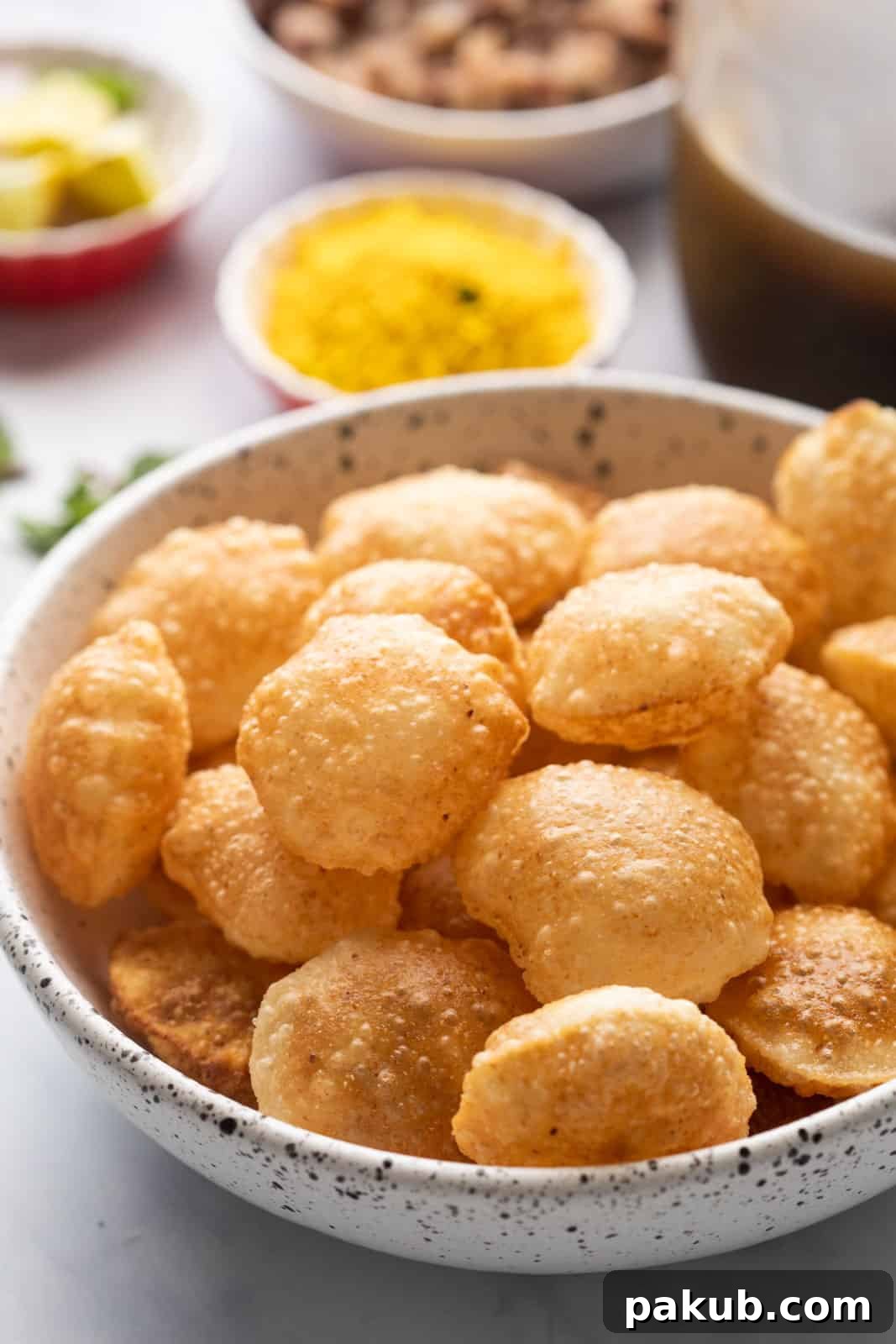
The puri, the crispy, hollow shell, is arguably the most challenging but also the most rewarding component of Pani Puri. Achieving that ideal texture – light, airy, and yet sturdy enough to hold its precious cargo of filling and pani – is an art, but one that can be easily mastered with the right technique. Forget stubborn, thick puris; we aim for shells that shatter with a satisfying crunch, making way for the burst of flavors within.
Here are my essential tips for making the crispiest, puffiest puris:
- Dough Composition is Key: For the puri dough, the primary ingredient is fine semolina or sooji. A small quantity of wheat flour (atta) acts as a binding agent, ensuring the puris hold their shape. Always opt for fine semolina for the best texture.
- Precise Water Temperature: When mixing the dough, use water that is hot, but not boiling. Add it gradually and very carefully. Too much water can lead to a sticky, soft dough that results in soggy, flat puris instead of crisp, puffed ones. The ideal dough should be quite firm and stiff.
- Thorough Kneading: Don’t skimp on kneading! Work the dough thoroughly for at least 5-6 minutes until it feels completely smooth and elastic. This develops the gluten, which is crucial for the puris to puff up.
- Roll Thin and Evenly: This is perhaps the most critical step. Roll out the dough as thin and as evenly as possible. Any unevenness – thick edges or a thick center – will prevent the puri from puffing uniformly and can lead to chewy, undercooked spots or even soggy patches. Consistency is key here.
- Shaping Methods: You have two main options for shaping. You can either divide the dough into tiny balls and roll each one individually into a 1.5 to 2-inch circle. Alternatively, roll out a larger, thin circle of dough and use a round cookie cutter to stamp out uniform puris.
- Optimal Oil Temperature for Frying: The temperature of your frying oil is paramount. It must be maintained between medium and high heat. If the oil is too cool, the puris will absorb too much oil and become greasy. If it’s too hot, they’ll burn quickly without fully puffing or cooking through, leading to a chewy interior. The correct temperature ensures they puff up instantly and cook to a perfect golden crisp, maintaining their crunch even after cooling.
- Gentle Tapping Technique: As you drop the puris into the hot oil, gently tap them with a slotted spoon. This encourages them to puff up fully and evenly, creating that desirable hollow center.
The Soul of Pani Puri: The Tangy Pani (Jaljeera Water)
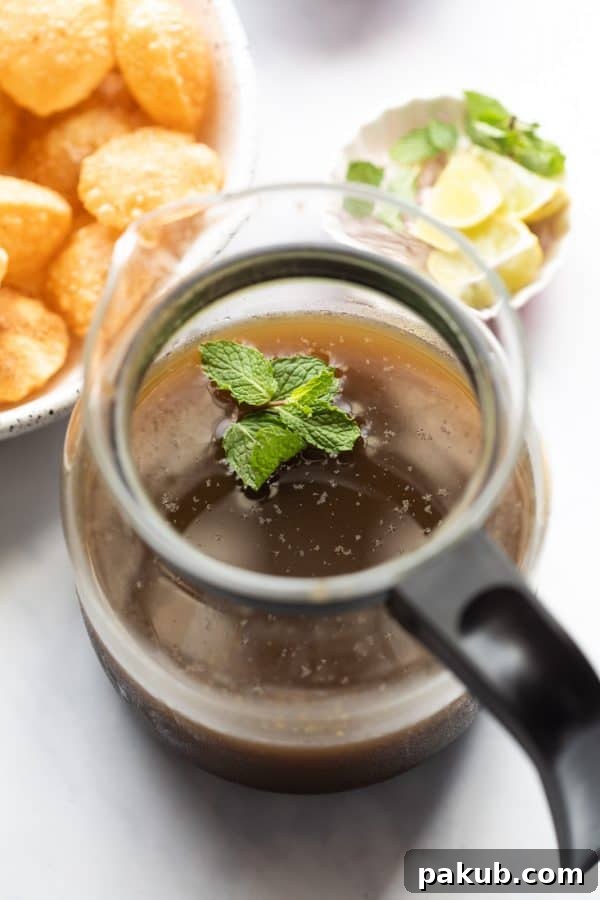
The “pani” or spiced water is the undisputed hero, the “magic potion” that truly brings all the elements of Pani Puri together. It’s what transforms a simple filled puri into an exhilarating, multi-sensory experience. My rendition of jaljeera pani is a symphony of flavors, crafted with a vibrant blend of fresh herbs and a thoughtful selection of spices and seasonings. The goal is a perfect equilibrium of sweet, spicy, tangy, and sour notes, all harmoniously interwoven to create an explosion of taste in every bite.
The foundation of this refreshing pani rests on fresh ingredients. Make sure your pudina (mint) leaves are super fresh, as their invigorating aroma and cool flavor are non-negotiable for an authentic taste. Along with mint, fresh coriander, green chilies (adjusting to your spice preference), and a choice of either raw mango or tamarind provide the essential tang. A careful measure of spices like roasted cumin, black salt, and a hint of sugar helps to round out the flavor profile, making it utterly addictive.
One of the beauties of homemade pani is the ability to customize it precisely to your taste preferences. Prefer it spicier? Add an extra green chili. Craving more tang? A squeeze of fresh lime juice can brighten it further. You can even experiment with unique variations like my popular Guava Pani Puri or the delightful Anar Pani Puri, both offering exciting twists on this classic snack. Remember, a well-chilled pani not only enhances the flavor but also provides a delightful cooling contrast to the spicy filling, making each mouthful a joyous adventure.
Elevating the Experience: Garnishes and Accompaniments
While the core components of puri, filling, and pani are undeniably delicious on their own, a selection of thoughtful garnishes and accompaniments can elevate your Pani Puri experience to new heights. These additions provide extra layers of flavor, texture, and visual appeal, turning a simple snack into a festive spread. In my household, these garnishes often disappear even before the puris are fully assembled – a testament to their irresistible appeal!
Here are some popular and highly recommended garnish options to serve alongside your homemade Pani Puri:
- Soaked Boondi: Tiny, crispy fried chickpea flour balls that add a delightful textural contrast and absorb some of the pani’s flavor.
- Whole Pudina Leaves (Mint Leaves): For an extra burst of fresh, aromatic flavor and a touch of vibrant green.
- Finely Chopped Raw Onions: A classic addition that provides a pungent crunch and savory depth, balancing the other flavors.
- Sweet Tamarind Chutney (Imli Chutney): This sweet and tangy condiment, often made with dates and tamarind, offers a delightful counterpoint to the spicy pani. It’s essential for those who enjoy a hint of sweetness in their chaat.
- Chopped Fresh Coriander Leaves: A fragrant and visually appealing garnish that adds a touch of freshness.
- Lemon Wedges: For an optional extra squeeze of zing, allowing individuals to customize the tanginess of their pani.
- Additional Spices: A small bowl of extra red chilli powder, kala namak (black salt), and roasted jeera powder (cumin powder) allows guests to fine-tune the spice and savory levels of their filling or pani.
- Sev: Fine crispy chickpea noodles, traditionally used for Sev Puri, can also be sprinkled on top of Pani Puri for added crunch and flavor.
- Dahi (Yogurt): For those who enjoy a creamy element or wish to create their own Dahi Puri, a bowl of chilled plain yogurt is a welcome addition. This transforms the spicy snack into a milder, yet equally flavorful, experience.
Laying out these diverse options turns your Pani Puri session into an interactive and personalized culinary adventure, ensuring everyone can craft their perfect bite.
The Art of Serving Homemade Pani Puri
Eating Pani Puri is not just about taste; it’s a full-fledged, hands-on experience, and I wouldn’t have it any other way! If you’re not getting a little messy, with some of that delicious pani dripping down your chin, you probably haven’t truly savored the moment. It’s a joyful, slightly chaotic, and utterly satisfying ritual that brings people together.
To recreate this vibrant street-food atmosphere at home, I love setting up a dedicated Pani Puri station. I simply lay out all the components on a table, allowing everyone to help themselves and enjoy the interactive process of assembling their own puris. This transforms a meal into a fun gathering, making it a perfect activity for weekends or casual get-togethers. Along with the freshly prepared Pani Puri water, crispy puris, and the delectable filling, I always ensure a generous spread of all the aforementioned garnishes and accompaniments:
- Sweet Tamarind Chutney (made with dates and tamarind)
- Raw, finely chopped onions
- Freshly chopped coriander leaves
- Bright lemon wedges
- A small pinch bowl of red chilli powder
- A dash of Kala Namak (black salt)
- Fragrant roasted Jeera powder (cumin powder)
- Crispy Sev for an added crunch
- Creamy Dahi or yogurt, for those who prefer to make a Dahi Puri
- And a pinch of regular salt, for individual seasoning.
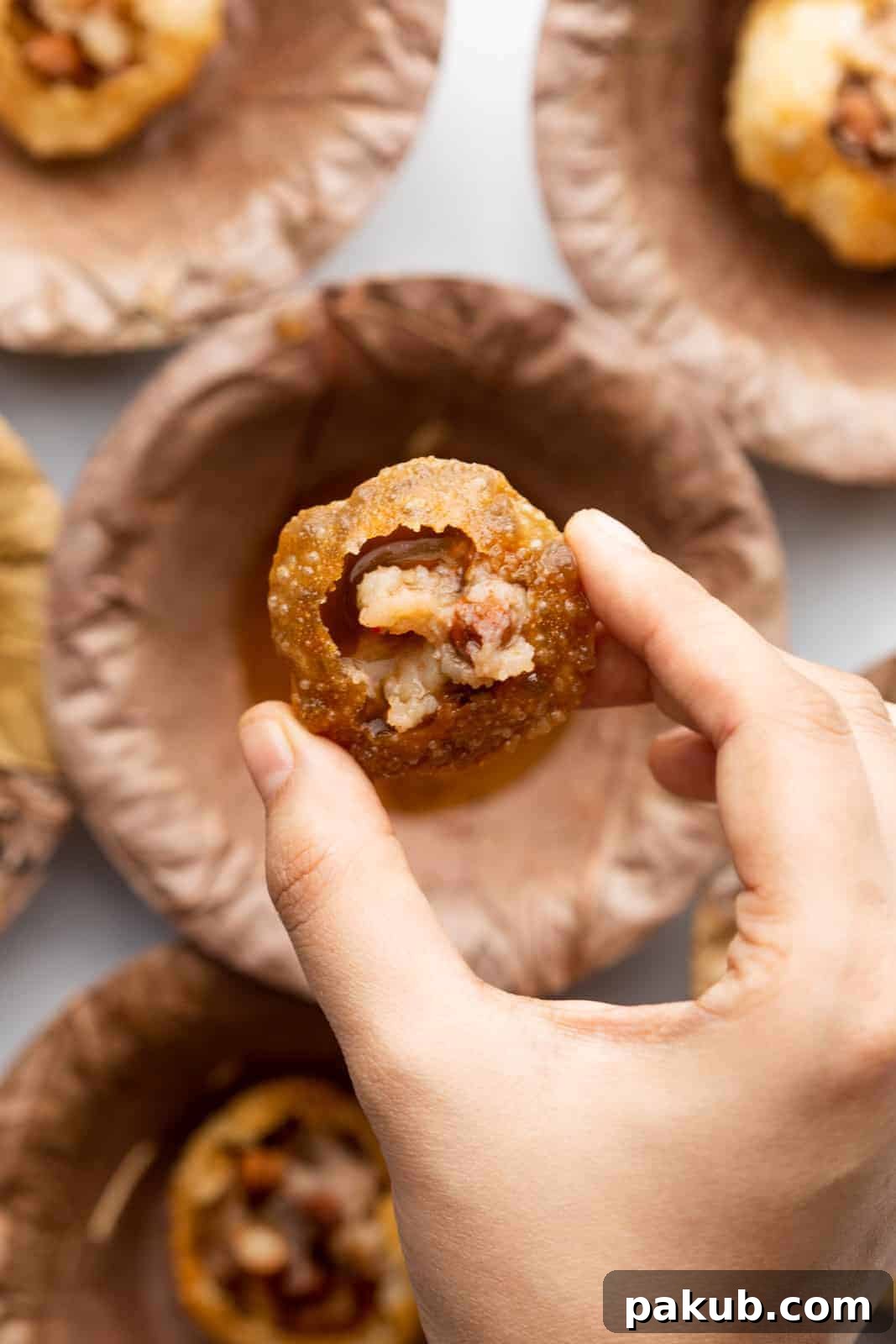
While making homemade Pani Puris can be a little time-consuming, it’s truly a labor of love that pays off in heaps of deliciousness and shared laughter. It’s an ideal weekend project, transforming a busy week into an opportunity to catch up and spend quality time with loved ones. It’s simpler than you might imagine, and the joy it brings is immeasurable. So gather your ingredients, clear your schedule, and embark on this delightful culinary adventure!
If you try this Pani Puri recipe, please don’t hesitate to leave a comment below sharing your thoughts and experiences. And remember to tag me on Instagram @my_foodstory with photos of your delicious creations! I love seeing your culinary triumphs.
Watch the Pani Puri Recipe Video
Easy Pani Puri (Golgappa/ Puchka)
Rated 4.59 out of 5 stars by 12 users.
By: Richa
Learn to make crispy puris, a flavorful filling, and tangy jaljeera pani for an authentic street-style Pani Puri experience at home!
Prep Time: 40 mins | Cook Time: 30 mins | Total Time: 1 hr 10 mins
Servings: 6 people
Pin Recipe | Rate Recipe | Print Recipe
Ingredients
For the Puri
- ½ cup fine Sooji (Semolina)
- 2 tablespoons Atta (Whole Wheat flour)
- ¼ cup hot but not boiling Water (+/- 1 teaspoon)
For the Aloo filling
- 2 boiled and peeled Potatoes
- ¼ cup boiled Kala Chana or Kabuli Chana (Black Gram or Chickpeas)
- ¼ teaspoon Black Salt
- ½ teaspoon roasted Jeera Powder (roasted ground Cumin)
- ½ teaspoon Red Chilli Powder (adjust to taste)
For the Jaljeera Pani
- ½ cup chopped raw Mango OR 1 lime sized seedless Tamarind (use either)
- 2 Green Chillies or Serrano Peppers (adjust to taste)
- 1 1/2 cup fresh Pudina leaves (Mint leaves)
- ¼ cup fresh Coriander leaves
- 3 Peppercorns
- ½ teaspoon Jeera (Cumin)
- ¼ teaspoon Red Chilli Powder
- 1 teaspoon Black Salt
- 1/2 teaspoon Sugar
- Adjust lime juice and black salt to taste
For Garnishing & Servings
- Soaked Boondi
- Pudina leaves
- Sweet Tamarind Chutney
Instructions
For the Puris
- Mix together sooji and atta in a bowl. Add ¼ cup hot water to this and mix to make a stiff dough. Knead the dough with your hand for 5-6 minutes until the dough is firm and smooth to touch. You might have to adjust the amount of water by a teaspoon or two. Cover the dough with a wet cloth (squeeze it well so that the cloth is wet but does not have extra water dripping from it) and rest it for 20-25 minutes.
- Knead the dough again for a minute or two once rested. Divide it into 4 equal parts and roll out one part into a thin rope. Keep the other three parts of dough covered with a wet cloth. With a knife, cut equal portions (the size of a blueberry) from the rope. Take a piece and roll it between your palm until smooth and press it gently to flatten it out slightly. With the help of a rolling pin, roll it into a circle about 1 1/2 to 2 inches in diameter. Place the rolled puri on a thick plastic sheet covered with a dry cloth. Repeat the above procedure to make puris from all the dough. Alternatively, you can also roll the dough out into a big circle and use a cookie cutter to cut it.
- Heat oil in a karahi (deep frying pan) until it is very hot but not smoking. We’ll follow the first in-first out rule: drop one puri in the hot oil so that the side which was touching the plastic sheet is what goes into the oil first. This is very important. Immediately press the puri lightly with a slotted spoon; and once it puffs up, turn it over. Press them lightly so that they are evenly golden brown from all sides, and then take them out. Fry all the puris in this way.
- Wait for them to cool completely and then store them in an airtight container to maintain crispness.
For the Aloo filling
- Lightly mash the boiled chana and potato with your hand and mix it with all the other ingredients for the filling. Set aside.
For the Jaljeera pani
- Blend together chopped mango or tamarind, green chillies, mint, coriander, peppercorns and the spices with 2 cups water until smooth. Place a strainer over a big bowl and line the strainer with a mulmul cloth if you have one. Strain the mixture into the bowl, pressing down on the leftover residue to extract all the juice. Once done, discard the leftover residue and add another glass of water to the jaljeera. Taste and adjust the seasoning. If needed, add some lemon juice. The amount of lemon juice required will depend on the sourness of the mangoes or tamarind used.
- Chill the jaljeera thoroughly. Add some soaked and lightly squeezed boondi to it if you like, just before serving.
Serving
- To serve, gently poke a hole in the center of a puri with your thumb. Fill it generously with the aloo masala and then carefully pour the chilled jaljeera pani into it. Add some sweet tamarind chutney if you like. Pop it into your mouth immediately and savor the explosion of flavors and textures!
Video Instructions
Notes
- This recipe yields approximately 40-50 puris, depending on the size you roll them.
- Dough Consistency: The dough for puris should always be firm, not soft. If you are familiar with Indian cooking, it should feel similar to the dough used for traditional puris.
- Rolling Technique: It is crucial that the puris are rolled thinly and consistently. Any thick edges or an uneven center will prevent them from puffing up properly during frying.
- Shape Matters Less: Don’t stress too much about achieving a perfect circle. Whether they are oval or perfectly round, the taste and crunch remain the same.
- Best Oil for Frying: Based on extensive testing, a refined sunflower oil or any oil with a high smoke point works exceptionally well for frying puris, ensuring they are light and crisp.
- Puri Puffing Success: This recipe has been thoroughly tested multiple times, and the puris consistently puff up. The main reason for them not puffing properly is incorrect oil temperature (either too hot or too cold). I highly recommend testing with 1-3 puris first to ensure your oil temperature is just right before frying the entire batch.
Nutrition (per serving, estimated)
- Calories: 470 kcal
- Carbohydrates: 29 g
- Protein: 5 g
- Fat: 38 g
- Saturated Fat: 3 g
- Sodium: 523 mg
- Potassium: 415 mg
- Fiber: 4 g
- Sugar: 2 g
- Vitamin A: 616 IU
- Vitamin C: 19 mg
- Calcium: 42 mg
- Iron: 2 mg
Like this recipe? We’d love to hear your thoughts! Rate and comment below!
More Delicious Chaat Recipes
Indian Recipes
Dahi Vada | Dahi Bhalla
Appetizers
Easy Aloo Chaat – Delhi Style
Appetizers
Bread Chaat
Appetizers
The Best Indian Punjabi Samosa