
In the vibrant world of Indian cuisine, certain ingredients stand out for their transformative power. Kasuri Methi, or sun-dried fenugreek leaves, is undeniably one of them. While often listed as an optional garnish in many recipes, I wholeheartedly believe it’s an indispensable addition that elevates dishes from good to extraordinary. Its unique ability to cut through the richness of hearty curries and the inherent sweetness of tomatoes, frequently used in our cooking, makes it an absolute pantry essential for any enthusiast of authentic Indian flavors.
Kasuri Methi holds a special place in my culinary heart, easily ranking among my most cherished herbs. Its distinct aroma and subtle bitterness are critical to so many dishes that would frankly feel incomplete without it – iconic preparations like Butter Chicken and Paneer Butter Masala being prime examples that truly shine with its inclusion.
This comprehensive guide aims to demystify this magical herb, providing you with everything you need to know about its origins, flavor profile, culinary applications, and much more. By the end, you’ll be confident in exactly how and when to leverage Kasuri Methi to infuse your cooking with unparalleled depth and authenticity.
What is Kasuri Methi? Decoding the Dried Fenugreek Leaf
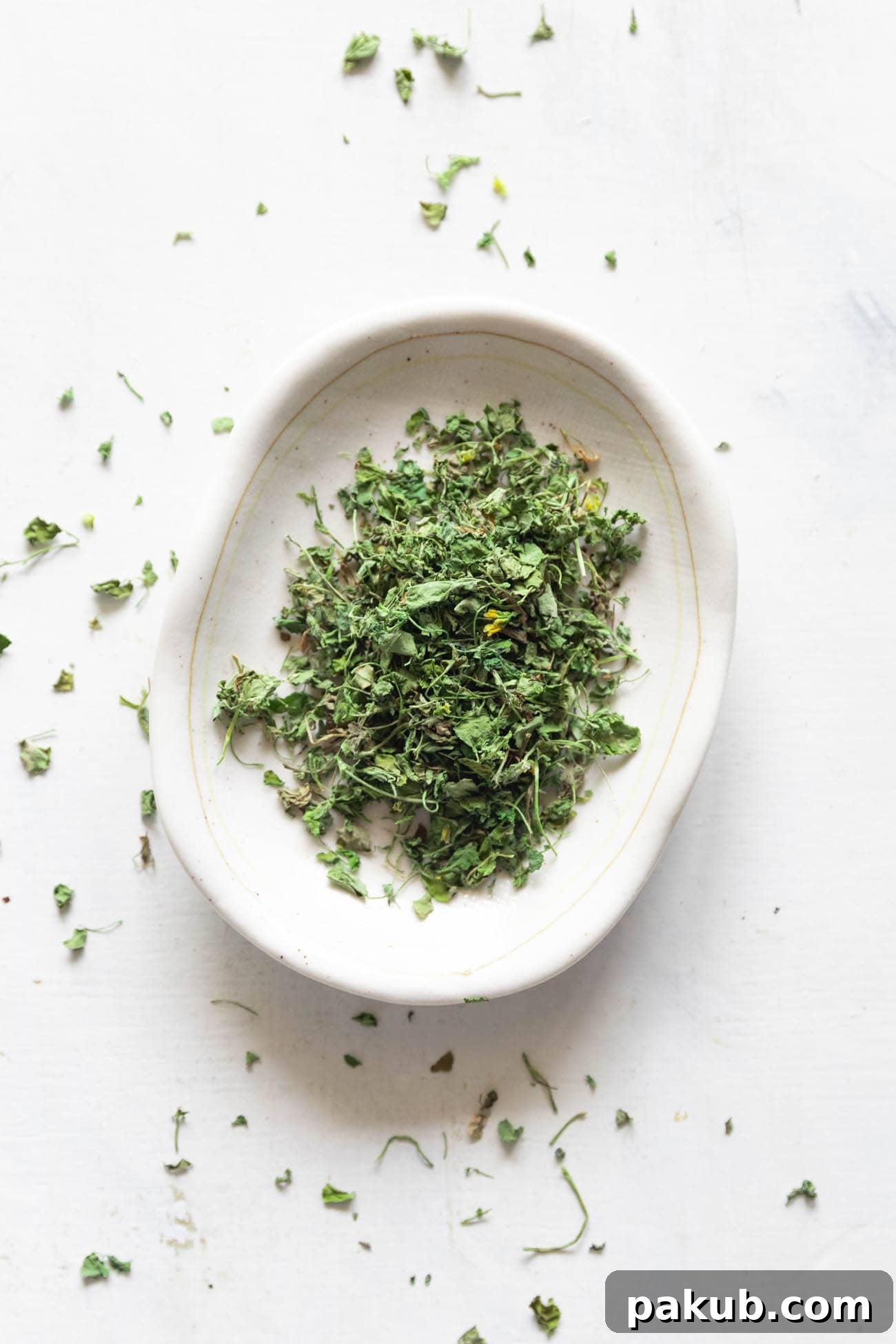
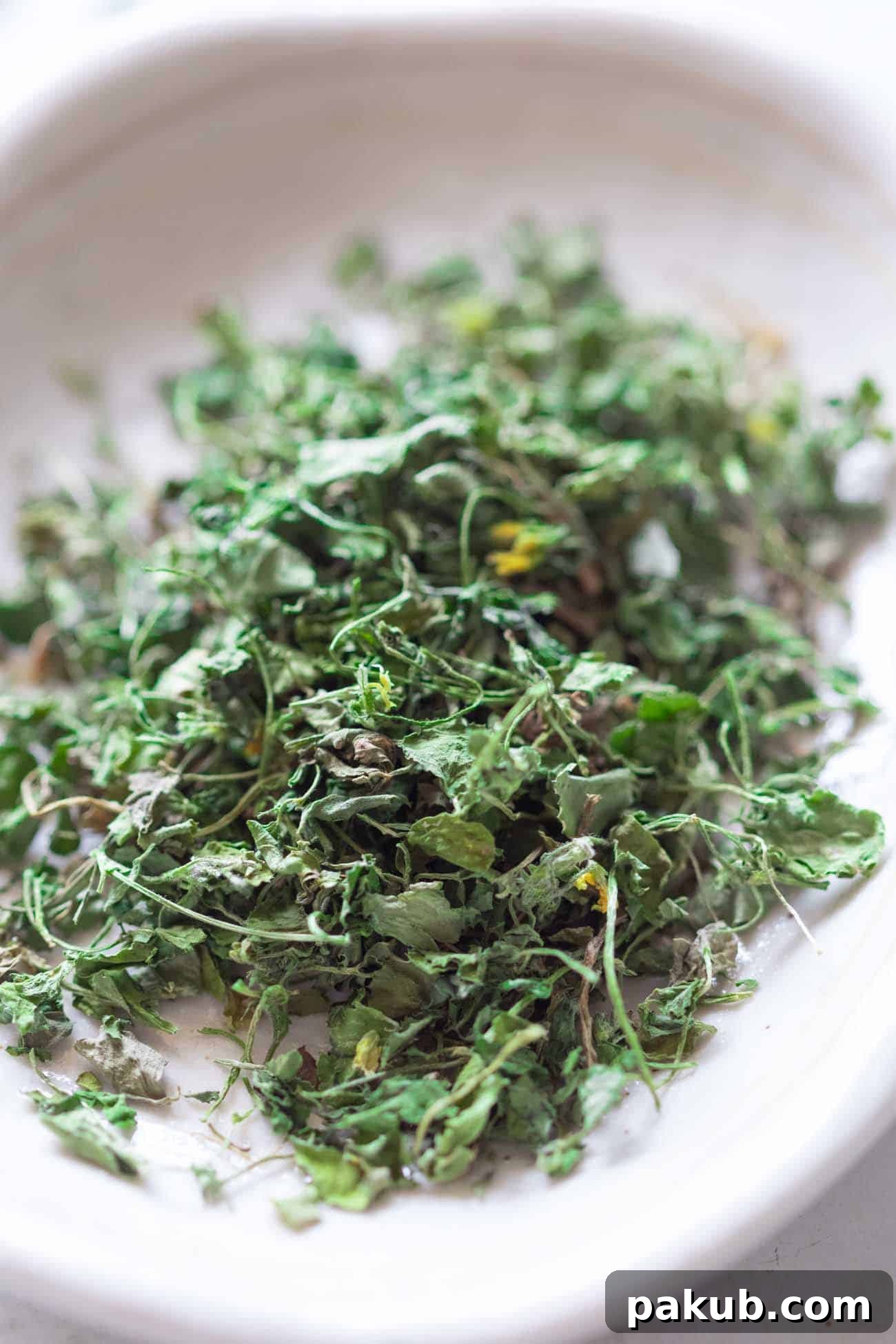
At its core, Kasuri Methi refers to sun-dried fenugreek (methi) leaves. Fenugreek, botanically known as *Trigonella foenum-graecum*, is an ancient herb cultivated for its seeds and leaves. While fresh fenugreek leaves are robust and somewhat bitter, the sun-drying process transforms them into the aromatic, slightly mellowed herb known as Kasuri Methi.
The name “Kasuri” is often attributed to the Kasur region of Punjab, where these leaves were traditionally dried and widely used, becoming synonymous with this unique product. The meticulous process of sun-drying concentrates their flavor and extends their shelf life, making them readily available year-round for Indian kitchens worldwide. These dried leaves are typically crushed or crumbled just before being stirred into dishes, releasing an intoxicating aroma that signals authentic Indian cooking.
The Unique Kasuri Methi Flavor Profile: A Symphony of Aromas
The flavor profile of Kasuri Methi is remarkably complex and multifaceted. It is often described as possessing a distinct maple-like aroma, which lends a deep, savory, and almost umami note to dishes. This richness is delicately balanced by an earthy undertone and a characteristic mild bitterness that is far less intense than that of fresh fenugreek leaves.
Many culinary experts compare its nuanced taste to a blend of celery and fennel, with an added smoky dimension that is truly unique. When dried, these fenugreek leaves retain their aromatic essence but become more subtle and sophisticated. This mellowed bitterness plays a crucial role in Indian cuisine, particularly in tomato-based gravies and rich curries. The herb’s distinct flavor expertly cuts through the inherent sweetness and tang of tomatoes, as well as the richness of cream and butter, thereby adding a profound depth and balance to the overall taste of a dish. It’s this balancing act that makes Kasuri Methi an indispensable ingredient for achieving truly authentic and well-rounded Indian flavors.
Kasuri Methi Substitutes: When Authenticity is Challenged
While the unique flavor of Kasuri Methi is hard to replicate perfectly, the best substitute, if you’re in a pinch, is fresh fenugreek leaves. However, it’s crucial to understand that fresh leaves are significantly more bitter than their sun-dried counterparts. Therefore, when using fresh fenugreek, you should use a much smaller quantity to avoid overpowering your dish with bitterness. A general guideline is to use about one-third to half the amount of fresh leaves compared to dried ones.
To minimize bitterness, gently chop the fresh leaves rather than finely mincing them, as excessive cutting can release more bitter compounds. You might also consider blanching the fresh leaves briefly to temper their bitterness further. If fresh fenugreek is unavailable, some recipes suggest a tiny pinch of fenugreek seeds, but this should be approached with extreme caution. Fenugreek seeds have a much stronger, more concentrated bitterness and a different aroma profile, so only a very minimal amount should be used, typically toasted and ground, and only if you are familiar with its potency. Ultimately, for the true Kasuri Methi experience, there is no perfect substitute for its distinctive sun-dried aroma and balanced bitterness.
Mastering Kasuri Methi Uses: Elevating Your Indian Cooking
Kasuri Methi is a versatile herb, predominantly used as a finisher – added right at the very end of the cooking process to maximize its delicate aroma and flavor. This technique prevents its flavors from becoming too concentrated or bitter during prolonged cooking. Its application spans a wide array of dishes:
In Curries and Dals: The Flavor Balancer
It’s traditionally stirred into creamy dals such as this hearty Slow Cooker Dal Makhani, rich gravies like Butter Chicken and Paneer Butter Masala, and robust meat dishes such as a flavorful Mutton Curry. Its unique bitterness expertly cuts through the sweetness of tomatoes and the richness of dairy, creating a perfectly balanced profile. It also shines in homely vegetarian staples like Rajma and Chana Masala – essentially, most tomato-based, masala-rich dishes benefit immensely from its flavor-balancing prowess.
In Marinades and Seasonings: Infusing Depth
Beyond being a finisher, Kasuri Methi can also be incorporated as a key herb in marinades. For instance, in this delightful Paneer Pakora recipe, it adds an earthy dimension. It’s also fantastic in creamy curries like Chicken Kali Mirch, where it provides a subtle yet profound flavor, or for seasoning fragrant pulaos, such as my personal favorite, Kabuli Chana Pulao, lending an irresistible aroma.
In Indian Breads: A Star Ingredient
One of my favorite, and perhaps less conventional, uses is to make Kasuri Methi Parathas. While traditional methi parathas use fresh fenugreek leaves, utilizing the dried version results in a much more aromatic and less bitter flatbread that works insanely well. In this context, Kasuri Methi is not just an accent but truly the star of the recipe, transforming simple dough into a fragrant, flavorful meal.
In Dry Vegetable Dishes: Aromatic Enhancer
Consider adding a pinch of crushed Kasuri Methi to dry vegetable stir-fries (sabzis) like Aloo Gobi, Bhindi Masala, or any potato-based dish. It imparts a delightful earthy and savory note, complementing the other spices beautifully and enhancing the overall depth of flavor without making the dish overly bitter.
Whether used as a subtle enhancer or a prominent flavor, Kasuri Methi is a winner to have readily available in your spice cabinet, guaranteeing an authentic touch to your Indian culinary creations.
Kasuri Methi Benefits: More Than Just Flavor
Beyond its incredible flavor contribution, Kasuri Methi also offers a range of nutritional benefits. This humble herb is packed with phytonutrients and essential vitamins, contributing to a healthy diet. It contains vital nutrients such as folic acid, niacin, and a spectrum of B vitamins (including B6), alongside important antioxidants like Vitamins A, C, and K.
Furthermore, these dried fenugreek leaves are a source of several key minerals, including copper, calcium, iron, zinc, manganese, and potassium. Traditionally, fenugreek has been used in Ayurvedic medicine for its potential digestive aid properties and its purported ability to help regulate blood sugar levels. While Kasuri Methi is primarily consumed for its culinary qualities, incorporating it into your meals can subtly boost your intake of these valuable nutrients, making your delicious Indian dishes even more wholesome.
Kasuri Methi – To Buy or To Make? A Practical Guide
While the romantic idea of sun-drying fresh methi leaves at home to create your own Kasuri Methi is appealing, in practice, there isn’t a significant quality difference when you purchase it from a reputable store. And honestly, for most home cooks, buying it pre-dried is considerably more convenient and far less time-consuming. The process of making it at home involves meticulously washing, drying, and then sun-drying the leaves over several days, which can be challenging depending on your climate and space.
For convenience and consistent quality, I highly recommend buying Kasuri Methi from the store, preferably in smaller quantities (e.g., 50g packs over 200g packs). This approach ensures that the herb retains its potency and freshness for longer, especially since you typically use only a small amount at a time. Always store it in an airtight container in a cool, dark place to preserve its aromatic qualities.
Kasuri Methi Powder: Unleashing Concentrated Aroma
Kasuri Methi can be easily transformed into a fine powder, offering another versatile way to incorporate its distinct flavor into your cooking. The process involves dry roasting the dried leaves on a slow flame for a minute or two. This gentle roasting helps to release and intensify its beautiful aroma. Once cooled, the roasted leaves are then crushed by hand or ground into a fine powder.
This concentrated Kasuri Methi Powder can be sprinkled as a garnish over finished dishes, added to spice blends, or incorporated as a specific ingredient in various preparations. For example, using the powder or finely crushed dried leaves allows you to create a delicious Kasuri Methi Aloo – a potato dish that is notably less bitter and far more aromatic than the traditional Aloo Methi made with fresh fenugreek leaves. This is an excellent, kid-friendly way to introduce the unique flavor of fenugreek into younger diets; its mildness and enticing aroma are sure to win them over!
Tips for Using Kasuri Methi Effectively: Best Practices
To truly harness the full potential of Kasuri Methi, a few simple techniques can make all the difference:
- Activate the Aroma: Before adding it to your dish, always gently crush the dried leaves between your palms. This simple action helps to release the volatile oils and intensify its fragrance.
- Light Toasting (Optional): For an even deeper, nuttier flavor, you can lightly dry roast the Kasuri Methi in a pan for about 30 seconds before crushing and adding it. Be careful not to burn it, as this can make it bitter.
- Add at the End: As a general rule, Kasuri Methi should be added towards the end of the cooking process, typically in the last 5-10 minutes, or as a garnish. This preserves its delicate aroma and prevents it from becoming overly bitter if cooked for too long.
- Balance is Key: Remember its distinct flavor. While wonderful, a little goes a long way. Start with a small amount (e.g., a teaspoon for a curry serving 4-6 people) and adjust to your taste.
- Pairing: It shines brightest in rich, tomato-based gravies, lentil dishes, and creamy preparations where its bitterness provides a perfect counterpoint to sweetness and richness.
Storing Kasuri Methi for Maximum Freshness
Proper storage is crucial to maintaining the potency and aroma of your Kasuri Methi. Here’s how to keep it fresh for as long as possible:
- Airtight Container: Always transfer Kasuri Methi to an airtight container immediately after opening the package. Exposure to air can quickly diminish its flavor and aroma.
- Cool, Dark Place: Store the container in a cool, dark pantry or cupboard, away from direct sunlight and heat. Heat and light are enemies of dried herbs and spices, accelerating their degradation.
- Avoid Moisture: Ensure no moisture gets into the container, as this can lead to spoilage or mold growth.
- Shelf Life: When stored correctly, Kasuri Methi can retain its quality for up to a year, though its aroma will slowly diminish over time. It’s a good practice to refresh your stock every 6-12 months for optimal flavor.
By understanding and applying these tips, you’ll be able to consistently infuse your cooking with the authentic and enchanting essence of Kasuri Methi, transforming everyday dishes into culinary masterpieces.
Do you have any interesting Kasuri Methi uses or cherished recipes you’d like to share? I’d absolutely love to hear about them! Feel free to message me over on my Instagram. Let’s keep the culinary conversation going!